
Expanding Production: Sumedang Develops Cilembu Sweet Potato via Tissue Culture
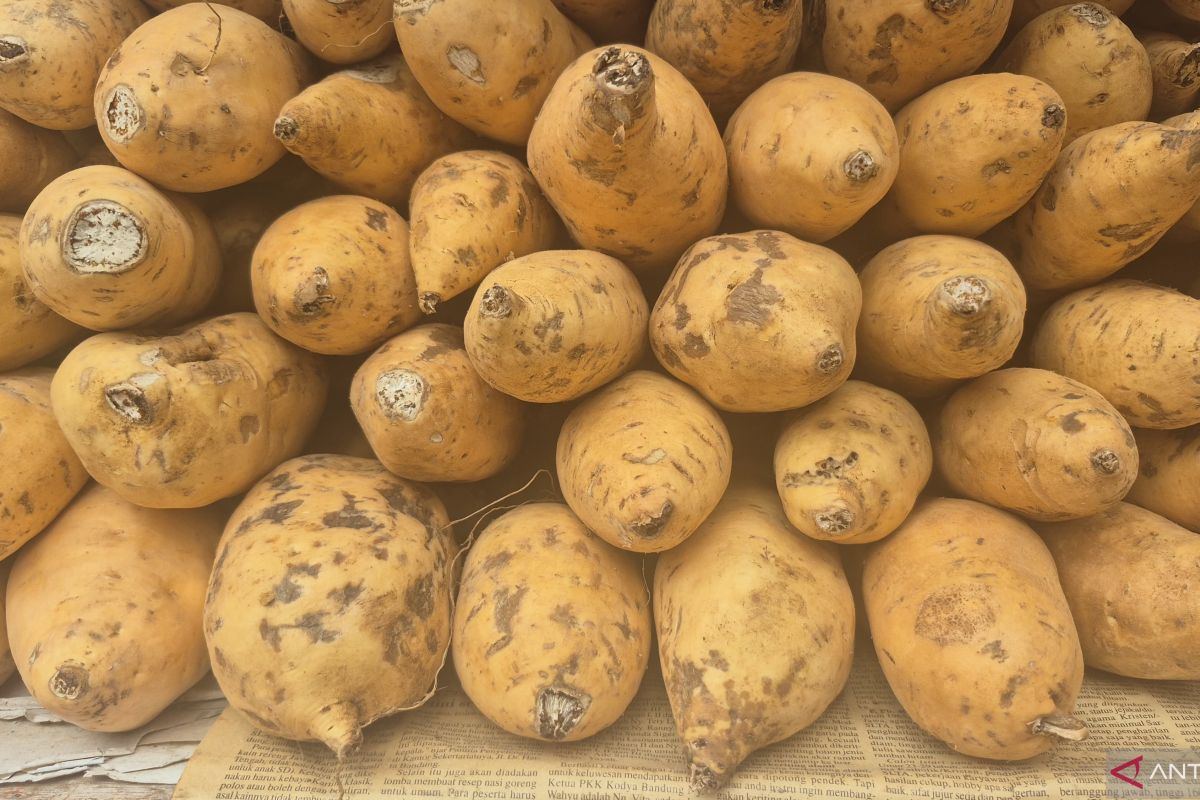
The Sumedang Food Security and Agriculture Office (DKPP) in West Java is continuously developing Cilembu sweet potato as a flagship regional commodity through tissue culture innovation to expand production and increase market competitiveness.
The Head of DKPP Sumedang, Tono Suhartono, stated in Sumedang on Monday that the development of Cilembu sweet potato is being carried out in an integrated manner from the upstream to the downstream sectors. “We are continuously pushing the development of Cilembu sweet potato upstream through tissue culture and also downstream to expand production while simultaneously increasing market competitiveness,” he said.
He explained that Cilembu sweet potato is a signature commodity of Sumedang, possessing a honey-like sweetness after roasting, which serves as its primary differentiator from other sweet potato varieties. According to Tono, this characteristic represents significant potential for Cilembu sweet potato to compete in the global market.
Tono noted that current development is being conducted using tissue culture technology to expand cultivation without being entirely dependent on the specific soil conditions of the original Cilembu region. He mentioned that trials have been conducted in several areas involving farmer groups and local authorities, including the planting of approximately 5,000 seedlings across 26 collaborative sites.
Cilembu sweet potato production centres in Sumedang Regency are spread across four main districts: Pamulihan, Rancakalong, Tanjungsari, and Sukasari, with a total land area exceeding 462 hectares. Meanwhile, Cilembu Village, the original region, has approximately 229 hectares of cultivation land, with average production reaching 1,600 to 1,900 tonnes per year.
Tono stated that the productivity of Cilembu sweet potato in Sumedang ranges from 15 to 20 tonnes per hectare, and can reach 40 tonnes per hectare under optimal conditions. Despite its great potential, the development of this commodity still faces challenges, such as dependence on specific soil conditions and production fluctuations due to weather factors. “Additionally, our challenge is maintaining production continuity because market demand continues to rise,” he said.
He revealed that the demand for Cilembu sweet potato for processed products and exports reaches 12 to 40 tonnes per month, making production continuity a vital factor in the commodity’s development. In addition to strengthening cultivation, the Sumedang Regency Government is also encouraging downstreaming through the development of MSME products, such as ‘bakpia ubi’ (sweet potato bakpia), which utilises the natural sweetness without added sugar. “Cilembu sweet potato can be processed into various products, including bakpia without added sugar because it is naturally sweet,” he added. Tono concluded that the development of Cilembu sweet potato is expected to strengthen the economic resilience of farmers and establish the commodity as a sustainable flagship for Sumedang Regency.