
Expanding Indonesia's trade footprint in the Pacific via Chile
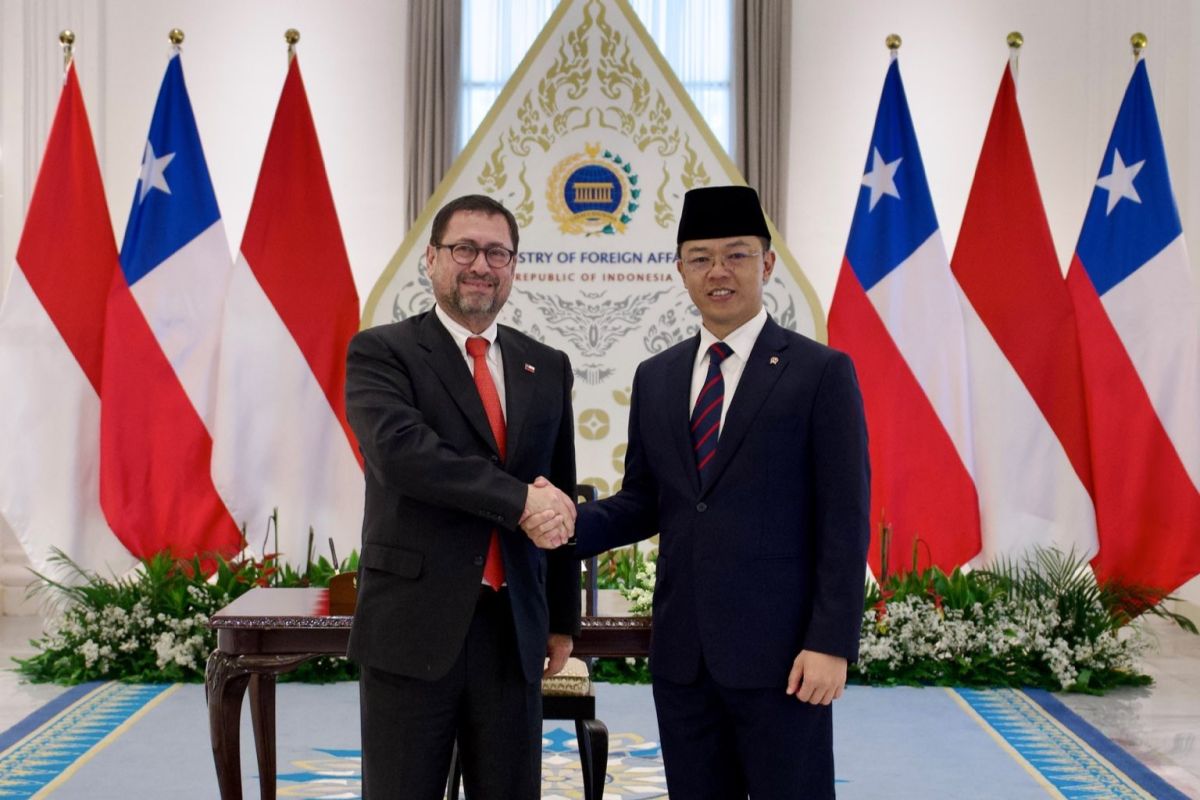
Indonesia continues to expand its trade reach into the Pacific region, one of which is by paying attention to Chile, a country on the west coast of South America facing the Pacific Ocean that holds an important position in the region’s economic network.
Economic relations between Indonesia and Chile are growing through the Indonesia-Chile Comprehensive Economic Partnership Agreement (IC-CEPA), which has been in effect for trade in goods since 10 August 2019 and provides zero per cent import duty tariffs for 6,704 Indonesian products entering the Chilean market.
The cooperation was then expanded through the Protocol on Trade in Services after ratification in early 2025, followed by discussions in the investment sector to enlarge the economic benefits for both countries.
The implementation of IC-CEPA is beginning to be reflected in bilateral trade performance. In 2025, the trade value between Indonesia and Chile reached 535.5 million US dollars, an increase of 12.4 per cent compared to the previous year. Indonesian exports were recorded at 441.5 million US dollars, while imports reached 94 million US dollars, resulting in Indonesia booking a trade surplus of 347.5 million US dollars.
Motor vehicles, fertiliser, and footwear are Indonesia’s main export commodities, while imports are dominated by frozen fish, wood pulp, starch, fertiliser, and grapes.
However, with trade value still in the half-billion dollar range, Chile is not yet a primary export market for Indonesia. The next challenge is to expand the number of business players utilising the trade facilities while increasing the diversity of Indonesian products capable of penetrating the Chilean market.
Thus, the main issue now is no longer opening market access, but rather increasing penetration. Zero per cent tariffs indeed reduce entry barriers, but do not automatically enlarge market share. Product competitiveness, the ability to meet standards, distribution networks, and supply continuity will determine how much economic benefit can be generated from this trade relationship.