
Expanding Educational Access up to Higher Education
Jakarta (ANTARA) - Free education is transforming how the state finances a child’s journey towards the future.
President Prabowo Subianto has instructed the preparation of free education services in state schools, starting from kindergarten, primary, and secondary education, as well as a gradual free university programme in state universities (PTN).
The idea, which first emerged on 18 September 2026 during the PAN anniversary celebrations, is now being discussed in limited meetings at the Palace with several relevant ministers to formulate its implementation scheme.
Education costs have long remained a significant part of household expenditure. The Central Bureau of Statistics noted that the average education cost in 2024 reached approximately Rp3.55 million per year for primary school and equivalent, increasing to Rp13.96 million for higher education. At the same time, only 16.27 per cent of students were recorded as receiving scholarships or educational assistance.
These figures provide context for the free education policy. The burden of education does not stop at the issue of whether school fees exist. As the level of education increases, the need for financing also grows. The longer a child continues their education, the greater the role of a family’s economic capability becomes in determining whether that journey can be sustained.
The government has previously established various instruments to reduce these barriers. The ‘Program Indonesia Pintar’ (PIP) is aimed at assisting students, while the ‘Kartu Indonesia Pintar Kuliah’ (KIP Kuliah) assists high school graduates or equivalents from economically disadvantaged families pursuing higher education. In 2026, economic conditions remain one of the bases for determining KIP Kuliah recipients, including through the National Socio-Economic Single Data (DTSEN).
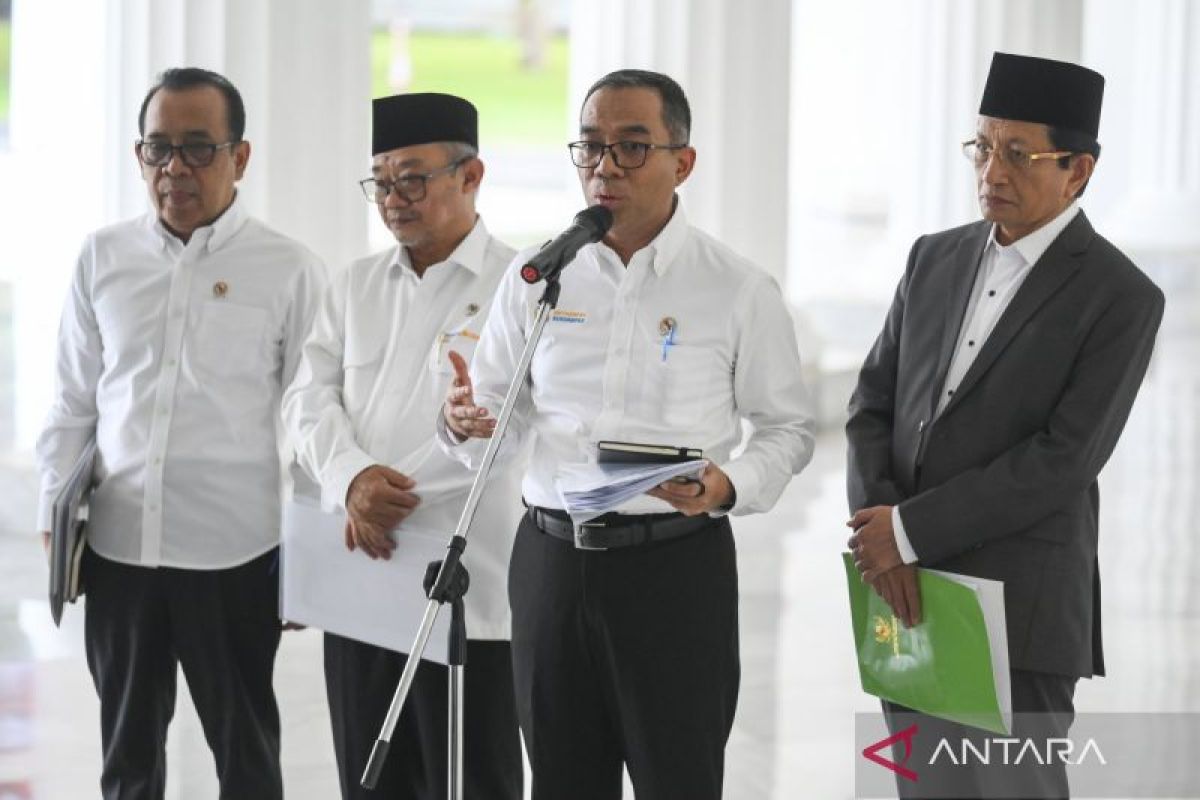
The directive for free education expands upon that approach. The government is beginning to shift assistance for specific groups towards a broader scheme of financing educational services in state schools. The Minister of Primary and Secondary Education, Abdul Mu’ti, stated that the President’s directive includes free education services at the primary and secondary levels, even starting from kindergarten.
This expansion of access comes as the government positions education as one of the main items in state expenditure. In the 2027 Draft State Budget (RAPBN), the education budget is designed to reach Rp820.9 trillion. This budget is directed, among other things, towards improving the quality of learning, infrastructure, teacher welfare, student support, and the use of technology to reduce the gap in education quality between regions.
The scale of the budget means that free education does not stand alone as a policy of fee exemption. The state must also ensure that schools maintain resources when part of the service costs previously borne by families shift to state responsibility. Teacher funding, facilities, school operations, and the quality of learning are all part of this expansion of access.
The government is also running programmes with more specific targets. ‘Sekolah Rakyat’, for example, provides free boarding school education for children from poor and extremely poor families. This programme demonstrates that the issue of educational access has different layers. For some families, school fees are not a barrier, while others face issues of poverty, housing, transport, or the learning environment.
Therefore, free education in state schools can reduce one of the main barriers, while affirmative programmes remain necessary for groups facing more complex challenges.