
Exhumation of Sutrimo's Body Involves Joint Forensic Team from PDFMI
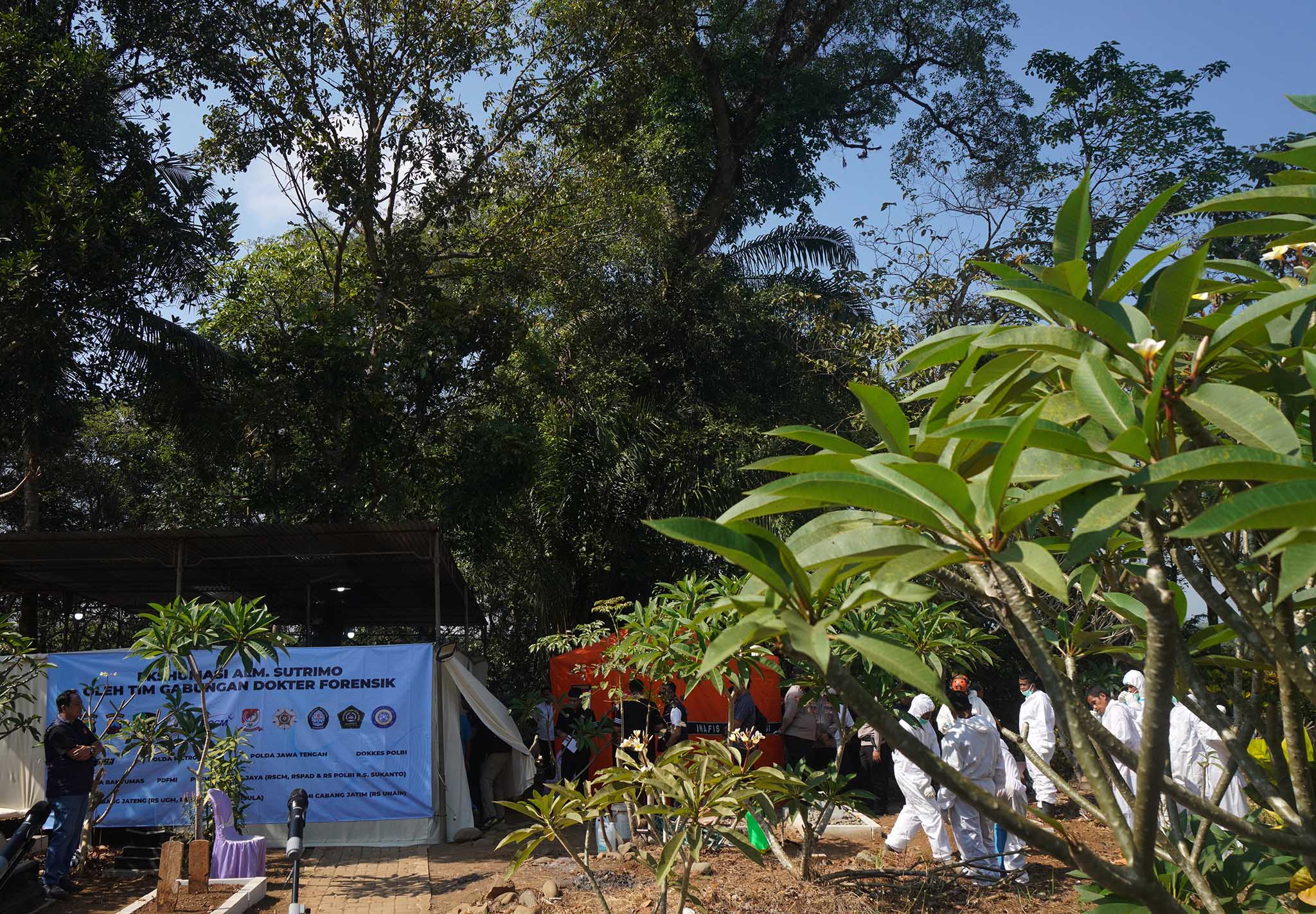
A joint forensic team from the Indonesian Forensic and Medicolegal Doctors Association (PDFMI) across several regions has conducted the examination of Sutrimo’s body at the Bantaragung Public Cemetery in Wlahar Village, Wangon District, Banyumas Regency, Central Java. ‘This joint forensic team consists of PDFMI Jaya, PDFMI Central Java, and PDFMI East Java,’ stated Greater Jakarta Metropolitan Police Head of Public Relations, Senior Commissioner Budi Hermanto, at the exhumation site on Wednesday (12/8). Sutrimo was the former head of household at the residence of former Deputy Attorney General for Special Crimes (Jampidsus) Febrie Adriansyah. He died on 23 July 2026, just two weeks after the first search of de’Clan Signature café and Febrie’s house in Sentul, Bogor, in connection with a money laundering case (TPPU). He confirmed that the exhumation process, external examination, and internal examination of the body were conducted professionally and in accordance with legal provisions. ‘The implementation of this exhumation and external and internal examination is definitely professional, proportional, and accountable. And this can certainly be legally accounted for,’ he said. At the same location, the Head of the Police Central Medical and Health Centre (Karodokpol Pusdokkes Polri) and Chair of PDFMI, Brigadier General Sumy Hastry Purwanti, stated that the examination did not rely solely on observing the physical condition of the body. The team also involved several experts to analyse samples obtained during the exhumation process. These experts came from the fields of forensic laboratories, psychology, DNA, and anatomical histopathology. ‘In these three stages, we from the Indonesian Forensic and Medicolegal Doctors Association have involved several experts within it; besides medicolegal forensic specialists, we also invited colleagues from the forensic laboratory and the psychology laboratory at the University of Indonesia, also at UNER to examine the lab results later, as well as DNA experts and anatomical histopathology experts,’ said Hastry. According to her, the involvement of various scientific disciplines is necessary so that the examination can be conducted comprehensively. The results of the laboratory analysis will later be an important part in determining whether Sutrimo’s death occurred naturally or unnaturally. ‘So that we work thoroughly, comprehensively, and the results are also based on the laboratory examination results we will obtain later,’ she said. Hastry asked the public to give the forensic team time to complete all stages of the examination. She noted that the geographical conditions and soil around Sutrimo’s grave were relatively supportive of the exhumation. The fairly dry soil is expected to facilitate the excavation process and allow the team to obtain a body that is still in an examinable condition. ‘Based on the geography here and the soil is also quite dry and good. Difficulties might be minimal, we might be able to get the body still in good condition,’ she said. However, Hastry stressed that the team could not yet conclude the condition of the body before the examination process was complete. According to her, exhumation is not merely about digging up a grave and retrieving the body. The team also examines the condition of the grave, the characteristics of the soil, and takes samples from around the grave for laboratory analysis needs. ‘Exhumation involves examining the grave, the type of soil, the length of the grave. Also taking samples from the soil around the grave like that. Only then is the excavation, then we do the external examination, then the internal examination,’ explained Hastry. The samples obtained will then undergo examination in the laboratory. Therefore, the forensic team cannot yet confirm the cause or manner of Sutrimo’s death based solely on the initial examination. ‘The process is that we take samples, we do not immediately state what or how, maybe later we will wait for the lab results,’ she said. Sutrimo had been buried for more than 10 days before the exhumation was carried out. This condition makes the natural decomposition process one of the factors considered in the forensic examination. Hastry said the natural decomposition process on the body has certainly taken place. Nevertheless, the relatively dry environmental conditions of the grave are hoped to still allow the team to obtain the required information. ‘Indeed, the decomposition process must have occurred because it has been more than 10 days since 23 July. But we hope to obtain information because the environmental conditions are dry and good,’ she said. When asked about the possibility of still finding signs of unnatural death, Hastry asked the public to wait for the results of the laboratory examination. ‘That’s why we wait for the lab results later,’ she said. Hastry ensured that the internal examination of the body would be carried out thoroughly by examining the body’s organs. ‘The internal examination is complete. All organs will be examined later,’ she emphasised. The results of the exhumation, the external and internal examination of the body, and the analysis of various laboratory samples will later become part of the Greater Jakarta Metropolitan Police’s investigation materials to reveal the cause and manner of Sutrimo’s death.