
Execution Risks of the Financing Source Determination for the Defence Sector
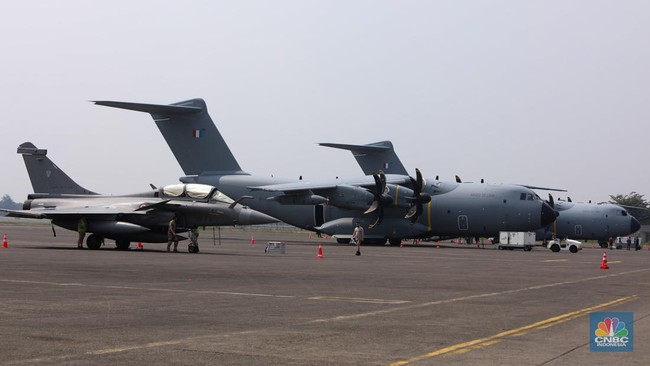
Amid the depreciation of the rupiah against the United States dollar and market distrust of the Indonesian government’s fiscal policy, these conditions have not deterred the government from promptly commencing large-scale spending in the defence sector using a Foreign Loan scheme. Perhaps what is happening in the financial market is, in the understanding of decision-makers, in a completely separate realm from the plan to spend on defence equipment based on foreign loans worth US$34.8 billion. Another possibility is that decision-makers are indifferent to the financial market situation because whatever happens, spending on weapons systems originating from foreign loans must proceed. Yet the root of the current turmoil in Indonesia’s financial markets stems from the government’s inability to reassure the market regarding its fiscal policy.
Recently, the Minister of Finance issued a Financing Source Determination for the Ministry of Defence with an undisclosed value. This determination is a follow-up to the 2025-2029 Blue Book, the 2026 Green Book and the 2026 Special Activities List. Although the financing source determination relates to approval for the use of sovereign debt and not personal debt by government officials, the programme and details of the foreign loans are now classified as a state secret. Government opacity in debt management is a new norm since the post-reform state finance system was introduced in 2003, even though sovereign debt is a public domain.
The plan to draw new debt amid Indonesia’s challenging fiscal situation creates specific risks for the country should risk calculations not receive special attention due to prioritising the implementation of the procurement programme no matter what. Concerning the financing source determination, one issue that must be observed is which financing scheme dominates it. Has the Minister of Finance provided more acquisition activities using an Export Credit Guarantee Institution scheme or a Foreign Private Creditor scheme? Referring to available historical data, when first issuing a financing source determination on 12 September 2025, the current Minister of Finance prioritised the private creditor scheme over the export credit guarantee scheme.
This is the opposite of the previous Minister of Finance, who approved more purchase programmes based on the export guarantee scheme than private creditors in ten issuances of financing source determinations between 2021 and 2024. Regarding the issuance of these determinations to start spending on military equipment, there are several risks that should not be overlooked when the financial market lacks confidence in the government’s fiscal management.
Firstly, the depreciation of the Rupiah. The fall in the rupiah’s exchange rate against the US dollar will undoubtedly affect defence spending capability, both that using pure Rupiah and foreign loans. It is not yet known how long the rupiah will experience volatility. It is also uncertain whether the Indonesian currency’s exchange rate against the US dollar will match the government’s expectations as stated in the 2027 Macroeconomic Policy and Fiscal Policy Principles, namely between Rp 16,800 to Rp 17,500. Consequently, defence spending programmes directly or indirectly linked to the US dollar exchange rate will be affected.
Secondly, Indonesia’s outlook and rating. Defence spending using the foreign loan framework will greatly depend on the stance of Fitch Ratings, Moody’s Ratings and S&P Global Ratings in assessing the Indonesian government’s debt. With the negative outlook assigned by Fitch Ratings and Moody’s Ratings at the beginning of this year, Indonesia has about six months to improve fiscal policy, with the consequence of a possible rating downgrade if there is no policy change. It remains to be seen whether at the end of June 2026 or early July 2026, S&P Global Ratings will follow the other two rating agencies regarding the outlook and rating of the Indonesian government’s debt.
Thirdly, the financing portion borne by Indonesia. Several years ago, the government allowed the application of zero companion pure Rupiah for weapons system spending, where the lender finances 100 percent of the procurement programme by the Ministry of Defence. Before this policy was introduced, the loan scheme was 85 percent of the programme’s value sourced from the lender, while 15 percent was financed by the Indonesian government’s budget, also known as companion Rupiah. In the current situation regarding the negative outlook and the possibility of a downgrade of the Indonesian government’s debt rating, no lender is willing to provide a loan to Indonesia for defence spending with a zero partner Rupiah framework.
To execute the acquisition of defence equipment using foreign loans, the process required from obtaining a lender to an effective contract takes a minimum of one year, but in practice, the average quickest timeframe is two years. Regarding the Ministry of Defence’s ambition to begin massive spending using a foreign loan scheme this year, the execution of the financing source determination will be heavily influenced by external factors triggered by Indonesia’s internal factors. Between June 2026 and June 2027, a number of external factors are predicted that could affect the implementation of the financing source determination, which is realised in the form of procurement contracts and loan agreements. For instance, the possibility that rating institutions not only lower Indonesia’s outlook but also downgrade Indonesia’s rating if there is no significant change regarding fiscal policy, where a rating downgrade has complications from the aspect of debt financing. If this year or early 2027 a rating agency downgrades Indonesia’s rating from inves