
Excellent! Lampung Bioethanol Project Enters New Phase
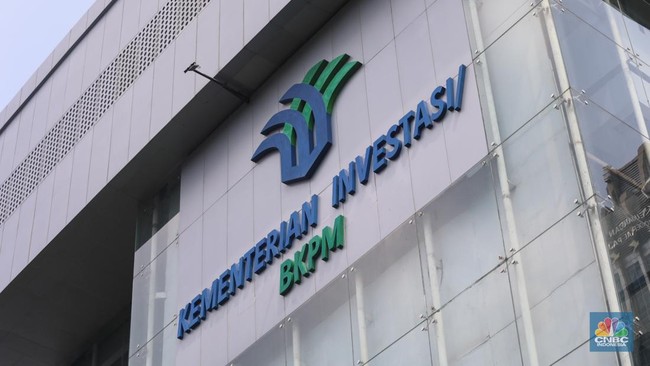
The government, through the Ministry of Investment and Downstreaming/BKPM, continues to promote the formation of strategic agreements in the development of the Bioethanol Project in Lampung Province as part of efforts to accelerate the national energy transition. Construction of the project, expected to start in the third quarter of 2026, involves Toyota, PT Pertamina New & Renewable Energy (PNRE), and Danantara Investment Management.
“This programme has actually been running for a year, but we have been silent in its development. Currently, there is coordination between PNRE and the Japanese Group, in this case Toyota Tsusho will be appointed as the partner, and will be supported by other technology partners from Japan such as RaBIT (a research consortium of several Japanese automotive and energy companies),” explained Deputy Minister of Investment and Downstreaming/Deputy Head of BKPM, Todotua Pasaribu, quoted from his statement on Tuesday (21/4/2026).
Todotua explained that the construction of this project will first be carried out in the Lampung region. Lampung was chosen because it is one of the provinces that is very strong in supplying feedstock, such as sugarcane, cassava, sorghum, and others.
In particular, the Ministry of Investment and Downstreaming/BKPM has been escorting since the end of 2025 to early 2026 through a series of concrete steps. These include coordination across ministries/institutions and state-owned enterprises, facilitation of meetings with technology partners from Japan, to direct assistance in field visits and project site identification.
The bioethanol development project being explored together with Toyota, PNRE, and Danantara Investment Management is designed in two phases. The initial phase (pilot project) is targeted at a capacity of 60 kilolitres per year in the third quarter of 2027, followed by the commercial phase of 60,000 kilolitres per year in the fourth quarter of 2028.
This development adopts a multi-feedstock approach, including utilising palm oil biomass waste, corn, and sorghum supported by second-generation (2G) technology to increase supply flexibility while ensuring long-term sustainability.
The project also includes gradual sorghum cultivation, starting from a 10-hectare pilot in 2026 to commercial development reaching 6,000 hectares in 2027. The project will be located in Lampung with land support from PTPN.
On the policy side, the government has strengthened its commitment through a mandatory bioethanol blending roadmap in fuel, namely E5 in 2026-2027, increasing to E10 in 2028-2030, up to E20 in the long term.
“We are pushing this project to prepare for the mandatory roadmap commitment to E10, so that our country is also ready,” said Todatua.
Todotua added that Indonesia’s dependence on fuel imports is still high, reaching around 61% over the last decade. On the other hand, the volatility of world oil prices due to geopolitical dynamics further underscores the urgency of the energy transition.
In line with President Prabowo Subianto’s directives, the government is focusing policies on three main pillars, namely energy self-sufficiency, food security, and downstreaming of natural resources. Indonesia is considered to have strong comparative advantages, including the world’s largest nickel reserves (42%), as well as its position as a major global producer of palm oil and coconuts which have the potential to become bioenergy raw materials.
The government also appreciates Toyota’s involvement in developing the electric vehicle battery industry in Indonesia. However, opportunities for cooperation are still wide open, especially in the development of multi-feedstock bioethanol.
CEO of Toyota Motor Asia, Masahiko Maeda, appreciated the constructive and progressive discussions with stakeholders to explore collaboration potential in the bioenergy ecosystem.
“In addition, through our strategic partnership with CATL (Contemporary Amperex Technology Co., Limited) in Indonesia, we aim to expand capabilities from battery pack assembly to battery manufacturing from cells and modules. This collaboration will strengthen a strong local supply chain, supporting Toyota’s Multi-Pathway approach towards carbon neutrality,” he said.
This meeting is part of the government’s ongoing efforts to strengthen international collaboration to encourage quality investment and accelerate Indonesia’s economic transformation based on downstreaming and sustainable energy.