
Examining the scheme for utilising idle state land for public housing
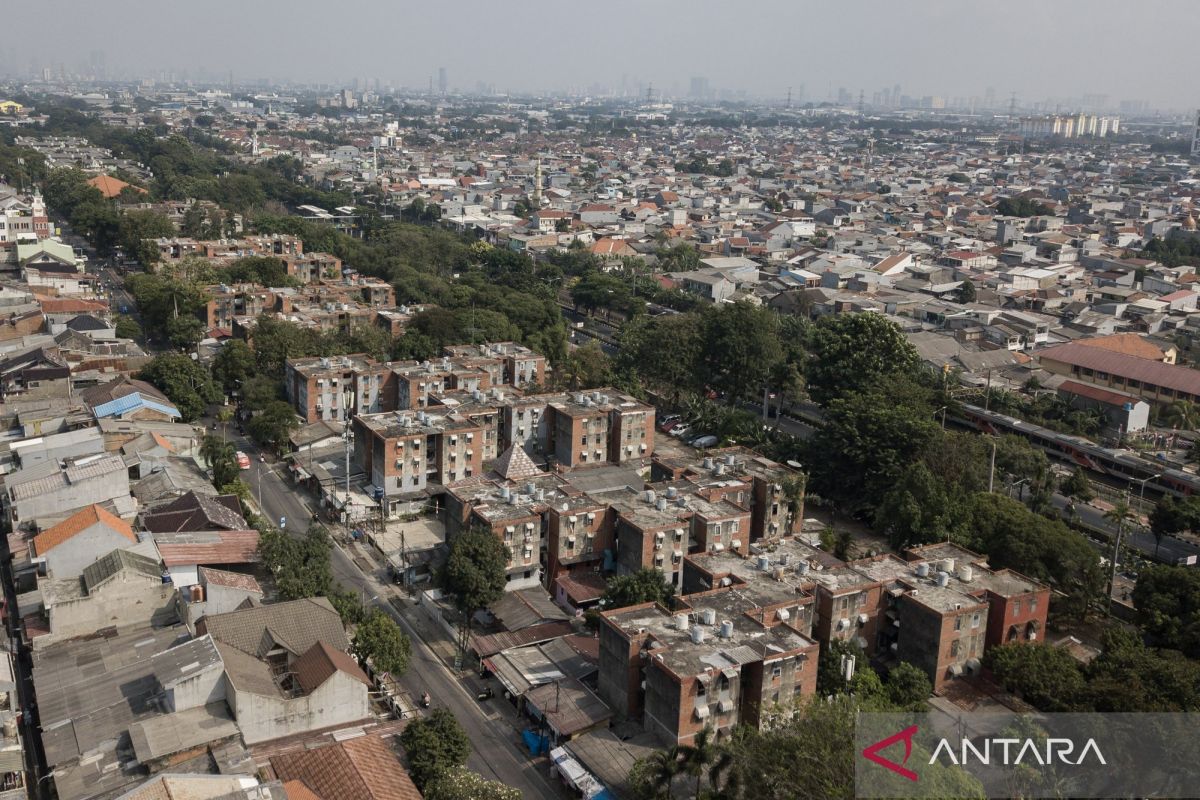
Housing must provide certainty for the community, just as asset management must provide certainty for the state. At that point of equilibrium, the utilisation of idle state land for housing programmes can become a sustainable policy.
Jakarta (ANTARA) - The demand for housing continues to rise, while land availability in urban areas is increasingly limited, and land prices remain one of the largest components in house construction costs.
Therefore, the utilisation of idle or underutilised state land for housing development is a viable idea to be developed as part of the housing provision strategy, especially for low-income communities (MBR).
However, utilisation involves more than just providing land. From the outset, the usage status, occupancy patterns, ownership or rental models, and the mechanism for returning the land if it is required by the state again must be carefully designed.
In principle, the state possesses land assets scattered across various regions, controlled by ministries, agencies, or specific bodies. Not all of this land is currently being used for governmental activities.
Law Number 1 of 2004 concerning State Treasury and Government Regulation Number 27 of 2014, as amended by Government Regulation Number 28 of 2020, regulate the management of State/Regional Property, including the utilisation of assets that are not being used optimally.
This means that the approach to idle state land should not merely view it as “empty land,” but as a state asset whose legal status, spatial planning designation, strategic value, and usage plans must be ensured before being utilised for housing (Law No. 1 of 2004; PP No. 27 of 2014 jo. PP No. 28 of 2020).
Consequently, a mature and cautious scheme is required. The primary stage involves inventorying and mapping idle state land across various ministries and agencies. This land data needs to be cross-referenced with spatial planning, infrastructure development plans, disaster risk mapping, transport access, and local housing needs.
The Ministry of ATR/BPN, the Ministry of Finance, local governments, asset-owning ministries/agencies, and the Ministry of Housing and Residential Areas (PKP) can build a shared database. Thus, land that appears empty today would not automatically be considered available for housing if it is actually included in plans for road construction, defence facilities, protected areas, or other state requirements.
Once the land is declared suitable, multi-layered utilisation options can be made. State land does not necessarily have to be immediately transferred into the residents’ ownership. For the needs of low-income communities, one option is the construction of low-rise apartments or landed housing under a long-term rental scheme.
Source: jawawa.id (https://jawawa.id/newsitem/examining-the-scheme-for-utilising-idle-state-land-for-public-housing-1790237191)
Originally published by Antara (Indonesian) (https://www.antaranews.com/berita/5756265/menilik-skema-pemanfaatan-lahan-tidur-negara-untuk-hunian-rakyat), translated from Indonesian