
Examining the Phenomenon of Electoral Backlash in the US Midterm Elections
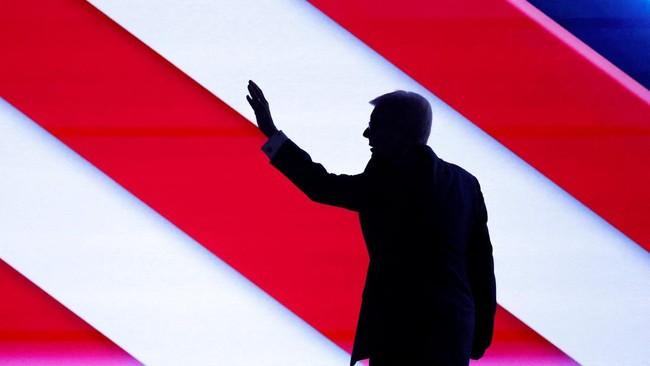
“The ballot is stronger than the bullet.” Abraham Lincoln, the 16th president of the United States, appears to have captured how voters can shift a governing order built by US President Donald Trump, despite his advantages as an incumbent and the ruling party’s dominance over the past two years.
The US midterm elections, held on 3 November 2026, showed that a governing party cannot necessarily preserve the political order it has built simply because it holds political dominance.
The 2026 midterm contest was a notable episode in US electoral history: the opposition Democratic Party won a majority in both chambers of Congress. Democrats have so far secured at least 253 seats in the House of Representatives and 54 in the Senate, including two independent senators who caucus with the Democrats.
This reflects an electoral rejection of several Trump administration policies, while giving the public hope of encouraging policy renewal that is more responsive and accountable.
Electoral backlash as a check on power
US midterm elections are rooted in the idea that the exercise of power needs to be balanced, and that oversight between state institutions must be strengthened. The practice stems from the constitutional design established when the US Constitution was adopted in 1787.
Article I of the US Constitution sets different terms of office: two years for members of the House of Representatives, six years for senators and four years for the president. These different terms allow voters to determine the composition of the legislature during a president’s term, without waiting for the next presidential election.
The differing terms of the legislative and executive branches are also intended to create separate cycles for the renewal of political mandates, preventing power in every branch from becoming concentrated in a single ruling party. Midterm elections are also founded on the public’s need to exercise its right to assess its representatives regularly.
The ruling party’s defeat in the 2026 US midterms was not without precedent. In 2006, the Democratic Party took control of both chambers of Congress, then under the leadership of Republican President George W. Bush.
At the time, however, the shift in the legislature’s political balance was not accompanied by a significant shift in support in several states. Texas and Kansas, for example, are now seeing support move from Republicans to Democrats. This makes the change a rare feature of the 2026 US midterms.
In light of this political shift, Trump appears to be facing an electoral backlash: a majority of voters have expressed dissatisfaction with the government in power by transferring their electoral support to the opposition, as a political check on the incumbent.
The electoral backlash in the 2026 midterms shows that a government’s electoral legitimacy remains open to public assessment and correction through regular elections.
Even a ruling party’s dominance of the executive and legislative branches cannot guarantee continued electoral support when voters decide to change their political preferences, generally because they are dissatisfied with government policies.
The phenomenon also shows that elections are not merely an instrument for changing governments, but a means for the public to monitor and assess them. Ultimately, the people remain the highest holders of power, with the ability to grant, maintain or withdraw the government’s mandate through elections.
Divided government in a presidential system
A defining feature of the US presidential system is the clear separation of powers between branches of government, intended to prevent power from becoming concentrated. As the archetypal presidential system, the US places strong emphasis on limiting power and applying checks and balances between state institutions. Midterm elections therefore play an important role in maintaining balance between the branches.
Midterms are also intended to prevent a presidential system from sliding into authoritarianism. When parliament is dominated by the governing party, the president’s position becomes very powerful and the presidential system may risk becoming authoritarian (Lijphart, 1994). In this respect, the 2026 US midterms have achieved that purpose by producing a divided government.
The divided government resulting from the midterms will also affect Trump’s legislative agenda over the next two years. Bills will now require the approval of the opposition, which holds majorities in both chambers.
Although Trump has the power to veto bills, that does not guarantee the continuation of a legislative agenda supporting his policies. Congress retains the authority to oversee the president and, under the applicable constitutional procedure, to override a presidential veto. The changed political balance in Congress can therefore restrict the executive’s room for manoeuvre in pursuing its agenda.
The midterms play an important role in sustaining checks and balances between state institutions and preventing the potential tyranny of the majority. The US electoral experience offers an important lesson on the manifestation of popular sovereignty in a democracy.
The US midterm experience should also prompt reflection in Indonesia on developing a more democratic, responsive electoral system oriented towards the people’s needs. A healthy democracy, after all, is not only about how power is obtained, but also how it is limited, monitored and held accountable to the public.
Source: jawawa.id (https://jawawa.id/newsitem/examining-the-phenomenon-of-electoral-backlash-in-the-us-midterm-elections-1794203448)
Originally published by CNBC Indonesia (https://www.cnbcindonesia.com/opini/20261109120258-14-783499/mengulas-fenomena-electoral-backlash-dalam-pemilu-sela-amerika-serikat), translated from Indonesian