
Examining the Escalation of Houthi Attacks on Saudi Arabia
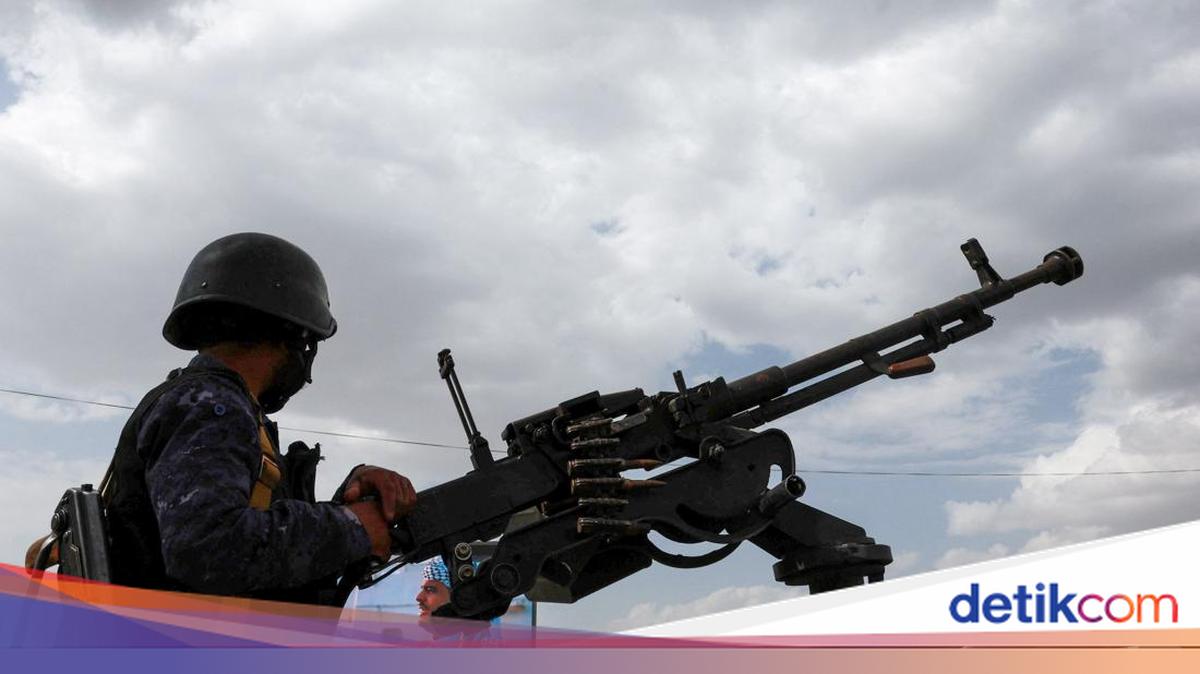
In recent weeks, Houthi cross-border attacks targeting Saudi territory have entered a qualitatively new phase. In addition to traditional border clashes and attacks on oil facilities, the strikes have increasingly targeted densely populated civilian infrastructure and vital transit hubs.
A critical turning point came on 10 October, when a ballistic missile struck King Khalid International Airport in Riyadh, killing 12 people and injuring more than 300. It was the deadliest military attack targeting Saudi Arabia in more than a decade. Houthi authorities issued a public warning advising civilians to avoid Saudi airports.
This stance suggests an intention to pursue a sustained offensive campaign rather than short-term tactical manoeuvres.
The dramatic escalation raises fundamental strategic questions about the dynamics of the regional conflict. During the ongoing military conflict in Gaza, Houthi forces have frequently launched long-range missiles and unmanned aerial vehicles (UAVs) towards Israeli targets. However, these attacks have caused very little strategic damage to Israel’s integrated defence architecture.
The key question is why the Houthis have now dramatically escalated their offensive posture towards Saudi Arabia. It remains to be analysed whether this military escalation, which came shortly after the signing of the Mecca Pact on 7 August by Turkey, Saudi Arabia and Pakistan, was coincidental or a calculated response to shifting regional alliances.
Israel as a symbol
To understand this operational shift, it is important to recognise that Houthi military action against Israel and Saudi Arabia serves fundamentally different political and strategic purposes. Attacks on Israel, launched from a distance of more than 2,000 kilometres against a layered air-defence system backed by the United States, have had minimal military impact. Their principal value, however, is political rather than operational.
By framing these long-range attacks around the Palestinian struggle, the Houthi movement has cultivated domestic, regional and wider Muslim-world legitimacy, positioning itself as the most resolute actor in the “Axis of Resistance” defending Palestinians. In this analytical context, Israel primarily serves as a symbol for the Houthis: an instrument for ideological posturing and the projection of soft power among a wider Arab public.
Saudi Arabia, by contrast, is a real adversary and an active participant in substantive negotiations. The extensive, porous shared border allows short- and medium-range ballistic missiles and UAVs to penetrate deep into Saudi territory. Although Saudi Arabia’s air-defence architecture has historically been configured primarily to mitigate long-range threats from Iran, interceptor stocks have been significantly depleted during the initial phase of regional hostilities. This structural vulnerability increases the Houthis’ asymmetric leverage.
Economic geography also plays an important role in amplifying this vulnerability. Following security disruptions in the Strait of Hormuz, more than 80 per cent of Saudi crude oil exports were rerouted to Red Sea ports and the Bab el-Mandeb Strait. As a result, Houthi forces are within direct military range of key Saudi logistics and economic nodes. The shift towards targeting Saudi infrastructure can therefore be seen as an attempt to exploit Riyadh’s principal strategic and economic vulnerabilities.
Bargaining politics
A key difference between the Houthi approach to Israel and to Saudi Arabia lies in the availability of political gains. Attacks on Israel have secured very few political concessions from Tel Aviv, but have won the movement sympathy across the Muslim world. Riyadh, by contrast, has significant strategic and financial resources that directly affect the Houthis’ viability and domestic governance.
At the negotiating table, the Houthis seek an official end to Saudi support for Yemen’s internationally recognised government, de facto recognition of Houthi authority as Yemen’s primary governing entity, the resumption of public-sector salary payments funded by state oil revenues, and substantial financial commitments for national reconstruction. While attacks on Israel serve ideological propaganda, military pressure on Saudi Arabia is an active bargaining tool designed to secure concrete economic and political concessions.
The deliberate targeting of critical civilian and economic infrastructure can be interpreted as part of a systematic cost-imposition strategy. Its main aim is not to achieve a conventional military victory over Saudi forces, but to impose such heavy political, economic and psychological costs that a prolonged conflict becomes unacceptable to Saudi leaders. This is intended to push Riyadh into negotiations from a position of compromise.
Testing the Mecca Pact
The timing of this escalation cannot be separated from broader geopolitical shifts in the Middle East and South Asia. The signing of the Mecca Pact on 7 August by Turkey, Saudi Arabia and Pakistan marked a significant step towards establishing a robust trilateral framework for defence, economic and diplomatic cooperation. From the perspective of Iran and its non-state regional allies, the pact represents a strategic realignment capable of changing the balance of power across a wider region.
In response to this emerging trilateral axis, intelligence and logistics channels between Tehran and regional proxies, symbolised by unscheduled transport flights such as those operated by Mahan Air, have intensified operational coordination. The escalation against Saudi Arabia can be understood not merely as a local Yemeni dispute, but as a multi-layered response intended to disrupt the consolidation of the Mecca Pact.
By demonstrating that Saudi Arabia’s core security remains vulnerable to asymmetric threats, the Houthis and their regional supporters are seeking to signal the limits of external security arrangements and project power against the emerging regional coalition.
In conclusion, the intensification of Houthi attacks on Saudi Arabia’s civilian and economic infrastructure represents a planned transition from symbolic power projection to direct coercive diplomacy. While attacks on Israel aim to reinforce the movement’s regional ideological standing, the military campaign against Saudi Arabia is designed to generate operational leverage, compel financial and political concessions, and challenge new strategic alliances such as the Mecca Pact.
As the security environment around the Red Sea and the Arabian Peninsula continues to evolve, the Houthi movement’s reliance on asymmetric warfare underscores persistent tensions between state-based security frameworks and the coercive capabilities of non-state actors.
Resolving the crisis will require addressing both local governance dynamics in Yemen and the broader geopolitical rivalries shaping the Middle East’s security architecture.
Source: jawawa.id (https://jawawa.id/newsitem/examining-the-escalation-of-houthi-attacks-on-saudi-arabia-1792126335)
Originally published by detikcom (https://news.detik.com/kolom/d-8709672/melihat-gejolak-serangan-houthi-ke-arab-saudi), translated from Indonesian