
Examining the Dangers of Mental Disorders and Their Impact on Indonesia's Economy
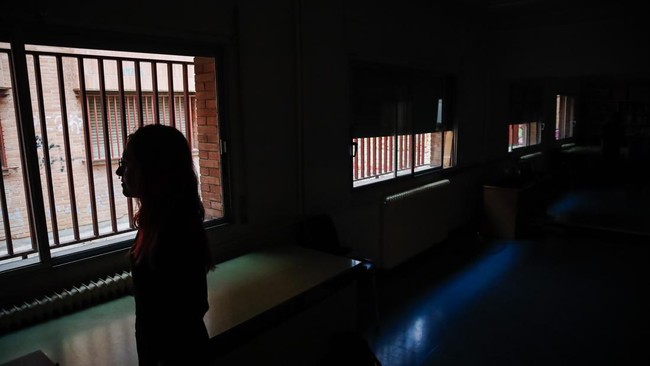
The author and co-founder of Attentive is deeply concerned about the current state of mental health among Indonesians. Data indicates that 68.7% of Indonesian adolescents and adults experience anxiety disorders (PAFI 2024). Additionally, 20% of the population, or approximately 54 million people, suffer from emotional mental disorders. This situation costs the Indonesian economy Rp463 trillion annually, equivalent to 2.1% of gross domestic product (GDP), with 80% of the losses stemming from reduced productivity.
This concern has spurred a collaboration between Triftin and Attentive. Recently, we held an educational webinar on healthy emotional regulation. Self-development books can aid the healing process by fostering new insights and perspectives, in addition to professional therapy. The author personally managed anxiety and PTSD (Post-Traumatic Stress Disorder) through a combination of therapy and reading books such as ‘I May Be Wrong’.
The author served as co-host for the webinar “Finding Inner Peace through ‘I May Be Wrong’” with Attentive’s Psychology Bureau on 8 February 2026. This event was more than just an online gathering; it became a pivotal moment for reflection and a source of inspiration in addressing the national epidemic of overthinking.
Speaker Disa Nisrina Listiani, an Adult Clinical Psychologist and Head of Psychology at Attentive, shared the story of Bjorn Natthiko Lindeblad, the author of ‘I May Be Wrong’. Bjorn achieved success as the youngest CFO at age 26. However, behind his brilliant career, he felt empty, like a robot. His mind was filled with overthinking: rumination on the past in the form of repeated regrets, and worry about the future filled with worst-case scenarios.
Bjorn’s turning point began with simple meditation. He learned to track his breath to create distance from wild thoughts. The book ‘Zen and the Art of Motorcycle Maintenance’ opened his eyes: “The peaceful part within us, which is calm and undisturbed by thoughts, is what is valuable.” Gradually, meditation helped him hear his inner voice. He resigned from his illustrious career.
Bjorn then tried various professions: dishwasher, volunteer on a mental health hotline, literature student, UNFPA economist in India. He travelled the world for a year, hiking mountains for a month.
Finally, in 1992, he joined Wat Pah Nanachat, a forest monastery in Thailand. As the monk Natthiko Bhikkhu for 17 years, he woke at 3:30 a.m. for meditation, ate once a day from villagers’ alms, without money or technology. Life consisted only of simplicity, ethics, and meditation. Initially, it was difficult: he often felt sleepy and gave up three times before completing a one-month course.
From Bjorn’s story, Disa taught webinar participants one important lesson: it is not about eliminating stress entirely, but learning to face it adaptively. She introduced Grounding + Coping in three stages: directing sensory attention, choosing strategic responses, and reframing experiences. The core philosophy of “I may be wrong” is to release rigid beliefs, accept uncertainty, and cultivate compassion for oneself and others.
The webinar gathered enthusiastic participants eager to learn healthy emotional regulation to reduce anxiety. Disa explained Grounding as a simple “earthing” technique using the five senses: see five things around you, touch four objects, hear three sounds, smell two aromas, taste one flavour. This technique shifts focus to the present, helping to clear the mind.
Then, Coping in three adaptive stages:
Grounding: Stabilise panic through the senses (the 5-4-3-2-1 technique).
Response: Emotion-focused (journaling or music to manage feelings), problem-focused (planning and time management to solve issues).
Reframing: Apply “I may be wrong” to release rigid beliefs, accept uncertainty, and grow self-empathy and empathy for others.
The highlight of the event was a safe space that proved invaluable. Participants shared personal experiences with full openness. They asked Disa questions directly, feeling touched and able to relate to the topic. This is where the webinar truly came alive: ordinary people supporting each other, learning together to overcome everyday anxiety.
Free webinars like this open eyes to the urgent need for affordable mental health access. The government could start with concrete steps, such as subsidising self-development books through collaborations with various bookstores or encouraging the purchase of second-hand self-development books to make them accessible to all levels of society.
The government could also subsidise therapy costs for those suffering from anxiety, depression, and other mental disorders. Organisations like Attentive are ready to collaborate to expand reach in addressing various mental issues while boosting long-term productivity.
This investment is not a burden but a way to save losses that could reach Rp463 trillion per year. The result will be a strong human resource base ready to realise Indonesia’s Golden Vision 2045. Mental health is not a luxury. It is the foundation of a productive and happy nation.
Source: jawawa.id (https://jawawa.id/newsitem/examining-the-dangers-of-mental-disorders-and-their-impact-on-indonesias-economy-1775029864)
Originally published by CNBC Indonesia (https://www.cnbcindonesia.com/opini/20260401140012-14-723191/mencermati-bahaya-gangguan-mental-dan-efeknya-terhadap-perekonomian-ri), translated from Indonesian