
Examining Sociopreneurship Policing
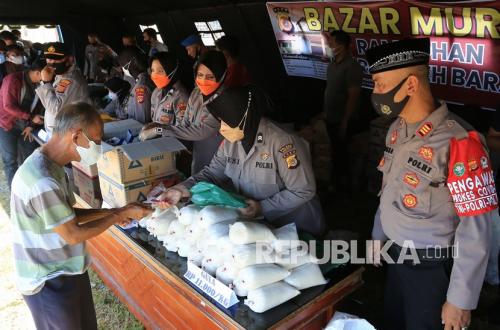
Crime cannot always be explained solely from the perspective of legal violations. In many cases, criminal acts are also linked to broader socio-economic issues such as poverty, unemployment, weak access to jobs, low skills, social stigma, and limited space for community empowerment. Therefore, crime prevention is not sufficiently achieved only through law enforcement, supervision, or prosecution, but must also touch the social roots that can push a person into the circle of criminality.
In this context, the concept of sociopreneurship policing becomes relevant to study as a policing approach that is more preventive, participatory, and empowering. This concept combines police science, community policing, social entrepreneurship, social crime prevention, and entrepreneurial policing. The goal is to build a policing model that is not only present after a crime occurs, but also helps strengthen the socio-economic resilience of the community so that the potential for criminal acts can be reduced from the root.
Conceptually, sociopreneurship policing can be understood as a policing approach that uses social entrepreneurship as an instrument to create social value, strengthen collaboration between the Indonesian National Police (Polri) and the community, and prevent criminal acts where one of the driving factors is socio-economic problems. This approach places Polri, the community, MSME actors, local communities, the private sector, academics, and relevant stakeholders in an equal, mutually reinforcing relationship oriented towards the creation of social order.
This idea does not position Polri solely as business actors, but as social actors who can take a strategic role in community empowerment. This role can be carried out in two forms. First, Polri members who have skills, interest, and concern in the field of social entrepreneurship can initiate or run social entrepreneurial activities that have an impact on the community. Second, Polri members can also become drivers, connectors, and facilitators to encourage the community to build productive business activities, particularly at the MSME level.
Thus, sociopreneurship policing does not oblige every Polri member to become an entrepreneur. This concept emphasises that for Polri members who have the capacity, network, concern, and passion in the field of social entrepreneurship, this space can be directed into a broader form of social service. This role must still be carried out within the corridors of rules, professional ethics, integrity, transparency, and free from conflicts of interest. Consequently, social entrepreneurship is not understood as a personal economic interest alone, but as a means to create social benefits and strengthen community resilience.
Theoretically, sociopreneurship policing departs from several foundations of thought. Police science provides a framework for understanding the relationship between police, community, security, order, and crime prevention. Community policing emphasises the importance of closeness, partnership, and community participation in maintaining security. Social entrepreneurship emphasises the creation of social value through sustainable productive activities. Entrepreneurial policing provides space for the police to be more innovative, adaptive, and able to read opportunities for solving social problems. Meanwhile, social crime prevention asserts that crime prevention needs to be carried out by improving the social conditions that are risk factors for criminality.
From an analytical perspective, the strength of sociopreneurship policing lies in its ability to connect crime prevention with socio-economic empowerment. If some criminal acts are influenced by economic pressure, then opening access to work, strengthening skills, mobilising MSMEs, and building productive business activities can become part of the prevention strategy. In this approach, the community is not only placed as an object of guidance, but as a subject that has the potential to be empowered and actively involved in creating social order.
At the practical level, the spirit of sociopreneurship policing can be seen in various forms of social service by Polri members in several regions. For example, a Polri member who developed a waste processing business to help the economy of residents, a Polri member who opened a humanitarian service space for people with mental disorders, and a Polri member who established a free school or Islamic boarding school for children from underprivileged families. These practices show that the presence of Polri members in the community can transcend formal functions, namely by helping to present real social solutions.
However, this approach also requires clear boundaries. Sociopreneurship policing must remain within the framework of rules, institutional ethics, accountability, and supervision. Socio-economic collaborations involving Polri members must not create conflicts of interest, abuse of authority, or the impression of commercialisation of office. Therefore, the emphasis of this concept is not on the business activities of Polri members, but on the social impact, community empowerment, job creation, and contribution to crime prevention.
The concept of sociopreneurship policing was studied by the author in a doctoral dissertation at the Doctoral Programme in Legal Science, Sultan Agung Islamic University (UNISSULA), Semarang. The author, Kompol M Fadli Amri, is a Polri member serving at SSDM Polri Headquarters and an alumnus of the Master of Police Science programme at STIK-PTIK.
Source: jawawa.id (https://jawawa.id/newsitem/examining-sociopreneurship-policing-1781672028)
Originally published by Republika (https://analisis.republika.co.id/berita/tgrd4m393/menelaah-sociopreneurship-policing), translated from Indonesian