
Examining Rumah Sandi, the Silent Witness to Indonesia's Guerrilla Struggle Against the Dutch
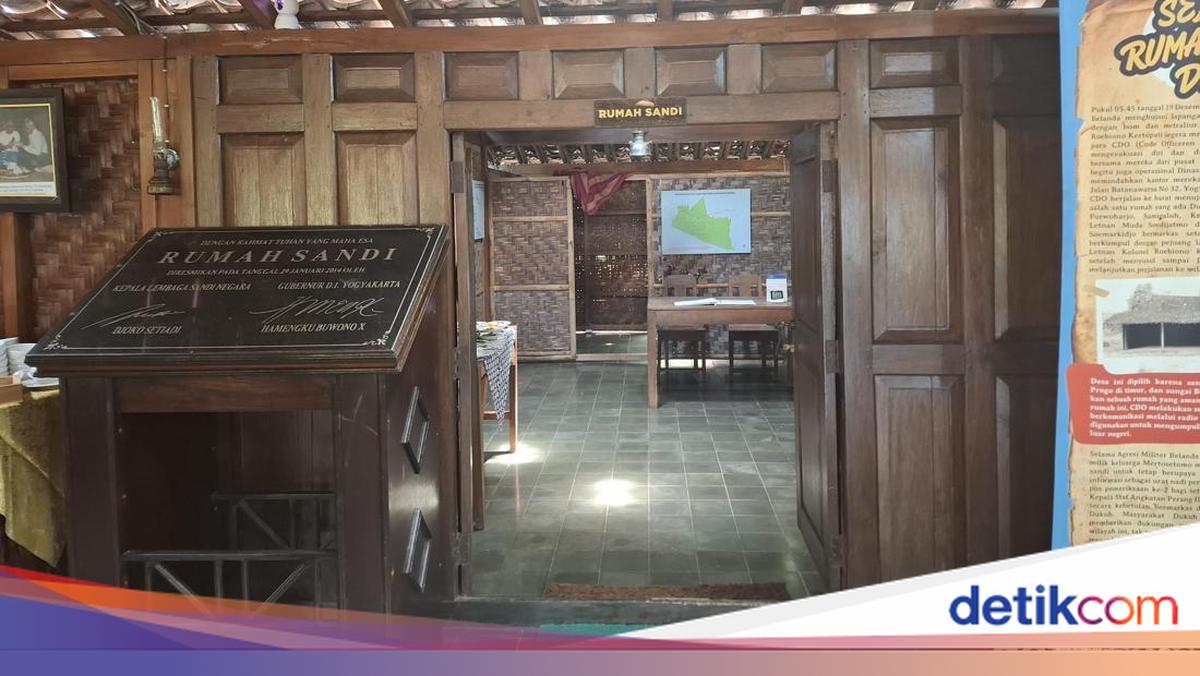
Behind the Menoreh Hills in Dusun Dukuh, Kalurahan Purwoharjo, Kapanewon Samigaluh, Kulon Progo, lies a simple house that stands as a silent witness to the Republic of Indonesia’s struggle to defend its independence during the Dutch Military Aggression II. It is Rumah Sandi, which became the emergency communication base for guerrilla cryptographers at that time. The joglo-style building, mostly constructed from wood, once bore witness to Indonesia’s historical struggle. When the Dutch attacked Yogyakarta in December 1948, the cryptography office located in Kotabaru, Yogyakarta City, was no longer safe. “Historically, this was used as an emergency cryptography room during the Dutch Military Aggression II. Because the Code Service office in Kotabaru was attacked, the cryptographers moved westward to save themselves,” said the Head of the Yogyakarta Cryptography Museum, Setyo Budi Prabowo, when met at the location on Tuesday (31/3/2026). Before heading to the Rumah Sandi location, the cryptographers first consolidated in the Dekso area, Kalibawang, before dispersing to carry out their duties. Then, one of the personnel found the house in Dusun Dukuh, which was deemed strategic. “Consolidation was carried out in Dekso, then tasks were divided. Some accompanied the leadership, and some searched for a safe location for cryptography operations. Finally, a house belonging to locals was found not far from the military radio, and it was used for encoding and decoding activities,” Setyo continued. Setyo said the role of the house was not just a place to hide. At Rumah Sandi, various messages were sent to various regions, including abroad. “To send and receive news, all confidential information was first encoded before being sent via radio. From here to Playen (Gunungkidul), then relayed to West Sumatra, even to our representatives in New Delhi,” he explained. Not only that, Setyo explained that Rumah Sandi also served as a filtering point for anyone who wanted to meet military leaders. “If someone wanted to meet the Deputy Chief of Staff of the Armed Forces, they were first checked in Dekso. Then here, it was checked whether they were pro-Republic or not,” he said. Setyo added that the existence of the house was indeed difficult for the Dutch to detect. However, Rumah Sandi remained safe during that period. “The Dutch did know this area was a base, but the exact location was unknown; this location was hidden. The Dutch also monitored communications, so they had to be secured with cryptography to avoid being read,” he stated. Now, Rumah Sandi is still well-maintained and open to the public. According to Setyo, this place serves as an important reminder of the struggle of the behind-the-scenes fighters in defending Indonesia’s independence. “The struggle was not only with weapons, but also through secret communications guarded by the cryptographers,” he concluded.
Source: jawawa.id (https://jawawa.id/newsitem/examining-rumah-sandi-the-silent-witness-to-indonesias-guerrilla-struggle-against-the-dutch-1774950811)
Originally published by detikJogja (https://www.detik.com/jogja/berita/d-8423455/menilik-rumah-sandi-saksi-bisu-gerilya-ri-merdeka-dari-belanda), translated from Indonesian