
Examining Fiscal Ease for Marketplace Traders
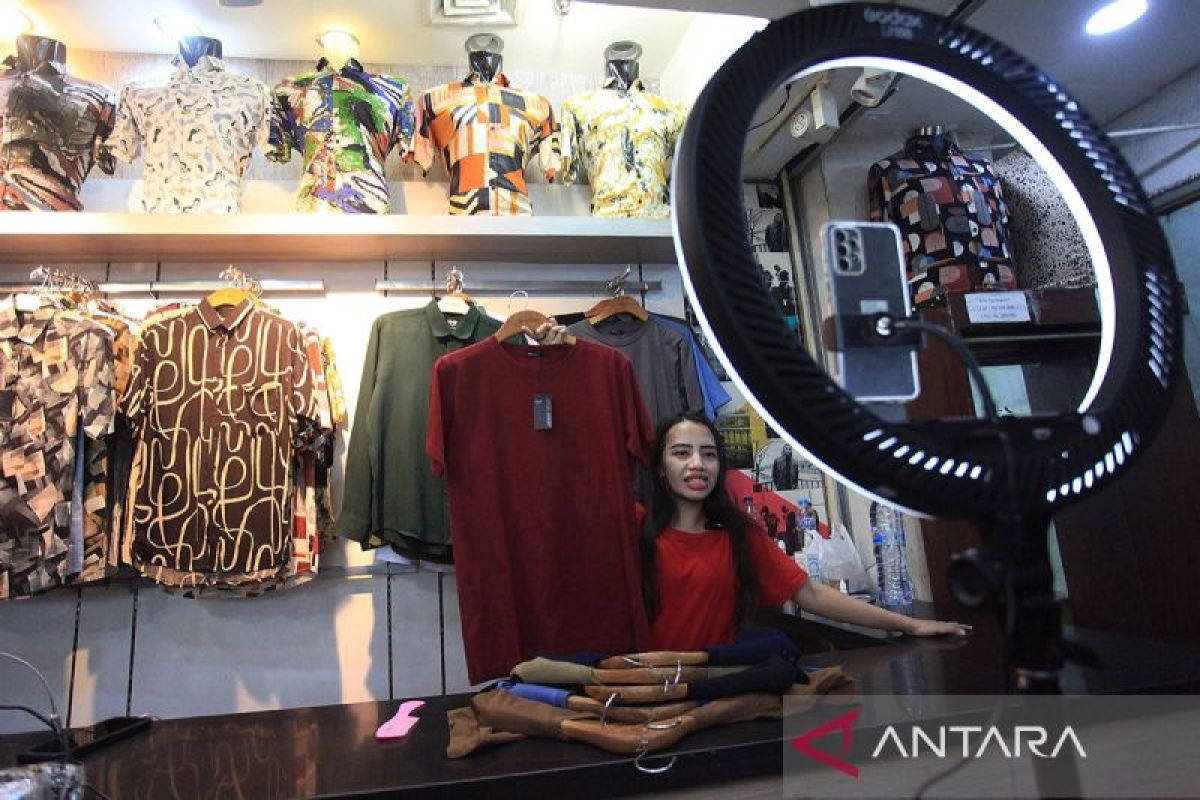
The development of digital trade has transformed business practices. Today, individuals can open shops without physical buildings, sell via mobile phones, accept electronic payments, and reach consumers across various regions through online marketplaces.
Currently, marketplaces are not merely meeting points for sellers and buyers but have become an essential part of the national trade ecosystem in the digital era. This shift requires tax administration to adapt accordingly. As transactions move digitally, fulfilling tax obligations becomes increasingly possible through systems integrated with the transactions themselves.
The issuance of Minister of Finance Regulation (PMK) Number 37 of 2025, regarding the appointment of third parties as income tax (PPh) collectors, is part of this transformation. Starting 1 October 2026, the collection of Article 22 Income Tax on the income of domestic traders through marketplaces will be implemented via four officially appointed electronic commerce providers: Shopee, Tokopedia, Blibli, and Lazada.
To understand this policy proportionally, it must be noted that PMK 37/2025 does not create a new tax for traders; the obligation for Income Tax on business income already existed. What has changed is the fulfillment mechanism: whereas it was previously handled by the traders themselves, collection will now be performed by the marketplaces during the transaction.
Consequently, marketplaces are taking on a new role in tax administration, acting not only as trading spaces but also as part of a comprehensive tax administration reform, covering the collection, deposit, and reporting of traders’ Income Tax.
Digital trade urgency is linked to the massive scale of digital trade activity in Indonesia. The E-Conomy SEA 2025 report (Google, Temasek, Bain & Company) estimates Indonesia’s digital economy GMV will nearly reach US$100 billion in 2025, growing 14 per cent from the previous year. E-commerce is the largest sector, valued at approximately US$71 billion.
This growth does not only come from conventional online stores. Transactions through video commerce are also growing rapidly, with transaction volumes increasing by up to 90 per cent annually to a total of 2.6 billion transactions, while the number of sellers and online stores within this segment has risen by 75 per cent to around 800,000 entities.
Furthermore, data shows the significant value of Indonesian marketplace transactions: rising from Rp453.75 trillion (2023) to Rp512.06 trillion (2024) and projected at Rp589.08 trillion (2025). In the period of January–June 2026, transaction value reached approximately Rp374.28 trillion.
These figures demonstrate that marketplaces have become vital economic nodes. Millions of transactions occur within a digital ecosystem that leaves more structured data records compared to conventional trade. Therefore, making marketplaces tax collectors is a logical consequence of the increasing integration of economy and technology. Transaction recording systems can simultaneously support tax administration functions.
Under the new mechanism, marketplaces will collect Article 22 Income Tax at a rate of 0.5 per cent of the gross turnover stated in billing documents, excluding VAT and Luxury Goods Sales Tax (PPnBM). The tax is due when payment is received by the marketplace.
For traders, this change brings significant administrative benefits. They will no longer need to manually calculate and deposit taxes for transactions subject to collection, as the marketplace system will perform this function based on occurring transactions.
This simplicity is particularly important for small business owners with minimal administrative resources. For micro-enterprises, the time and cost of understanding tax administration can be a burden. With parts of the process integrated into the marketplace, administrative hurdles are reduced.
Nevertheless, ease does not mean responsibility is lost. Traders must still ensure that tax data is correct, such as NPWP/NIK and correspondence addresses, and submit statements if they meet certain turnover criteria or provide a Certificate of Tax Exemption (SKB) if they possess one.
Interestingly, a statement for turnover up to Rp500 million can be used for all marketplace accounts owned by a trader with the same NPWP/NIK. This means traders do not need to create separate statements for every online store or platform.
This indicates that the policy design is oriented not only towards state revenue but also towards administrative simplification.
Another important aspect of this tax administration reform is the protection provided to small-scale businesses. Individual taxpayers who meet the requirements and have a gross turnover of up to Rp500 million per tax year will not be subject to Article 22 Income Tax collection by marketplaces, provided they submit a statement in accordance with the regulations. Thus, this automatic mechanism does not apply to all traders immediately.
This provision is vital because tax digitalisation should not add new burdens to emerging businesses. Digital systems can provide simplified treatment according to the characteristics and scale of the business.
If a trader’s turnover exceeds Rp500 million during the current year, the trader is obliged to submit a notification of this change. The collection of Article 22 Income Tax by the marketplace can then proceed from the following period according to the regulations. The Directorate General of Taxes (DJP) provides examples where if the combined turnover across several marketplaces exceeds the limit, the statement is sufficient based on the total gross turnover.
From a public policy perspective, this mechanism signifies a shift from full self-administration towards collaborative administration, with marketplaces becoming part of the state’s administrative chain.
This shift offers benefits beyond merely facilitating payments. Collecting at the point of transaction reduces the risk of forgetting to remit payments.