
Ex-Lurah's Scheme to Illegally Lease Village Land: Plotted Like a Housing Estate
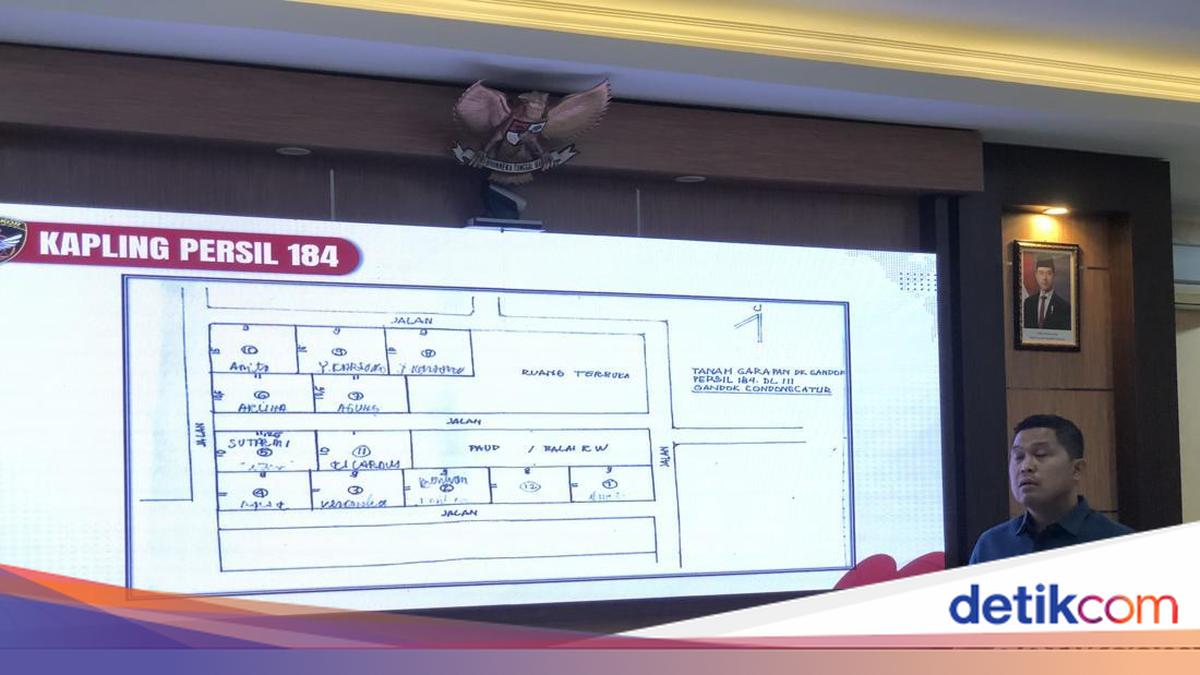
Former Condongcatur village head Reno Candra Sangaji, a suspect in a corruption case involving the misuse of village treasury land in Gandok Hamlet, Sleman, illegally leased the land to individuals. Houses plotted like a housing estate now stand on the land.
The Special Criminal Investigation Directorate of the Yogyakarta Regional Police explained that the land was leased by Reno on a personal basis. The lessees subsequently built private residences on the plots.
‘Currently, 17 residential buildings have been erected on the land. The users dealt directly with Mr R,’ said AKBP Haris Munandar Hasyim, Head of Sub-Directorate 3, during a press conference at the Yogyakarta Regional Police Headquarters on Tuesday.
‘The modus operandi involved long-term leases, some up to five years. In reality, the land was not designated for residential use as it was not originally intended for that purpose,’ he added.
Haris noted that the rental fees varied based on the duration and size of the land leased, though he declined to specify the exact prices. ‘We need to verify the precise figures. The rental values differed according to the land area. We will synchronise the data later,’ he stated.
He confirmed that fees ranged from IDR 50 million to IDR 100 million per person and that agreements existed, with the suspect promising the leases could be passed down through generations. Currently, 10 families occupy the 17 plots.
All rental payments were pocketed personally by Reno. Once the case entered the investigation phase, Reno returned all the money directly to the individual lessees. ‘When we conducted the investigation, the money was returned to the lessees, whereas it should have been deposited into the village treasury account. He was also at fault because the land transaction lacked gubernatorial permission,’ Haris explained.
The total amount collected from the 17 lessees was approximately IDR 1.3 billion. The funds were returned directly to the lessees rather than to the state.
Regarding the lessees, Haris explained they were initially unaware that leasing village treasury land for housing was illegal. They felt secure because the person leasing the land was a village official. ‘That is correct; they felt safe because the lessor was the village head, a village official,’ he said.
‘They did not know initially. That is why we, together with the Land and Spatial Planning Agency, are conducting outreach to villages and the community to prevent residents from suffering losses. Ultimately, they are victims,’ he stated.
Following the case’s emergence, questions arose about the lessees’ future. Haris said authorities are awaiting the court’s decision. ‘Some houses are now empty, some are closed. These are private residences, not boarding houses,’ he clarified.
‘We are waiting for the court ruling. Perhaps due to humanitarian considerations, we are awaiting the decision regarding the assets, whether they will be confiscated for the state or otherwise. We will follow up on the buildings that have already been constructed there,’ he added.
Meanwhile, observations at the site showed several grand houses standing on the village treasury land in Gandok Hamlet, along with some unfinished structures. The area appeared deserted, with the completed houses locked up and seemingly unoccupied.
Source: jawawa.id (https://jawawa.id/newsitem/ex-lurahs-scheme-to-illegally-lease-village-land-plotted-like-a-housing-estate-1782809494)
Originally published by detikJogja (https://www.detik.com/jogja/berita/d-8553737/modus-eks-lurah-concat-sewakan-tanah-kas-desa-ilegal-dikaveling-ala-perumahan), translated from Indonesian