
Ex-Apple Employee Now Building Chinese iPhone Replacement
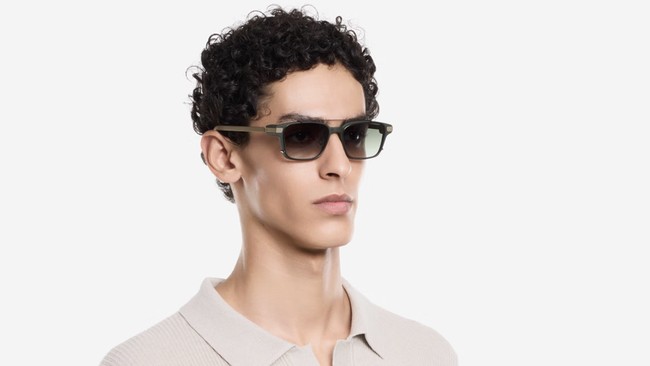
Chinese smart glasses manufacturer, Even Realities Technology, has attained unicorn status after securing funding worth US$150 million, or approximately Rp2.7 trillion. The pre-Series B funding round was joined by several major investors, including Meituan and Tencent, pushing the company’s valuation past the US$1 billion mark.
The founder and CEO of Even Realities, Will Wang, is a former Apple employee who worked at the company from 2016 to 2018. During his tenure at Apple, he was involved in the development and mass production of the Apple Watch and iPhone.
Wang is now targeting the market for artificial intelligence (AI) based wearable devices, a sector currently dominated by Meta Platforms. Smart glasses are frequently touted as potential smartphone replacements in the future. The industry is expanding rapidly, with several tech giants such as Meta, Apple, and Snap actively developing the technology.
Based in Shenzhen, Even Realities Technologies stated that the fresh capital will be used to develop its next-generation smart glasses platform, deepen AI integration, expand global operations, and accelerate product innovation.
Even Realities is positioned to compete in the global AI device arena alongside Meta Platforms. In China, Alibaba also launched its Quark AI glasses in February.
Founded in 2023, Even Realities launched its Even G2 smart glasses late last year. The product features a larger display within a lighter frame. Alongside this, the company introduced the Even R1 smart ring, which can control the display on the Even G2.
The company noted that the development vision for the Even G2 was largely inspired by Wang’s experiences working at Apple.
Unlike Meta’s Ray-Ban line, which is equipped with cameras, the flagship Even G2 glasses do not feature a camera or recording device. Instead, the device displays notifications, navigation, and live translations via a heads-up display embedded in the lenses. This approach was chosen to prioritise user privacy.
“The future is no longer about taking out a device every time we need information. The future is having the right information available exactly when needed, while remaining fully present in the world around us,” said Wang, as quoted by CNBC International.
Even Realities revealed that more than half of its users are located in the United States, and approximately 80% of its software developers are also based there.
Smart Glasses Market Surges
Meanwhile, the global smart glasses market continues to show rapid growth. According to a report from research firm IDC, global smart glasses shipments surged 167% year-on-year in the first quarter, reaching 2.25 million units.
Meta continues to lead the market with a share of nearly 70%, followed by Shenzhen-based augmented reality manufacturer RayNeo Technology and Chinese electronics giant Xiaomi.
IDC noted that this growth is driven by the wider adoption of display-less smart glasses, particularly due to the success of the Meta and Ray-Ban collaboration. Looking ahead, IDC predicts that global smart glasses shipments, including devices with displays and virtual reality (VR) functions, will more than double to reach 50 million units by 2030.
Since its inception, Even Realities has been heavily funded by Chinese venture capital and private equity firms, including CDH Investment, Monolith Management, and CVC Capital. In January, the company also secured undisclosed funding from Hong Kong-based Unicorn Capital Partners and Cyanhill Capital.
In the domestic market, Even Realities’ primary competitor is Rokid, which has a valuation of US$2.58 billion according to PitchBook data, following a US$522 million funding round in March. Meanwhile, RayNeo, an affiliate of TCL Electronics, has a valuation of approximately US$239.9 million.