
EVs Increasingly Prevalent in Beijing, Yet Blue Skies Remain a Challenge
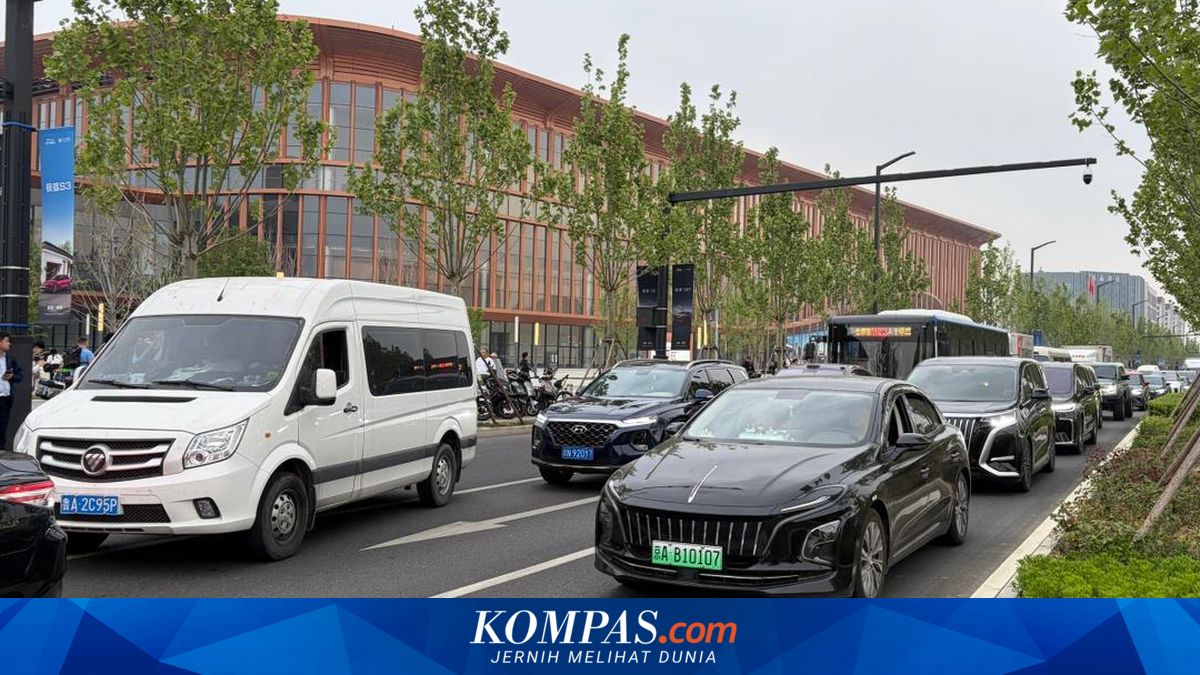
BEIJING, KOMPAS.com – Beijing’s transformation over the past two decades is often cited as one of the most tangible examples of successful air pollution control worldwide. From a city once synonymous with thick smog, China’s capital now more frequently displays blue skies. However, amid the increasingly widespread era of electric vehicles, Beijing’s air quality still holds a story that is not entirely clean. “On my smartphone, Beijing’s AQI (Air Quality Index) shows 74, but in Shanghai it’s 52. In Wuhu, which is a village, the AQI there is 44,” said Xiao Heng to Kompas.com (24/4/2026). According to him, these differences can be influenced by many factors, including industrial activities and the number of vehicles. He assesses that Shanghai appears more consistent in pollution control, partly through policies encouraging electric vehicle use. In contrast, he views Beijing as not as strict as Shanghai in implementing environmental policies, although it still has regulations. However, this situation cannot be simplified to just one factor. Meanwhile, Zhang Jun, a taxi driver in Beijing, experiences the city’s air conditions directly on the streets every day. He says that air quality lately has not always been stable. According to him, vehicle restriction policies have indeed been implemented, but their effects are not always significantly felt amid the extremely dense number of vehicles. “I think this city has too many cars. Traffic jams can happen almost every day,” he said. Data from Local Governments for Sustainability (ICLEI) records that between 1998–2017, the number of vehicles in Beijing rose by 335 percent, while GDP surged by more than 1,000 percent. This surge once significantly worsened air quality. The peak occurred in 2013, when Beijing’s PM2.5 levels reached 101.56 micrograms per cubic metre, a level that severely limited outdoor activities. Masks became a common sight, while respiratory disorder cases increased.