
Evidence the US Was Battered by Iran: Economy Bleeds, Trump on the Brink
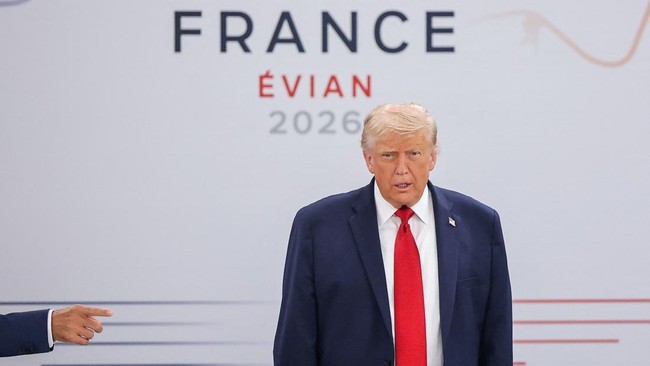
The 100-day war between the United States (US) and Iran has finally entered a ceasefire phase following the signing of a new memorandum of understanding (MoU). Although further negotiations over the next 60 days are just beginning, President Donald Trump has been quick to claim an absolute victory before his public.
Through his personal social media platform, Trump provocatively wrote in capital letters, “IT’S A TIE!” He flaunted claims that oil is flowing again, the stock market is soaring, jobs are hitting records, and Tehran’s nuclear ambitions have been locked down for global security. However, objective data on the ground tells a different story. Behind the unilateral victory narrative, the Pentagon is reportedly bleeding, suffering massive financial losses.
According to an initial analysis by the Center for Strategic and International Studies (CSIS), the direct costs incurred by the US Department of Defense to finance this conflict have reached US$40 billion, equivalent to Rp712 trillion. This figure is just the tip of the iceberg.
“That value covers ammunition, destroyed combat equipment, and base damage. However, it does not include internal operational costs that have already consumed a portion of the Pentagon’s routine fiscal year 2026 budget, which totals US$1 trillion (Rp17,800 trillion),” said CSIS Senior Adviser Mark Cancian, as quoted by CNN International on Monday (22/6/2026).
Washington’s real losses became even clearer after two internal government sources leaked that the Pentagon has now submitted an emergency bailout request, or supplemental funding, of US$80 billion (equivalent to Rp1,424 trillion). The majority of this staggering request is intended to restore damaged US military base facilities in the Middle East and cover other budget items drained during the war.
Tomahawk Missiles Burn a Hole in the Pocket
The largest US expenditure during the 100-day conflict centred on high-cost advanced munitions. CSIS’s Mark Cancian detailed that the US military was heavily reliant on state-of-the-art long-range weapons with exorbitant price tags. For example, a single Tomahawk missile costs approximately US$2.5 million (Rp44.5 billion). During the conflict with Iran, the US reportedly launched around one thousand Tomahawk missiles. Calculated solely on the Tomahawk missile expenditure, the US burned through US$2.5 billion or Rp44.5 trillion.
This aggressiveness led to a depletion of US strategic weapons stockpiles. The logistics supply became so critical that Trump was forced to activate the Defense Production Act in early June to compel domestic companies to instantly ramp up weapons production.
It was not just the Pentagon; civilian agencies such as the US Department of Homeland Security and the Department of Veterans Affairs also suffered losses of up to US$135 million (Rp2.4 trillion), of which Rp2.9 trillion (US$165 million) was purely triggered by the surge in fuel prices during military operations.
Domino Effect on US Citizens’ Wallets
In the real sector, Trump’s claims of economic success contrast sharply with the condition of the public’s pockets. The war drained US emergency oil reserves to their lowest level since 1983. According to data from Kpler, the world lost up to 1.15 billion barrels of crude oil supply due to the blockade in the Middle East over nearly four months.
The impact was immediately felt at petrol stations. Gasoline prices in the US skyrocketed from an average below US$3 per gallon to above US$4 per gallon during the raging conflict. According to the Brown University cost of energy tracker, the average US household had to pay an extra US$253 (approximately Rp4.5 million) for energy expenses compared to normal conditions without war.
The logistics and food sectors fared worse due to the surge in diesel fuel prices, which briefly breached US$5 per gallon from an initial position of US$3.80. Cumulatively, US citizens and businesses had to fork out an additional US$27.1 billion (Rp482.3 trillion) just to cover the diesel price difference. This figure does not yet include the domino effect of soaring fertiliser prices, which threatens the long-term sustainability of the US agricultural sector.
Inflation Rages, Trump’s Rating Plummets
This chain of economic losses culminates in one frightening spectre: inflation. The latest data from the Bureau of Labor Statistics (BLS) shows annual US inflation creeping above 4% for the first time in three years. This figure is double the target set by the US central bank, the Federal Reserve (The Fed).
Due to stubborn inflation, The Fed, under the leadership of new Chairman Kevin Warsh—who was appointed by Trump—has opted to keep interest rates high and is preparing for further monetary tightening later this year. Consequently, the US housing market has frozen as 30-year mortgage rates remain elevated at 6.47%, burying the American working class’s dream of homeownership.
High inflation has demonstrably eroded the real wage gains of workers in April and May. This explains why public satisfaction with Trump’s performance has plummeted to a worrying psychological level of 37%, according to the CNN Poll of Polls. A Fox News poll also confirmed public dissatisfaction, with only 31% of registered voters approving of Trump’s economic policies and just 35% supporting his handling of the Iran crisis.
Source: jawawa.id (https://jawawa.id/newsitem/evidence-the-us-was-battered-by-iran-economy-bleeds-trump-on-the-brink-1782179463)
Originally published by CNBC Indonesia (https://www.cnbcindonesia.com/news/20260622161337-4-744703/bukti-as-babak-belur-lawan-iran-ekonomi-boncos-trump-di-ujung-tanduk), translated from Indonesian