
Evidence-based policies for better toll roads
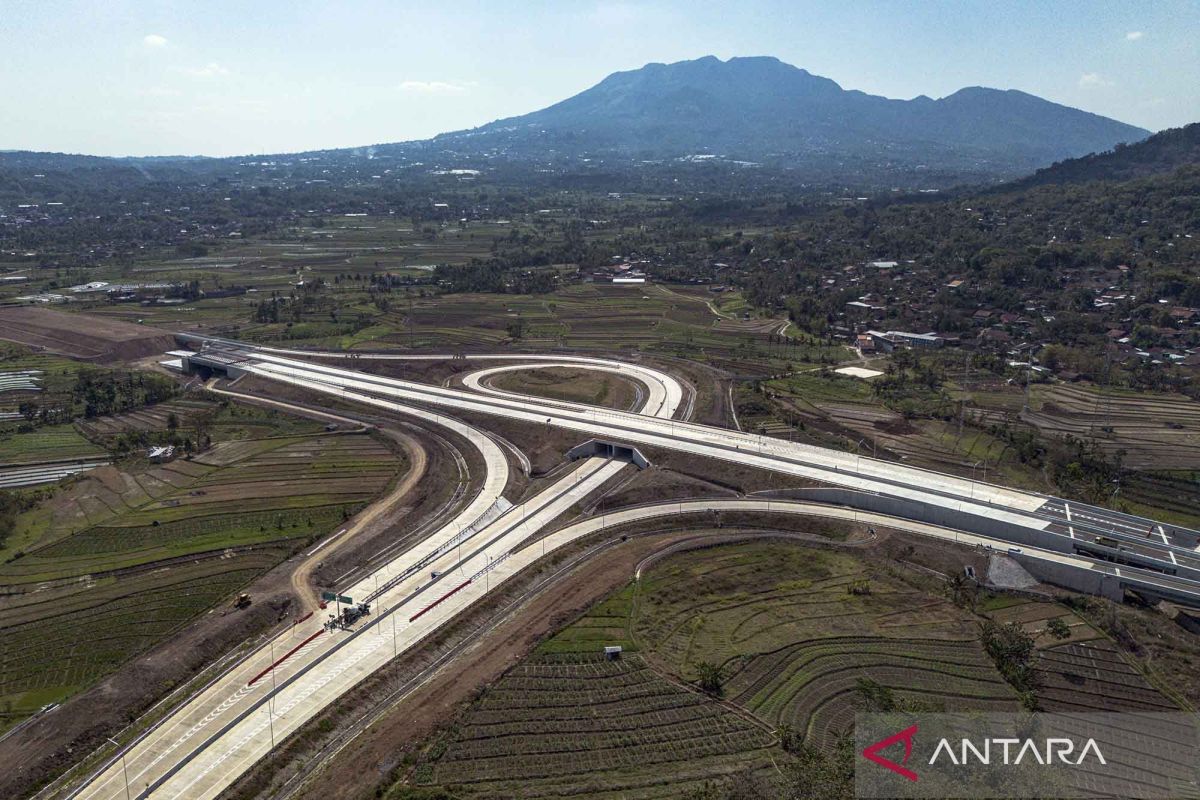
Jakarta (ANTARA) - Indonesia is at a critical crossroads in toll road infrastructure development. On one hand, the investment requirement is immense: the plan to construct 2,461 kilometres of new toll roads by 2029 requires approximately Rp725 trillion.
On the other hand, the government is preparing various new regulations to improve Minimum Service Standards (SPM), the regulation of Rest and Service Areas (TIP), the utilisation of Toll Road Right-of-Way (Rumija), the integration of business operations, and the implementation of Multi-Lane Free Flow (MLFF).
All these regulations share a noble objective: to enhance the quality of excellent service to the public. However, every policy carries consequences. The question is not whether we need to improve our service standards, but how we do so in a fair, transparent, and sustainable manner for all parties: the government, business actors, and toll road users (the public).
Within the framework of public policy thinking, the question of “how” is often more important than the question of “what”. This is because good policy is determined not only by noble goals but also by correct processes. This is the result of a dialectic between data, analysis, participation, and evaluation—a result that is not a finished product, but a process that must be nurtured.
First, the public interest. The community requires toll road services that are safe, comfortable, and affordable. They pay tolls and are entitled to services that meet commensurate standards. This interest must be the top priority.
Second, the interest of business actors. Toll Road Business Entities (BUJT) require business certainty. They invest large amounts of capital with long payback periods. Without certainty, they will be reluctant to invest, and road users will ultimately suffer. Conversely, infrastructure development risks becoming stagnant or falling behind other nations.
Third, the interest of the government. The government needs to strive for an extensive, connected, and high-quality toll road network without excessively burdening the state budget. However, the government also faces limitations in capacity, time, and resources.