
Evidence-Based Communication Key to Successful Forestry Policy
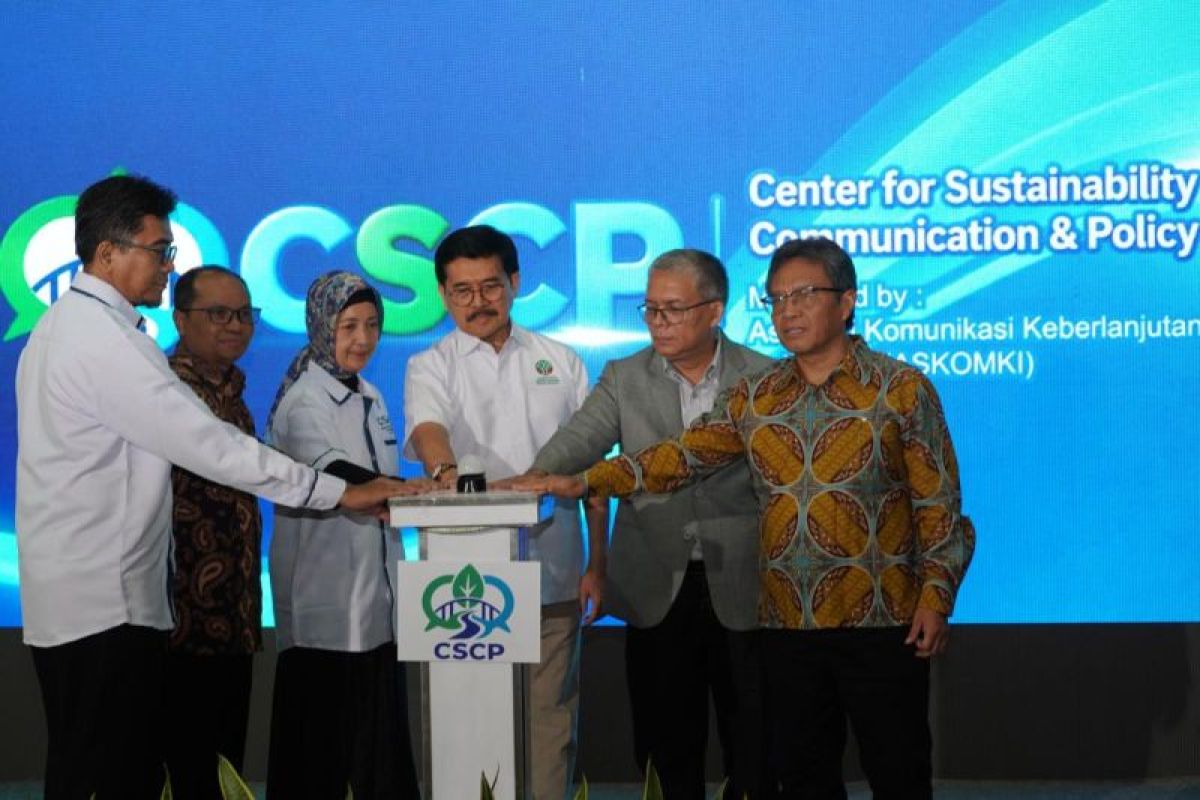
Jakarta (ANTARA) – Senior Adviser to the Forestry Minister Bambang Soepijanto stressed that evidence-based communication and active community involvement are essential to the success of forestry policy.
Communication, he said in a statement in Jakarta on Friday, needs to be part of the process from identifying issues and formulating policy through to implementation and evaluation. It should also provide a means of hearing public concerns and improving policy.
“Information that is easy to understand and relevant to conditions on the ground will strengthen public trust. The success of communication should therefore be measured by whether it builds public understanding, capacity and participation in protecting forests,” he said at the Sustainability Communication Expert Dialogue and the launch of the Center for Sustainability Communication and Policy (CSCP) Indonesia.
Bambang welcomed the launch of CSCP Indonesia and said he hoped it would bring together scientific knowledge, policy and field experience to strengthen collaboration among government, academics, businesses, the media and communities, including in support of Indonesia’s FOLU Net Sink 2030 target.
Such collaboration is expected to improve public understanding and produce policies and actions that benefit forest conservation and community welfare.
Agus Justianto, a member of the advisory board for Indonesia’s FOLU Net Sink 2030, said achieving environmental sustainability in line with the target required an effective communications strategy. This would help ensure that policies and programmes to control emissions from the forestry and land-use sectors were understood and supported by the public.
Communication, he said, should do more than relay government targets; it should also explain the benefits and the public’s role in achieving them.
“Consistent implementation of strategies and programmes, together with collaboration among government, businesses, academics, the media and communities, is essential to achieving this,” he said.
CSCP Indonesia chair Trisia Megawati Kusuma Dewi said the centre was a think tank and collaborative platform for sustainability communications, managed by the Indonesian Sustainability Communication Association (Askomki).
“The centre was established to bridge science, policy and society through science-based communication, particularly on environmental, social and governance (ESG) issues, disaster risk and community resilience,” she said.
Soegianto Soewandi of the Indonesian Forest Concessionaires Association (APHI) said environmental conservation was no longer merely an obligation imposed on businesses by the government, but had become a demand from the public and consumers.
That shift requires businesses to take environmentally friendly practices more seriously if they want their products to be accepted by the public.
“In the past, environmental conservation activities were a burden set by the government, but now the market itself is demanding them,” he said.
In this context, environmental credentials can become a competitive advantage that distinguishes a company from its rivals.
The demands are also prompting businesses to coordinate and collaborate with a range of parties, including the media, to build brands for environmentally friendly products.
UPN Veteran Jakarta rector Anter Venus said environmental sustainability was still often treated as an abstract concept that was difficult to relate to people’s daily lives.
“Communications strategies therefore need to take account of people’s social and cultural circumstances and their level of understanding,” he said.
Ristianto Pribadi, head of the Forestry Ministry’s Bureau of Public Relations and International Cooperation, welcomed CSCP Indonesia as a forum for collaboration to strengthen forestry policy communications.
He said he hoped the centre would become a strategic partner to the ministry in developing public campaigns grounded in scientific evidence, easy to understand and relevant to people’s lives.
Accurate, open communication that responds to public concerns is also needed to build people’s trust in government, he said.
Indonesia’s Ambassador to the United States, Dwisuryo Indroyono Soesilo, said science-based sustainability communication was important to strengthen international partners’ understanding of, and confidence in, Indonesia’s policies and development practices.
Indonesia’s experience in managing natural resources and protecting biodiversity, he said, could provide a basis for expanding cooperation with the United States in research, education, technology and capacity-building.