
‘Everything has become expensive’: Pakistanis struggle with rising prices ahead of Eid al-Adha
‘Everything has become expensive’: Pakistanis struggle with rising prices ahead of Eid al-Adha
Higher fuel and food prices, coupled with economic uncertainty linked to tensions in the Middle East, are forcing people to cut expenses for next week’s festive season.
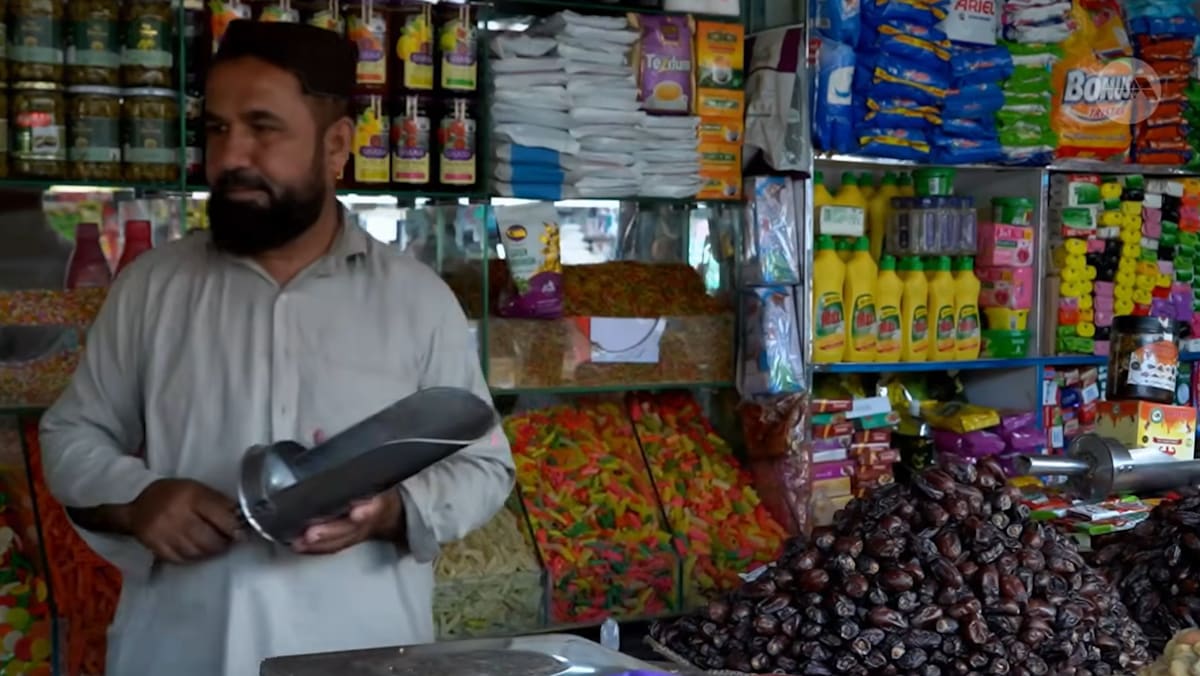
ISLAMABAD: Father-of-eight Abdullah Khan has spent two decades running a dry fruit and grocery stall in the Pakistani capital Islamabad, where he is the sole breadwinner of his family.
But as Eid al-Adha approaches next week, typically one of the busiest shopping periods of the year, he said business has dropped to its lowest level in years.
Rising fuel and food prices, coupled with economic uncertainty linked to tensions in the Middle East, are keeping customers away.
“Everything has become expensive because of petrol prices, and things have become out of reach. We only have this source of income,” he told CNA.
“This market only opens three days a week. In three days, covering household expenses, children’s needs and everything else is very difficult.”
The slowdown comes as Pakistan faces renewed inflationary pressure ahead of the major Muslim holiday of Eid al-Adha, or the feast of sacrifice, with consumer inflation climbing into double digits for the first time in nearly two years.
Inflation rose to nearly 11 per cent in April, up from 7.3 per cent a month earlier, according to official data.
The continued disruption in the Strait of Hormuz is adding to the strain on Pakistan, which relies heavily on energy supplies from the Middle East routed through the strategic waterway. Rising food and transport costs have further squeezed household budgets.
Khan said he is also worried about supply shortages, as imports of some dry fruits and nuts from Iran have been affected in recent weeks.
“We are worried as we only have a few days of stock left. Even in the market, supplies are not available, and whatever is found is being sold at much higher prices,” he added.
SPENDING LESS
Across Pakistan, many consumers said they are being forced to cut spending ahead of the festive season.
“As Eid is approaching, we are scaling back on many of our expenses. But the issue is that we cannot cut back on children’s needs, and that has become very challenging. To cope with this, people eventually have to look for part-time jobs in the evenings,” said Pakistani citizen Sana Ullah.
Fuel prices have surged in recent months.
Petrol, which cost around US$0.92 per litre before tensions escalated around the Strait of Hormuz, is now priced at about US$1.50 per litre - an increase of nearly 60 per cent.
Long queues have also formed at petrol stations as motorists rush to fill up.
Economists warn the crisis could deepen in the coming months.
“It is a dire situation, and I think the implications of this entire scenario are still not completely manifested,” said Syed Ali Ehsan, chief development officer at the Policy Research Institute of Market Economy, an Islamabad-based think-tank.
“I think a lot more inflation is expected. I do not think the increase in petrol prices has come to a halt. I think they will continue to increase.”
Pakistan’s central bank has raised the policy rate to 11.5 per cent to contain inflation, but analysts say high borrowing costs could slow consumer spending and investment.
Ehsan said the country needs greater investment in alternative energy infrastructure to reduce reliance on imported fuel.
“That could also be happening at the household level where people could be utilising loans to buy solar panels and batteries and so on, which all helps to mitigate this crisis,” he added.
“And because they have increased the interest rate, the prospects of that happening have also slowed down.”
The government has said it is implementing measures to ease price pressures, including subsidies for farmers and the transport sector. Provincial authorities are also stepping in, with Punjab offering free travel to commuters.
But with uncertainty over fuel prices and inflation still looming, many Pakistanis say they are not expecting relief anytime soon.