
Everyday Life in Indonesia Feels Increasingly Expensive: What Is Actually Happening?
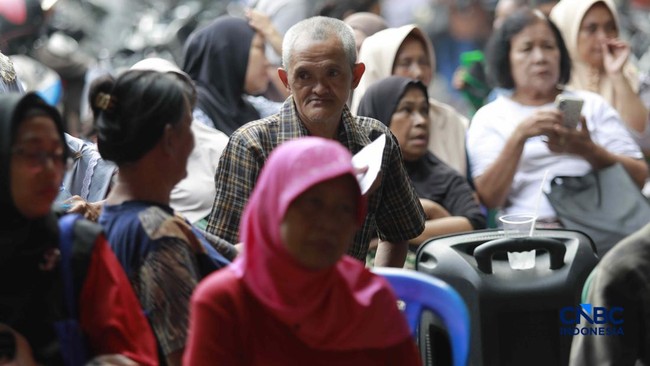
Jakarta, CNBC Indonesia - Indonesian society has been facing considerable pressure recently due to rising prices of goods, making everyday life feel increasingly expensive. Research from the Institute for Economic and Social Research at the Faculty of Economics and Business, University of Indonesia (LPEM FEB UI) reveals the difficult conditions many Indonesians are currently experiencing because of inflation driven by rising prices of goods, especially food, fuel, and the weakening of the rupiah. “Compared to last year, price trends have changed quite significantly. For example, red chillies and shallots, which previously held back inflation, are now pushing it up,” stated the LPEM FEB UI research, quoted on Wednesday (10/6/2026).
The Central Statistics Agency (BPS) reported that national inflation in May 2026 reached 3.08% year-on-year (yoy), up from 2.42% (yoy) in April 2026. Unlike May 2025, which recorded deflation, May 2026 saw Indonesia experiencing inflation. The volatile goods component in May 2026 increased to 6.24% (yoy), from 3.37% (yoy) in April 2026. The main food commodities contributing to inflation in May 2026 were red chillies at 0.08 points, cooking oil at 0.04 points, shallots at 0.04 points, tomatoes at 0.03 points, and rice at 0.02 points.
Rising food prices are the primary reason for the increasing burden on household needs. Food prices for items such as rice, cooking oil, red chillies, shallots, and tomatoes are major concerns. The increase in food prices is due to the end of the main harvest season, production disruptions caused by weather as most of Indonesia enters the dry season, increased demand during Eid al-Adha, and uneven food distribution. In addition to rising food prices, increasing energy costs, including fuel, are further squeezing the public, especially the middle and lower-middle classes. Commodities impacted by price increases include household fuel, vehicle fuel, and air transport fares. “The administered prices group rose to 2.07% yoy, from a previous 1.53%,” the research continued.
Unlike the beginning of 2026, which was influenced by the base effect of electricity tariffs, May 2026 was more triggered by direct cost increases, where the adjustment of non-subsidised LPG prices and the rise in non-subsidised fuel prices became the main drivers. Furthermore, the government’s plan through the Ministry of Transportation to raise air transport fares due to increased fuel costs is further draining the public’s wallets. The weakening of the rupiah is also contributing to the squeeze on society. Rupiah pressures exacerbate the risk of price increases, especially for imported goods and raw materials. “The impact of the rupiah’s depreciation makes imported goods more expensive, raw materials for industry rise, energy and electronic costs increase, and logistics costs are also pushed up,” the research explained.
In response to this phenomenon, Bank Indonesia (BI) decided to raise its benchmark interest rate (BI Rate) by 50 basis points (bp) at the May 2026 Board of Governors Meeting. Within less than a month, BI raised the rate again by 25 bp yesterday. This policy was pursued as an anticipatory measure to maintain macroeconomic stability, primarily to curb the pressure from the rupiah’s depreciation and to control inflation expectations. However, its short-term impact on inflation is expected to be limited, because food, energy, and transport price pressures are determined by supply factors. “Increasing interest rates can indeed help to hold back pressure from the exchange rate and expectations, but controlling inflation in the volatile goods group still requires more targeted interventions on the supply side,” the research added.
Besides the impact on consumers, these pressures also affect the upstream production chain. On an annual basis, the Wholesale Price Index (IHPB) in May 2026 experienced an increase at the upstream level, reaching 5.76% (yoy), up from 3.81% (yoy) in the previous April. “This means that production costs and prices at the wholesale level have also increased,” the research clarified. Looking at it by sector, the mining sector recorded the sharpest increase, reaching 8.92% in May 2026, up from 2.43% in April. This was followed by the agriculture sector, which rose to 7.73% from 4.52%, and the manufacturing sector, which increased to 3.72% from 2.99%. The factors driving the high IHPB in May 2026 include rising upstream commodity prices, particularly iron ore, minerals, electricity, gas, and water, as well as cost pressures on energy and industrial raw materials that have not fully eased due to geopolitical uncertainty in the Middle East.
Observing these conditions, LPEM FEB UI forecasts that inflation for June 2026 could increase more sharply, above 3% year-on-year. “We estimate that the national inflation rate for the June 2026 period risks rising to around 3.14% - 3.30% annually and increasing by 0.24% - 0.39% monthly,” the research concluded.