
Evaluation of 2026 Mudik, Minister of Public Works Claims Decline in Road Accident Fatalities
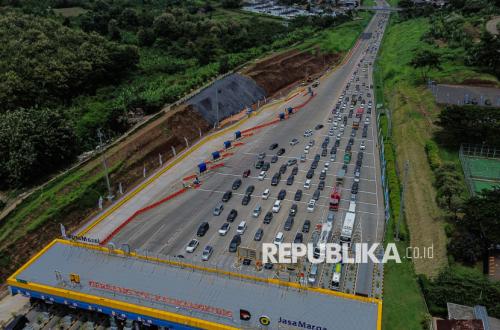
The Ministry of Public Works recorded a decline in accident fatalities during the 2026 Eid al-Fitr homecoming and return flows amid an increase in vehicle volume. This achievement is claimed to be inseparable from improvements in the quality of toll road and national highway infrastructure.
Public Works Minister Dody Hanggodo stated that the evaluation results show improved safety as the main indicator of the success of this year’s mudik flow management.
“The government continues to enhance the quality of infrastructure and road services. The evaluation results indicate that although traffic volume has increased, the rate of accident fatalities has decreased. This is an important indicator that safety improvement efforts are running effectively,” said Dody during a Working Meeting with Commission V of the House of Representatives on Tuesday (7/4/2026).
The evaluation also spotlighted issues with rest areas that still cause congestion. The rest areas at KM 57 and KM 62 on the Jakarta-Cikampek Toll became the focus for redesign because they affect the flow on the MBZ and existing Japek sections.
“The rest areas at KM 57 and KM 62 have been evaluated by us. In the future, they will be redesigned together with the Ministry of Transportation and the National Traffic Police Corps to make their management more optimal,” said Dody.
In addition, the operation of functional toll roads was deemed effective in easing congestion. During the 2026 Eid period, 10 functional toll road sections spanning 291.13 km served 1,056,784 vehicles in Java and Sumatra.
In Sumatra, the Sigli–Banda Aceh Section 1 Padang Tiji–Seulimeum section recorded 82,663 vehicles, while the Palembang–Betung section served 87,079 vehicles.
In Java, the Probolinggo–Banyuwangi section was the highest with 390,245 vehicles, followed by the Solo–Yogyakarta–NYIA Kulonprogo section with 131,949 vehicles.
The Jakarta–Cikampek II South section, which was operational during the return flow, also served 69,114 vehicles and helped reduce traffic load. Other sections such as Yogyakarta–Bawen, Serang–Panimbang, and Ciawi–Sukabumi also supported vehicle distribution.
“We will continue to evaluate and improve infrastructure readiness, including accelerating the completion of strategic toll road sections,” said Dody.
The Chairman of Commission V of the House of Representatives, Lasarus, appreciated the improved performance of the infrastructure. He assessed that infrastructure improvements have a direct impact on smoother traffic and a reduction in accident rates.