
Evacuation of Illegal Semeru Climber Completed After Four-Day Rescue Operation
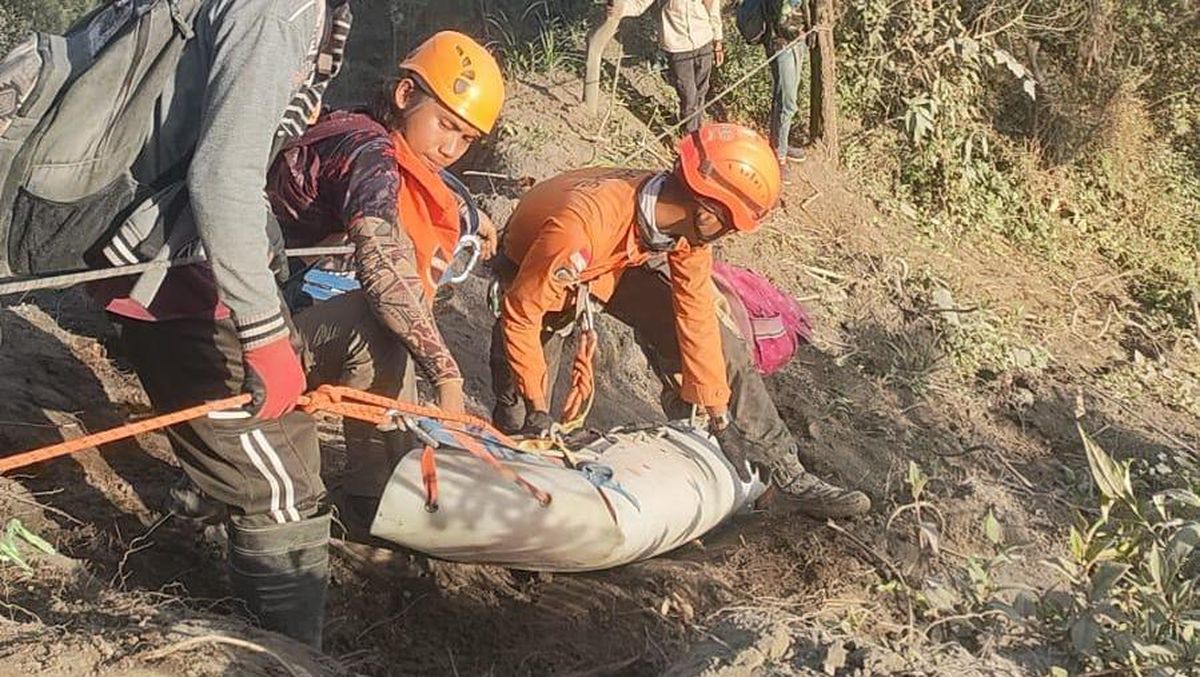
The joint SAR team has finally succeeded in evacuating Cakra (18), an illegal climber who fell into a 375-metre deep ravine on Mount Semeru, East Java. Following a rescue operation lasting four days, the victim was successfully evacuated on Friday (5/6) at 19:26 WIB.
The Head of the Surabaya SAR Office, Nanang Sigit, revealed the difficulty of the evacuation process on the ground. The team had to transport the victim via an estuary method using the slope rescue technique, which involved a folding stretcher pulled by a rope system.
The rescue of the young man from Malang physically and mentally exhausted the SAR personnel. In addition to climbing through the illegal Candi Jawar Purbakala route while Mount Semeru remained closed due to volcanic activity, the evacuation terrain was extremely extreme.
The SAR team had to contend with steep paths, a lack of safe footholds or anchors, the threat of landslides, as well as exposure to volcanic dust and thick fog that limited visibility.
“Information from the team on the ground indicated that the ground surface in several locations was covered in volcanic dust. Towards the late afternoon, the joint SAR team also had to be more cautious as fog began to obscure vision,” said Nanang on Friday (5/6).
The difficult terrain forced the evacuation team to stop several times to recover strength. The SAR post even sent additional assistance mid-journey to support the rescue process.
Nanang explained that at 14:30 WIB, the joint SAR team requested a break due to the arduous path. The post subsequently dispatched four additional personnel to carry logistics and assist with the evacuation process back to the post.
The incident began when the victim attempted to climb Mount Semeru via an illegal route on Saturday (30/5). He was reported to have fallen into the ravine on Monday (1/6) at approximately 10:00 WIB.
Fortunately, before losing contact, Cakra managed to send his last coordinates and a plea for help to his parents.
To reach the victim’s location, the joint SAR team had to trek for approximately eight hours. Upon being found, the victim had sustained serious injuries to his right leg.
“To minimise movement and prevent further swelling, the survivor’s leg had to be splinted,” said Nanang.
Because the victim’s location was in a very steep ravine, the stretcher retrieval process was carried out gradually since Thursday (4/6) afternoon, with strict security on both sides of the evacuation route.
“From the ravine, the survivor was evacuated using slope rescue to the joint SAR team’s assembly point above. After that, the victim was carried by stretcher down to the post,” he explained.
Upon arriving at the post on Friday night, paramedics from the Malang Regency Health Office immediately provided emergency treatment before the victim was handed over to his family.
The rescue operation involved at least 60 personnel from various agencies. After ensuring all members and equipment were accounted for during the final debriefing, the SAR operation was officially closed.
Nanang expressed his appreciation to all personnel involved in the evacuation process since Tuesday (2/6). He also reminded the public not to attempt climbing via illegal routes, especially as the volcanic activity status of Mount Semeru remains fluctuating and potentially dangerous to safety.