
Evacuation of 11,000 Sailors in Strait of Hormuz Delayed After Cargo Ship Attack
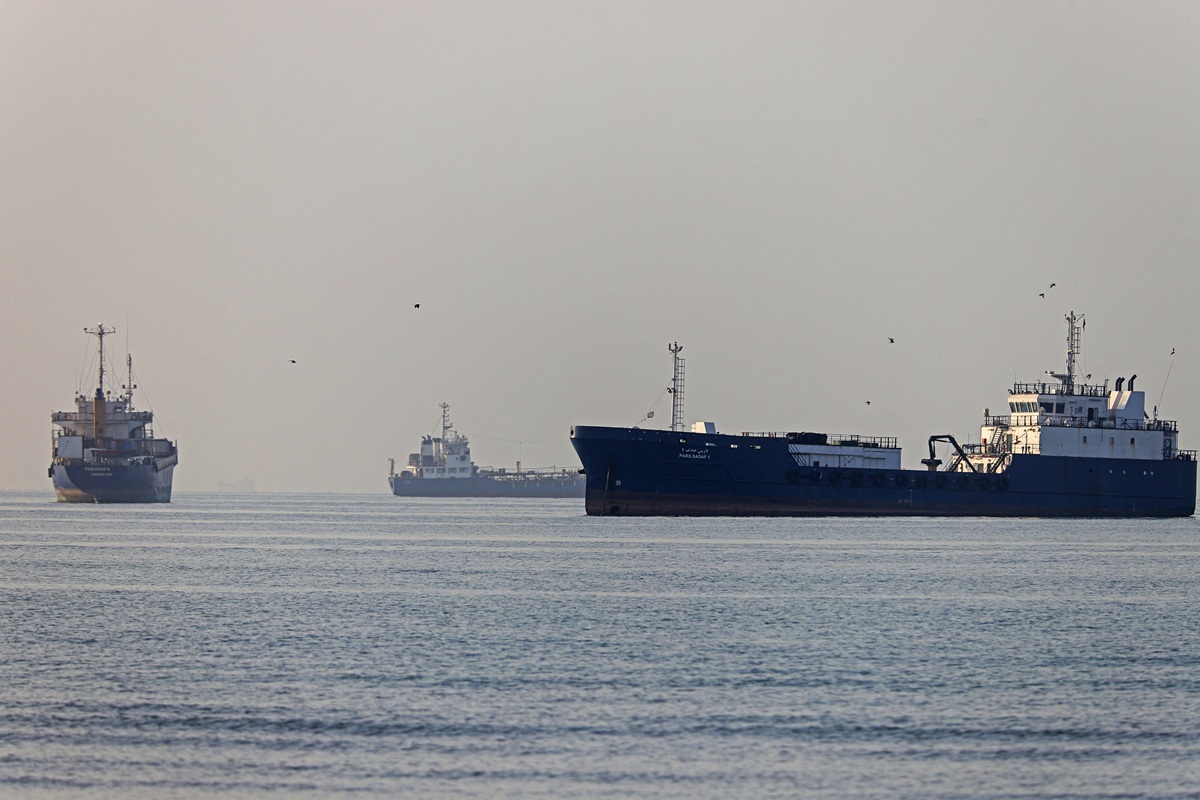
The International Maritime Organization (IMO) under the United Nations has decided to temporarily postpone plans to evacuate more than 11,000 sailors stranded in the Strait of Hormuz. The move came after a cargo ship transiting the strategic waterway was reportedly targeted in an attack. IMO chief Arsenio Dominguez confirmed that some vessels had already been successfully evacuated, but the large-scale operation was halted to ensure the ‘necessary safety guarantees’ were in place. The United Kingdom Maritime Trade Operations (UKMTO) reported on Thursday that a ship was struck by an ‘unknown projectile’ 7.5 nautical miles southeast of Oman’s Dahit Port. Fortunately, there were no casualties. Maritime risk management firm Vanguard identified the vessel as the Singapore-flagged Ever Lovely, which continued its journey through the strait without requiring emergency assistance. According to tracking data from MarineTraffic, the Ever Lovely entered the Strait of Hormuz via the southern route on Thursday morning and exited on the eastern side around 3:30 p.m. local time. The mass evacuation plan was only announced on Tuesday following the reopening of the Strait of Hormuz. Dominguez stressed that the large-scale operation had secured cooperation from Iran, the United States, regional coastal states, and the maritime industry. However, the latest incident forced a strategic pause. Dominguez clarified that the attacked vessel was not moving within the official UN evacuation corridor. ‘I always reiterate that the safety of seafarers remains paramount. Therefore, to ensure a coordinated approach and navigational safety, the evacuation plan will be postponed until further clarity is obtained,’ Dominguez said in an official statement on Thursday. Thousands of sailors and hundreds of ships have been stranded in the Gulf region since February following the outbreak of war between the US-Israel and Iran. The conflict prompted Tehran to close the Strait of Hormuz, a vital artery for global oil and gas shipping, triggering a spike in global oil prices. Tensions had eased after the US and Iran agreed to a 14-point deal last week to end hostilities, including a commitment by Iran to guarantee the safety of commercial ships for 60 days. However, the situation flared up again as Tehran insisted on charging a ‘maritime service fee’ for passing vessels, a policy strongly opposed by the US, which considers the Strait of Hormuz international waters.