
EV Incentives Seen as Momentum to Strengthen National Battery Industry
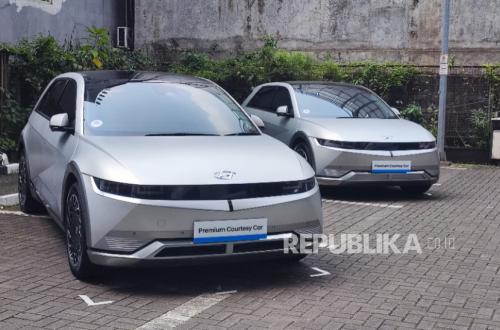
The government’s plan to provide nickel-based electric vehicle incentives is seen as a crucial opportunity to strengthen the national battery industry and deepen mineral downstreaming in Indonesia. Energy economist Fahmi Radhi from Gadjah Mada University (UGM) said the policy is more targeted as it supports electric vehicles using domestic raw materials, particularly nickel, one of Indonesia’s key commodities. ‘The government is now being more selective. Providing incentives for nickel-based vehicles is good because we have nickel production, which can drive downstreaming as part of the national electric vehicle ecosystem,’ Fahmi stated in Jakarta on Tuesday. Fahmi said the new policy is a crucial step towards building a more integrated electric vehicle industry from upstream to downstream. He noted this approach is more relevant than previous incentives, which also benefited fully imported electric vehicles (completely built up, or CBU). Indonesia’s electric vehicle market has shown rapid growth over the past two years. Data from the Indonesian Automotive Industry Association (Gaikindo) shows battery electric vehicle (BEV) sales rose from 56,204 units in 2024 to 114,413 units in 2025. However, growth remains dominated by lithium iron phosphate (LFP) battery vehicles, whose raw materials and technology are not yet produced domestically. In 2024, LFP-based EV sales reached 46,814 units, or 83.3% of the national market. Meanwhile, nickel-manganese-cobalt (NMC) based EVs recorded 9,390 units sold, or 16.7% of the market. However, NMC-based vehicle sales surged significantly in 2025 to 26,069 units, a 177.6% increase from the previous year, accounting for 22.8% of the market. Fahmi said this trend shows Indonesia still has a significant opportunity to optimise its nickel reserves, among the largest in the world. ‘The most important thing is how this becomes an opportunity for Indonesia to create an industrial ecosystem for electric vehicles from upstream to downstream,’ he said. He warned that LFP technology dominance could lead to more industrial value flowing overseas unless domestic nickel-based battery industries are strengthened. Therefore, Fahmi said the government must do more than just provide subsidies. It needs to ensure battery production facilities are built, domestic component levels (TKDN) are increased, and technology transfer from foreign investors is facilitated. Fahmi also said the Mining Industry Holding MIND ID could play a strategic role in developing the national battery industry, including partnering with global firms possessing NMC battery technology. Previously, the government, through the Ministry of Finance, is preparing an EV incentive programme for 100,000 cars and 100,000 electric motorcycles in 2026. For electric motorcycles, the government has allocated a subsidy of Rp5 million per unit. For electric cars, the government is offering a government-covered Value Added Tax (PPN DTP) incentive of 40 to 100%, with the amount varying based on battery type—nickel-based or non-nickel. The EV incentive policy is set to take effect in June 2026.