
EV Charging Network in China Continues to Expand
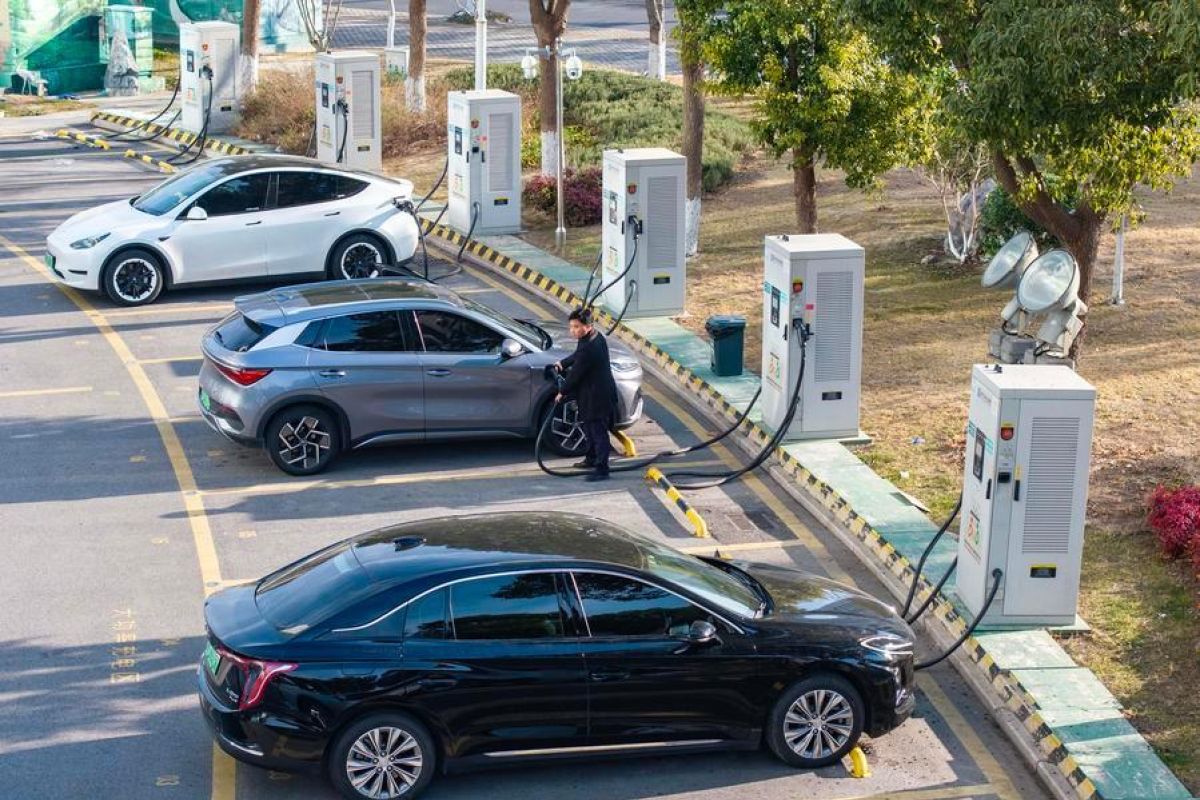
Infrastructure for charging electric vehicles (EVs) continues to develop rapidly in Asia, in line with the rising use of new energy vehicles (NEVs) and commitments to a clean energy transition. China records significant national expansion of its charging network, while Indonesia accelerates the construction of Public Electric Vehicle Charging Stations (SPKLUs) to support domestic electric vehicle growth.
China leads with the world’s largest EV charging network. The EV charging network in China continues to grow rapidly in 2026, with the number of charging connectors reaching 20.7 million by the end of January, according to official data.
According to data from China’s National Energy Administration (NEA), this figure shows a sharp 49.6 percent increase from the previous year. Of the total, about 4.8 million are public charging facilities, while the remaining 15.9 million are private charging facilities. Both figures rose by 31.2 percent and 56.1 percent year-on-year, the data reveals.
Zhang Xing, an official from China’s NEA, stated at a press conference that the growth of the charging network aligns with the increasing popularity of NEVs among the Chinese public. The expansion of these facilities also occurs along the national toll road network, broadening access for users with long-distance travel needs.
The Chinese government has also launched the EV Charging Infrastructure Action Plan 2025-2027, aiming to achieve 28 million charging facilities with public charging capacity exceeding 300 million kilowatts by the end of 2027. This target seeks to accommodate demand from more than 80 million electric vehicles in the future.
Meanwhile, in Indonesia, EV charging infrastructure development also shows significant acceleration alongside the rising number of electric vehicles. According to PT PLN (Persero), the number of SPKLUs in Indonesia increased from around 1,081 units in 2023 to 3,233 units in 2024, a 299 percent year-on-year rise.
The number of home charging services (HCS) facilities also surged from around 9,393 units to 28,356 units. Throughout 2025, PLN along with its operational partners will introduce 4,655 SPKLUs across various regions in Indonesia, an increase of about 44 percent compared to the previous year. SPKLUs have reached 3,007 locations nationwide.
In a press conference, Wang Hongzhi, head of China’s NEA, said that building EV charging infrastructure is part of the national strategy to boost consumer confidence in electric vehicles and accelerate the clean energy transition across the transportation sector.
Meanwhile, in Indonesia, EV charging infrastructure development also shows significant acceleration alongside the rising number of electric vehicles.
According to PT PLN (Persero), the number of SPKLUs in Indonesia increased from around 1,081 units in 2023 to 3,233 units in 2024, a 299 percent year-on-year rise. The number of home charging services (HCS) facilities also surged from around 9,393 units to 28,356 units.
Throughout 2025, PLN along with its operational partners will introduce 4,655 SPKLUs across various regions in Indonesia, an increase of about 44 percent compared to the previous year. SPKLUs have reached 3,007 locations nationwide.
PLN also encourages private sector involvement to expand the SPKLU network beyond areas managed by the company, allowing infrastructure to grow faster and more evenly across Indonesia. According to its official website, PT PLN (Persero) collaborates with PT Mega Energi Biru Indonesia (MEBI) and Huawei Digital Power Indonesia to establish the ZORA Signature SPKLU at Scientia, Summarecon Gading Serpong, South Tangerang.
PLN’s President Director Darmawan Prasodjo stated that the increase in SPKLUs represents the company’s support for government instructions to accelerate the electric vehicle ecosystem in Indonesia. He emphasised that expanding the charging network is part of the national energy transition agenda to reduce carbon emissions in the transportation sector.
PLN also encourages private sector involvement to expand the SPKLU network beyond areas managed by the company, allowing infrastructure to grow faster and more evenly across Indonesia. According to its official website, PT PLN (Persero) collaborates with PT Mega Energi Biru Indonesia (MEBI) and Huawei Digital Power Indonesia to establish the ZORA Signature SPKLU at Scientia, Summarecon Gading Serpong, South Tangerang.
Growth in EV charging infrastructure in both countries faces challenges regarding regional equity, technology integration, and local electricity grid readiness. However, the acceleration of SPKLU development in Indonesia signals positive progress towards a more mature electric vehicle ecosystem, while China continues to expand its EV charging network to support the energy transition.
According to the press release, with a power capacity of 480 kilowatts (kW), this infrastructure becomes Indonesia’s first ultra-fast charging unit equipped with intelligent Split Charging features and Liquid Cooling System technology. Huawei’s advanced FusionCharge technology enables the ZORA Signature SPKLU to deliver energy flexibly from the main electricity grid or integrated clean energy sources via a battery energy storage system and operates optimally in all weather conditions.
“This collaboration shows that by joining hands, the direction of electric vehicle transformation to support decarbonisation in the transportation sector is not impossible for us to achieve. In addition to low emissions, using electric vehicles is also important in reducing the use of fuel oil, which has mostly been imported,” said the Transportation Director.