
Europe’s Hottest Political Week: AfD Wins, France Wobbles and Spain Faces an Early Election
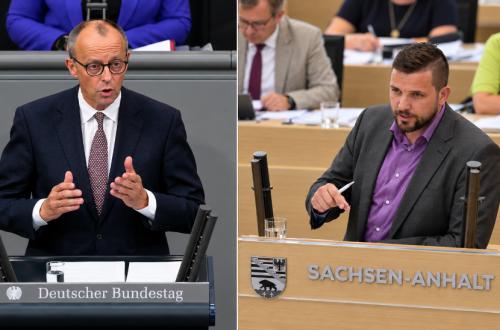
Europe’s political landscape is undergoing changes that could shake the foundations of the European Union. The growing strength of right-wing and far-right parties in Germany, France, Spain and Italy is increasing pressure on Europe’s traditional leadership, as the region also grapples with debt, high energy costs, migration and uncertainty over relations with the United States.
The shift became increasingly apparent during the first week of October 2026. In Germany, the far-right Alternative für Deutschland (AfD) achieved a historic victory by securing the post of speaker of the state parliament in Saxony-Anhalt, while in France growing concerns about government debt and the prospects of a presidential election unsettled financial markets.
At almost the same time, Spain’s socialist government faced the threat of losing power in an early election, while the right-wing government of Italian Prime Minister Giorgia Meloni succeeded in passing an electoral-system reform opposed by opposition groups. Taken together, these developments show that the contest over Europe’s political direction is no longer confined to migration, but is increasingly bound up with economic policy, national sovereignty and the future of regional integration.
The debate over Europe’s future has also drawn direct attention from Washington. US Secretary of State Marco Rubio, speaking in Athens on Wednesday (7 October 2026), called for a renewal of the spirit of Western civilisation and urged European countries to strengthen their economies and defences, and to regain confidence in their own identity.
“We believe Europe can awaken from its long slumber and rekindle the fire that was lit here thousands of years ago,” Rubio said near the Acropolis complex, according to CBS News and The Guardian.
Rubio said the Western world was at a pivotal moment requiring a renewal of national strength. He praised European countries for increasing defence spending, but also stressed that the United States under President Donald Trump would prioritise national interests, strengthening industry and the ability to defend itself.
However, political relations between the United States and Europe do not entirely reflect the vision of unity set out by Rubio. At the European Parliament building in Strasbourg, France, a satirical statue depicting Trump naked and covered in gold was put on display during the same week.
Euronews reported that the 2.6-metre work by Danish artist Jens Galschiøt is titled “The Orange Plague”. It depicts Trump sitting on the back of a smaller man, as a criticism of US foreign and environmental policies.
The two events illustrate differing views on the future of transatlantic relations. The Trump administration wants a Europe that is stronger militarily and places greater emphasis on national interests, while some European politicians and members of the public are concerned about the impact of Washington’s policies on international co-operation.
The most tangible change is visible in Germany, the European Union’s largest economy. On Tuesday (6 October 2026), AfD’s Tobias Rausch was elected speaker of the Saxony-Anhalt state parliament, a milestone the party had not achieved since its foundation in 2013.
Tagesschau, the news service of Germany’s public broadcaster ARD, reported that Rausch received 48 of 82 votes in the election in Magdeburg. The AfD holds only 39 of the state parliament’s 83 seats, having won 43.8 per cent of the vote in the election on 6 September.
The ballot result indicates that Rausch received support from MPs outside his party. The left-wing populist Bündnis Sahra Wagenknecht (BSW), which has five seats, had announced its support, while the identities of the other MPs who voted for Rausch could not be established because the ballot was secret.
The result has shaken the unwritten agreement among Germany’s mainstream parties to avoid political co-operation with the AfD. Known as the “Brandmauer”, or firewall, the policy is intended to prevent a party regarded as extremist from gaining legitimacy and government influence through the support of other parties.
Source: jawawa.id (https://jawawa.id/newsitem/europes-hottest-political-week-afd-wins-france-wobbles-and-spain-faces-an-early-election-1791507143)
Originally published by Republika (https://analisis.republika.co.id/berita/tmm57s451/pekan-paling-panas-politik-eropa-afd-menang-prancis-goyah-spanyol-pemilu-dini), translated from Indonesian