
European Union Accelerates Trade Agreements with Southeast Asia
The European Union (EU) and several Southeast Asian nations are approaching the final stages of bilateral trade agreement negotiations. If current deadlines are met, the EU will have agreements with six of the eleven ASEAN countries by mid-next year.
Free trade agreements with Singapore and Vietnam are already in effect. Meanwhile, negotiations with Indonesia have concluded, with Jakarta targeting a signing in October and implementation aimed for early 2027.
Negotiations with Thailand, which resumed in 2023, have entered the ninth round. Malaysia is set to resume negotiations in early 2025 after a 13-year hiatus. Both are expected to conclude by the end of this year or early 2027.
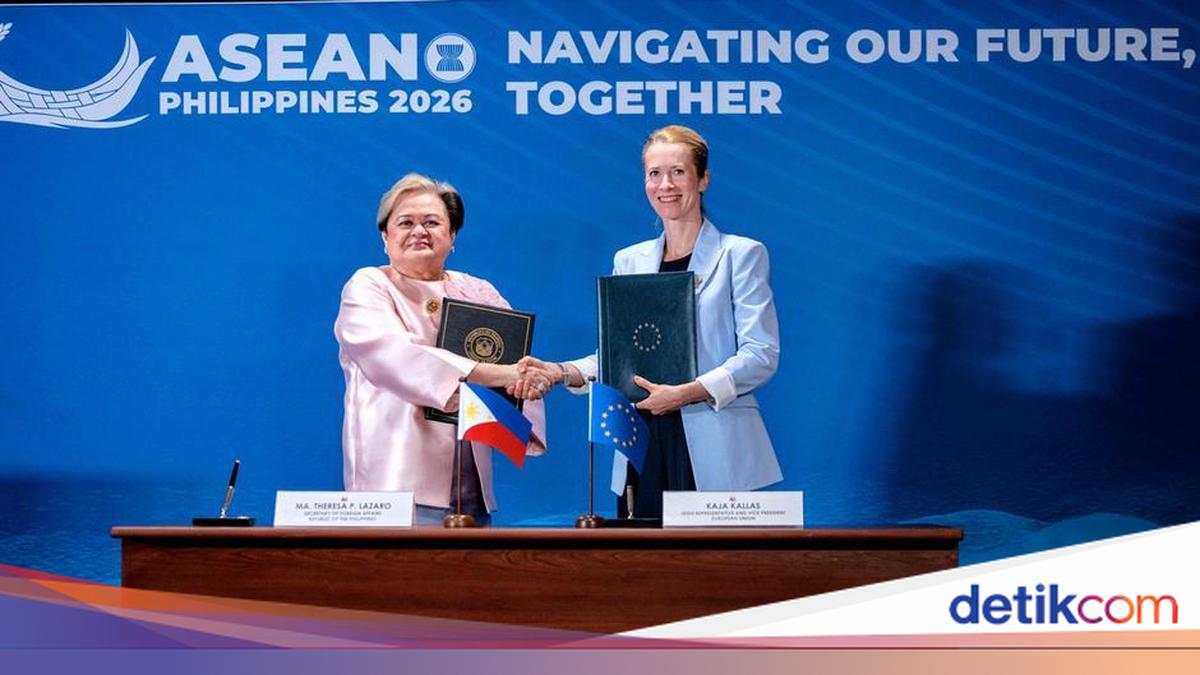
Earlier this week, the EU and the Philippines also announced they had reached a “substantial agreement” regarding a free trade agreement. The deal is now directed towards being officially finalised in the coming months.
Trade has surged over the last decade. Speaking to DW, Chris Humphrey, Executive Director of the EU-ASEAN Business Council, stated that EU engagement with ASEAN in trade and investment is currently at an “all-time high.”
Trade in goods between the EU and Southeast Asia reached 274.9 billion euros (approximately Rp5,610 trillion) last year. This figure represents an increase of about 6 per cent compared to the previous year and more than 50 per cent compared to 177.9 billion euros in 2016, according to EU data. ASEAN is now the EU’s third-largest trading partner for goods outside Europe, following the United States and China.
This week, Manila hosted the ASEAN-EU Business Summit and the 22nd meeting of ASEAN economic ministers and EU trade commissioners. Both blocs are committed to strengthening cooperation to face rising geopolitical tensions, including unilateral trade policies and regional conflicts that “collectively threaten the rules-based international order.”
Why is Southeast Asia important to Europe? Brussels is expanding its network of trade agreements across various countries to open new markets while building more resilient supply chains. Southeast Asia sits at the centre of the supply chain for semiconductors, electronics, electric vehicles, and batteries. Investment is also flowing into the data centre, renewable energy, and digital services sectors.
An International Monetary Fund (IMF) article published this month noted that the 11 ASEAN nations have formed an economic bloc worth 4.5 trillion US dollars, with growth exceeding 4.5 per cent annually. This economic growth, combined with efforts by multinational corporations to diversify production away from China, makes access to Southeast Asian markets increasingly attractive to European companies.
Alfred Gerstl, an Indo-Pacific international relations expert from the University of Vienna, told DW that geopolitical and geo-economic shifts are accelerating cooperation between the two regions. According to him, the protectionist and uncertain trade policies of US President Donald Trump are a primary driver. Meanwhile, the EU’s strategy to reduce dependency risks on China and diversify supply chains further increases the strategic importance of Southeast Asia.
A stronger partnership with Europe also helps Southeast Asian nations diversify their economic relationships, ensuring they are not overly dependent on China, the United States, or any single partner.
EU companies are pushing for agreements. The EU-ASEAN Business Council, according to Humphrey, is encouraging the formation of an inter-regional economic framework with a clear path towards free trade agreements between the EU and ASEAN. “This can be achieved through a modular approach, for example, starting with a Digital Trade Agreement and an inter-regional Investment Protection Agreement,” Humphrey told DW.
This idea is not new. The EU and ASEAN began negotiations for an inter-regional agreement in 2007. However, negotiations were hindered by the vast differences in the economic conditions of ASEAN nations and differing views on the scope of the agreement. Both parties agreed to freeze negotiations in 2009, after which Brussels shifted to bilateral negotiations with individual ASEAN member states.
To date, these differences remain a major challenge. ASEAN includes Singapore, one of the world’s wealthiest economies, alongside developing and least developed nations. This disparity makes it difficult for both parties to agree on a common commitment acceptable to Brussels. Furthermore, meeting the EU’s high social, labour, and environmental standards is also difficult for less developed ASEAN nations, according to Gerstl.
Is the European Commission ready to expand cooperation? While there are no immediate prospects for reaching a full inter-regional agreement, the completion of several ongoing bilateral agreements will provide the EU with preferential trade access to most of ASEAN’s largest economies. This also demonstrates that Southeast Asia is gaining a greater place on Brussels’ trade agenda.
However, for Humphrey, these bilateral agreements should be a starting point, not the end goal. He expressed concern that the European Commission may not yet be prepared to move towards an inter-regional agreement. “2027 marks 50 years of EU-ASEAN relations. We hope the European Commission will view this milestone as significant and increase efforts to build an inter-regional economic architecture,” he said. “Otherwise, ASEAN will perceive that the EU is not serious about the region.”