
European Team Reviews Blue Economy Project in North Sulawesi to Protect Coral Triangle
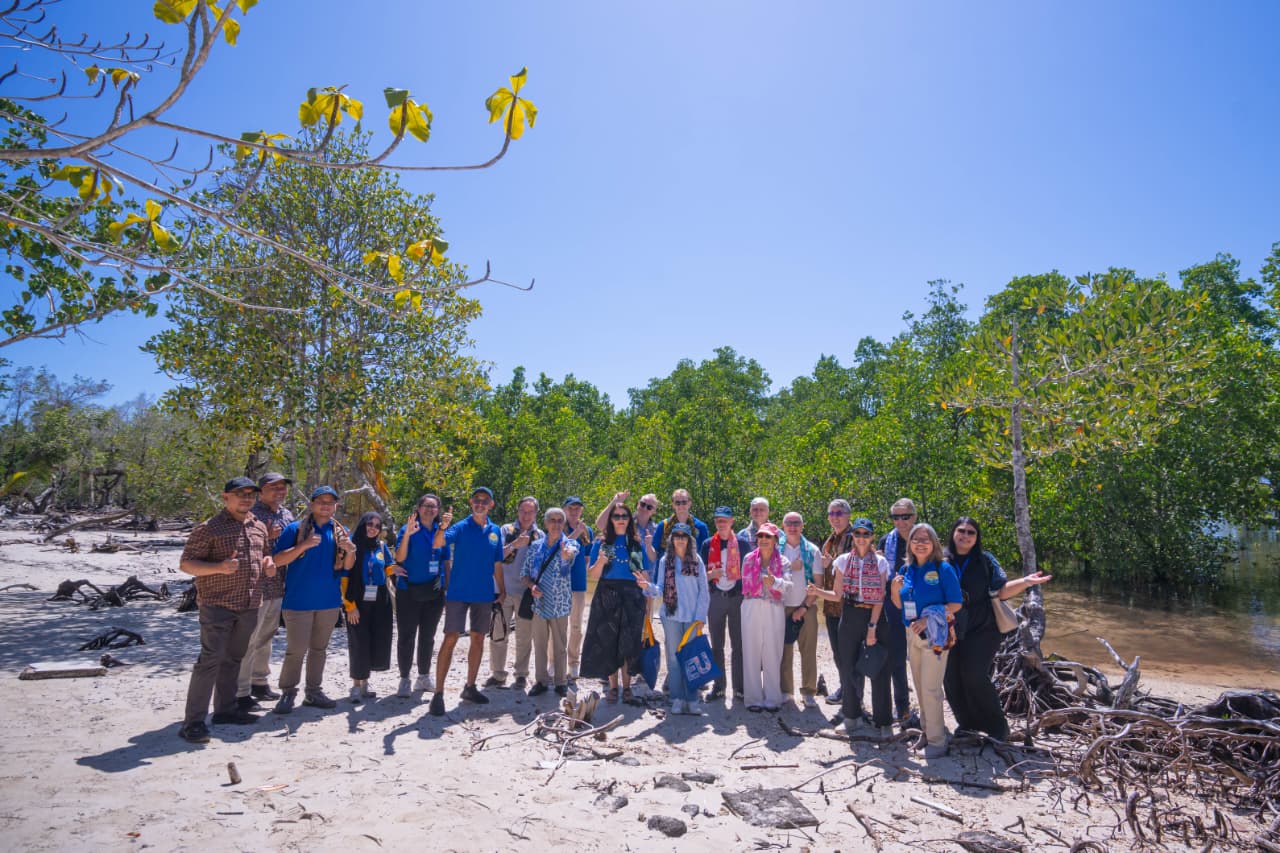
A delegation of European ambassadors and senior officials has conducted a working visit to the site of the ‘Marine Biodiversity and Support of Coastal Fisheries in the Coral Triangle’ programme. The delegation included representatives from the Netherlands, Austria, France, Spain, Bulgaria, Lithuania, Belgium, Portugal, the Czech Republic, Ireland, Denmark, Finland, and the EU Delegation to Indonesia. The visit aimed to directly review the tangible impact of global collaboration in preserving marine ecosystems and strengthening coastal economies.
The programme is a partnership with the Ministry of Forestry’s Directorate General of Natural Resources and Ecosystem Conservation, implemented in North Sulawesi and North Maluku. It is funded by the European Union through the German Development Bank KfW and collaborates with the Wildlife Conservation Society (WCS) Indonesia Programme. The project builds upon a separate but complementary programme funded by the German Federal Ministry for the Environment, Nature Conservation, Nuclear Safety and Consumer Protection (BMUV), covering North Sulawesi, Aceh, and West Nusa Tenggara. This synergy reflects joint action between the EU and its member states in contributing to biodiversity conservation and a sustainable blue economy in Indonesia.
Indonesia lies at the heart of the Coral Triangle, the world’s centre of marine biodiversity. North Sulawesi, particularly the North Minahasa region, was selected as a key landscape because it harbours critical ecosystems of coral reefs, seagrass beds, and mangrove forests. Besides serving as a buffer zone for Bunaken National Park, this area supports the food security and livelihoods of thousands of coastal communities. During the visit, the European team and Indonesian government officials toured marine conservation areas and held dialogues with community groups from six villages: Gangga Dua, Bahoi, Lihunu, Tarabitan, Bulutui, and Galo-Galo. These meetings allowed delegates to witness first-hand the achievements of the collaboration between the government, international partners, and local communities.
Denis Chaibi, the EU Ambassador to Indonesia, stated, ‘Indonesia plays a vital role for the world as it is home to one of the richest marine ecosystems on earth. Through the Global Gateway strategy, the EU supports efforts to restore coral reefs, strengthen the fisheries sector, and create economic opportunities for coastal communities, including here in North Minahasa. This collaboration shows that protecting nature can go hand in hand with job creation and sustainable growth.’
Since 2019, two programmes supported by the EU and BMUKN have been managed by WCS Indonesia under the supervision of KfW. These programmes aim to strengthen the management of marine protected areas, sustainable fisheries governance, and coastal community livelihoods in North Sulawesi and North Maluku. The initiative has also expanded its scope to protect critical marine ecosystems and coastal fisheries in Indonesia, the Philippines, and the wider Coral Triangle region. Nandang Prihadi, Secretary of the Directorate General of Natural Resources and Ecosystem Conservation, representing the Director General, expressed appreciation for the synergy. ‘We appreciate the North Minahasa Regency Government, the European Union, KfW German Development Bank, WCS, and all partners who have contributed. We hope this field visit becomes a momentum to strengthen international cooperation and showcase best practices in conservation area management and community empowerment in North Sulawesi,’ he said.
The programme has yielded significant positive impacts on the environment, economy, and society, with benefits extending beyond North Sulawesi and North Maluku to West Nusa Tenggara and Aceh. Key achievements include the support for establishing and strengthening the management of 21 marine protected areas covering 1,631,572 hectares across the four regions, which includes the protection of 16,613 hectares of coral reefs, 14,318 hectares of mangroves, and 10,582 hectares of seagrass beds supported by the EU. Ecosystem-based fisheries management in four areas has successfully maintained the health of stocks for 27 key fish species, such as snapper, grouper, and small pelagic fish. In Gangga Dua Village, a community-agreed seasonal closure for lift-net fisheries has dramatically increased fishermen’s income from around Rp20 million to Rp48 million per season. Furthermore, 29 community surveillance groups and 19 coastal communities are now active in conservation-based enterprises. One such group, Poklahsar Kalkop in Bulutui Village, produces processed seafood like fish balls and banana chips, boosting the economic independence of coastal women. Community-based ecotourism has also flourished, with tourism awareness groups in Bahoi and Lihunu villages developing snorkelling activities, homestays, and guide services, leading to Lihunu’s recognition as one of the top 500 tourism villages.
Source: jawawa.id (https://jawawa.id/newsitem/european-team-reviews-blue-economy-project-in-north-sulawesi-to-protect-coral-triangle-1784483424)
Originally published by Media Indonesia (https://mediaindonesia.com/nusantara/912466/jaga-segitiga-terumbu-karang-tim-eropa-tinjau-proyek-ekonomi-biru-di-sulut), translated from Indonesian