
European Nations Hit by Climate Change-Induced Droughts
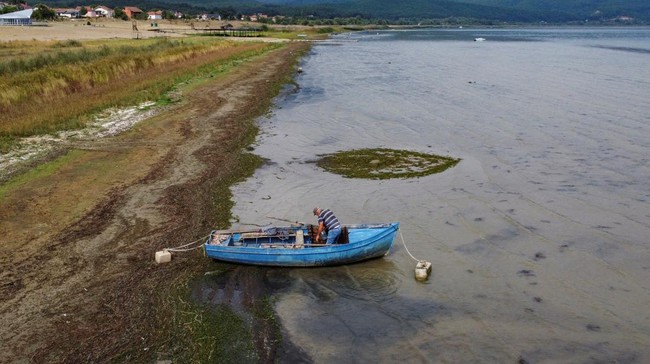
Climate change is being acutely felt in several European nations, where many countries experienced extreme heatwaves one or two months ago. This extreme heat is unprecedented for much of the European population.
Recently, extreme heat has also caused European waters to dry up. Prolonged droughts and this summer’s scorching heat have devastated ecosystems and businesses across the region, ranging from lakes in Slovenia and tributaries of the Danube River in Serbia to fish ponds in Bosnia, the Czech Republic, Romania, and Hungary.
The fishing industry has been the hardest hit, with losses estimated to reach millions of euros. This adds to the already high costs resulting from energy and water supply issues, crop damage, and disruptions to river traffic and trade.
Feeling unprepared for this year’s crisis, nations and businesses are now considering ways to minimise the impact of future extreme weather events, which scientists link to human-induced climate change.
According to the Hungarian National Meteorological Service, approximately 99% of land in Hungary is currently experiencing severe or extreme drought conditions. Desertification—the process where vegetation decreases due to high temperatures and low rainfall—threatens much of the Great Hungarian Plain.
Among the most affected are approximately 27,000 hectares of fish ponds in Hungary. The Hungarian Ministry of Agriculture and Food Economy stated that “continuous heat and water shortages” have caused 1,588 hectares of these ponds to dry up, resulting in the death of nearly 280 metric tons of fish across 20 farms.
Authorities also estimate that revenue losses due to this damage have reached 1.3 billion forints (approximately 4.2 million USD).
“Replacing the lost fish could take years. Sometimes, operators are forced to drain one pond and divert its water to save fish in another,” said the Inter-branch Aquaculture and Fisheries Organisation of Hungary, as reported by AP on Sunday.
Beyond Hungary, drought is also striking Romania. Catalin Platon, President of the Romanian National Fish Producers Association (ROMFISH), stated that fish farmers in Romania, particularly those cultivating carp, are facing this scorching heatwave following severe droughts in 2023 and 2024, the effects of which are still being felt.
In carp production, Platon noted, the production cycle lasts three to four years.
“Therefore, what we lost in 2023 has had an impact every year since then,” said Platon.
“Water usage policies that prioritise irrigation for agriculture during previous droughts have left us without water for fish,” Platon complained.
Similarly, in the Czech Republic, fish farmers nationwide have taken various emergency measures, such as reducing or suspending feeding to lower oxygen consumption, aerating ponds, or draining them where necessary.
Officials from the Czech Fisheries Association stated that sustained rainfall could alleviate the short-term crisis, but long-term measures are required to retain more water in the region.
“Some ponds that were already low on water have been exploited, but these are all ponds in poor condition. We are only now beginning to plan what will be done with the larger ponds,” said Jan Sokolik, a technician at the Rybarstvi Trebon fishing site, as reported by AP.
Other countries, such as Bosnia and Slovenia, are experiencing similar issues, with vital water sources drying up and threatening specific fish habitats.
A farmer, Veljko Budjen, noted that the hot and dry summer has brought serious problems to his largely mountainous country, famous for its trout restaurants.
“Trout are cold-water fish that require cold, highly oxygenated water. Therefore, during the summer, you are forced to reduce production and feeding to ensure the business survives,” said Budjen.