
European Leaders Clash as Rp900tn Loan for Ukraine Stalls
JAKARTA — Disputes among European Union leaders over the long-term budget and the sharing of the cost of financing the war have stalled plans for a new loan of €45 billion, or around Rp900 trillion, for Ukraine. An EU leaders’ summit in Brussels, Belgium, ended without agreement after more than 12 hours of talks.
According to the Associated Press (AP), on Friday (27 November 2026), the leaders of the EU’s 27 member states will resume negotiations on 17–18 December 2026. The deadlock has added to uncertainty over funding Ukraine’s economic and military needs in 2027, as its war against Russia approaches its fifth year.
The dispute highlights the complexity of Europe’s efforts to sustain financial support for Ukraine while national governments face budgetary pressures and domestic political interests. Countries that have long shared an economic and political bloc now disagree over who should bear the cost of supporting Ukraine.
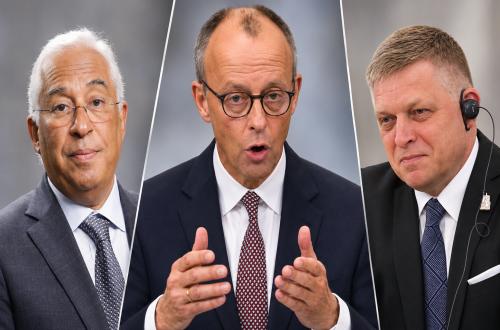
European Council President Antonio Costa said 24 of the 27 member states had backed the loan plan. However, agreement with the Czech Republic, Hungary and Slovakia still needs to be secured.
German Chancellor Friedrich Merz has taken a firm stance, linking approval of the EU’s long-term budget to a commitment by all member states to help finance Ukraine.
“For me, there is a connection between our support for Ukraine and the European budget. The European Union consists of 27 member states, not 23 or 24,” Merz said, according to Reuters on Friday (27 November 2026).
Germany threatens to use its veto
Merz indicated that Germany could block an EU budget agreement if there were no collective commitment to financing Ukraine.
The position was opposed by Slovak Prime Minister Robert Fico. According to Euronews on Thursday (26 November 2026), Fico described the pressure exerted by Merz as a clear example of blackmail.
Slovakia, Hungary and the Czech Republic object to being included in the new loan scheme. Bulgaria has also raised concerns about funding Ukraine’s military needs, although it is willing to participate in financing non-military requirements.
To bridge the differences, the European Commission has proposed splitting the loan into two components. A total of €20 billion would be allocated to non-military needs, while the remaining €25 billion would go towards Ukraine’s military requirements.
The arrangement would allow countries opposed to funding weapons for Ukraine to take part in supporting the country’s civilian budget needs.
Merz himself faces a dilemma. As the leader of one of the EU budget’s largest net contributors, he wants fiscal discipline and spending restraint. At the same time, he is calling for continued funding for Ukraine as part of Europe’s security interests.
Source: jawawa.id (https://jawawa.id/newsitem/european-leaders-clash-as-rp900tn-loan-for-ukraine-stalls-1795913431)
Originally published by Republika (https://news.republika.co.id/berita/tp8l8y451/pemimpin-eropa-ribut-pinjaman-rp900-t-untuk-ukraina-tertahan), translated from Indonesian