
Europe Wants a Strong Military, but Many Countries Aren't Ready to Pay
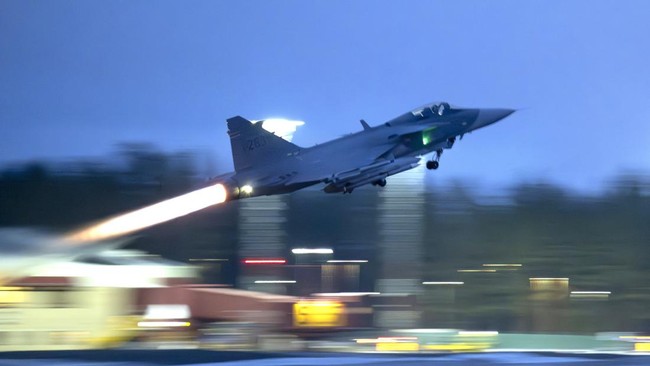
Europe is currently focused on strengthening its military. The Russia-Ukraine war has made many European countries realise that defence can no longer be considered a secondary matter.
A snapshot of this shift can be seen at a factory in northern Sweden. There, a Ukrainian flag bearing a message in Cyrillic script—‘thank you, always’—hangs in a plant owned by Hägglunds, a subsidiary of the British defence giant BAE Systems. The flag was a gift from Ukraine’s 21st Brigade, which operates the CV90 infantry fighting vehicles manufactured at the site. Ukrainian soldiers have even nicknamed the vehicle ‘the Scandinavian beast’.
A decade ago, the Hägglunds factory was in a very different state, cutting costs just to survive. Now, the situation has reversed. Production capacity is being expanded five to six times to meet a massive surge in orders. Revenue has soared from US$211 million in 2018 to US$1.1 billion in 2025. Tommy Gustafsson-Rask, the general manager of Hägglunds, says the company’s revenue is now expected to exceed US$2 billion annually, and its workforce has more than tripled since 2021 to around 2,600 people.
The story in Örnsköldsvik illustrates the positive side of Europe’s military spending spree. Countries across the region are striving to meet a NATO agreement made last year to raise defence spending to 3.5% of GDP by 2035, with an additional 1.5% for security infrastructure. Much of this funding will be used to purchase new equipment, from missiles and drones to tanks and warships. European NATO members need to rebuild their military strength to face a potential attack from Russia, even in a scenario without full support from the United States. For nations with large defence industries, this spending can also boost economic growth.
However, there is a more complicated side to this story. In Brussels, thousands took to the streets carrying slogans like ‘welfare, not warfare’. Last year in Italy, trade unions mobilised around 500,000 people to protest against planned increases in defence spending. European governments now face a difficult choice: increase debt, raise taxes, cut social spending, or pursue a combination of all three.
The problem is that, looking at the financial health of Europe’s largest military powers, many are not on a strong enough footing to reach the 3.5% GDP defence spending target. This includes the UK and France. The situation is likely to trigger sharp debate at the NATO summit on 7-8 July 2026 in Ankara, Turkey.
US President Donald Trump and Secretary of War Pete Hegseth view European NATO members as being overly reliant on American security guarantees while still providing their citizens with generous welfare benefits and long holidays. On Friday last week, Trump posted a graph on social media showing that US defence spending far outstrips that of several NATO members, arguing it was unreasonable for America to continue on such an unbalanced path. The 3.5% spending target was essentially created to keep Trump supportive of NATO.
To understand why many European countries are likely to fail to meet this pledge, they can be divided into three groups: the serious, the struggling, and the relaxed.
The first group consists of countries that have already reached the target or are on track to do so soon. These are generally the nations that feel most threatened by Russia, such as the Baltic states and Poland. However, this path is not easy. Lithuania has raised some existing taxes and introduced a new levy called a ‘security contribution’. Finland has cut health and social service spending. Overall, ratings agency Fitch estimates that 11 European countries are financing at least half of their defence spending increases through tax rises or spending cuts. According to a survey by the European Council on Foreign Relations, a majority of the public in these countries supports cutting social spending to fund defence.
This group also includes countries that still have significant room to borrow, such as Denmark, Sweden, and especially Germany. Germany is targeting defence spending of 3.7% of GDP by 2030. With relatively low public debt ratios, politicians in these countries can, for the time being, avoid difficult choices between military and social spending.
The second group comprises countries that want to reach the target but have tight fiscal space and low public support for tax increases or welfare cuts. Unfortunately, Europe’s two nuclear powers, the UK and France, fall into this category. The UK is in an extremely tight financial position. Last month, Defence Secretary John Healey even resigned, judging the planned increase in the defence budget to be too small. A Treasury official retorted by warning that Healey’s demands would essentially mean cutting budgets for schools and hospitals. After further debate, the UK only added 0.1% of GDP to defence spending by 2030, bringing the total to 2.7%. Analysts doubt the UK can reach the 3.5% target by 2035.
France is lagging even further behind. The country only plans to increase defence spending to 2.5% of GDP by 2030. According to the French Court of Auditors, this target is already insufficient.