
Europe United Against Russian Gas, Yet Hungary Subscribes to Moscow's Energy
Polish Member of the European Parliament, Piotr Müller, has assessed that statements made by the Party Leader of Hungary’s Tisza Party, Péter Magyar, regarding his country’s dependence on Russian gas could threaten the consistency of European Union energy policy. The statement emerged after Magyar indicated that despite Budapest’s efforts to diversify energy sources, Hungary had not yet been able to completely stop energy imports from Russia. Müller highlighted that the European Commission has consistently encouraged EU member states to reduce and eventually cease their dependence on Russian fossil fuels, including natural gas, oil, and liquefied natural gas (LNG).
The European Commission has repeatedly stressed the need for the EU to achieve full independence from Russian fossil fuels and to phase out imports of gas, oil, and LNG from Russia. However, public debate on this issue shows signs of weakening the consistency of this policy, Müller said in an official query to the European Commission. According to Müller, Magyar’s statement raises questions about the commitment of some EU member states to efforts to reduce energy dependence on Russia. The Polish politician also asked the European Commission to request an official explanation from the Hungarian government regarding their plan to remove Russian energy resources from the national energy mix. Additionally, he urged the EU to take further steps to ensure the comprehensive implementation of an energy embargo against Russia.
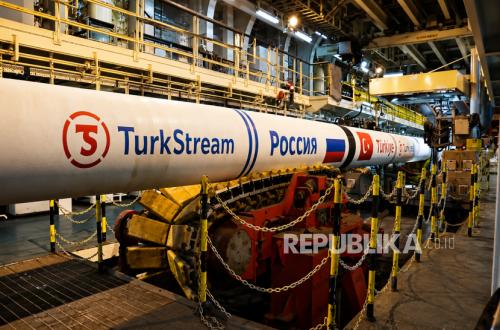
Since the outbreak of the Ukraine war in 2022, the European Union has attempted to reduce its dependence on Russian energy through various sanctions packages and supply diversification. However, although Russian energy imports have fallen drastically compared to pre-war levels, the flow of money from Europe to Moscow has not completely stopped. Before the invasion of Ukraine, Russia was the largest energy supplier for the EU. In 2021, around 40 per cent of the natural gas consumed in the EU originated from Russia. However, in recent years, this figure has fallen sharply amid increased LNG imports from the United States, Norway, Qatar, and other supplying countries. Despite this, a number of European countries still buy Russian gas, oil, and LNG. The TurkStream pipeline passing through Turkey remains a crucial channel for Russian gas exports to South-Eastern Europe, including Hungary and Slovakia.
According to various reports from international energy monitoring agencies, energy exports remain the largest source of revenue for Russia. Even after being subjected to Western sanctions, revenues from the oil and gas sector still contribute a significant portion to the Russian state budget and serve as a main source of financing for Moscow’s economy. This situation raises a question increasingly voiced by observers: how effective are Western energy sanctions against Russia? On one hand, European dependence on Russian energy has indeed decreased significantly compared to the pre-war period. On the other hand, Russia is still able to export energy to several European countries and redirect most of its market to Asia, particularly China and India.