
Europe Suddenly Approaches the Taliban, What's Going On?
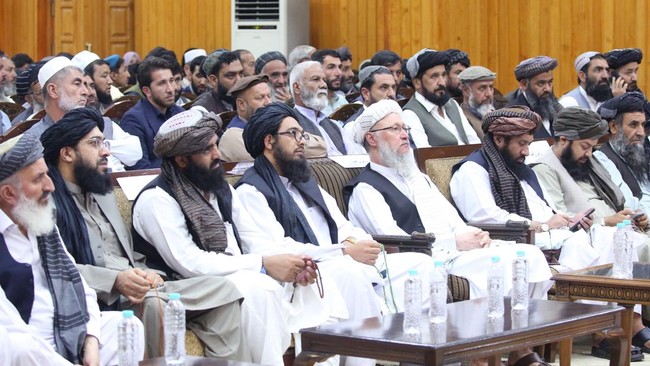
The European Union (EU) has begun opening direct communications with the Taliban amid increasing political pressure over migration. Brussels is even planning to invite Taliban officials to Belgium to discuss the repatriation of Afghan migrants from Europe.
The European Commission confirmed to the media that technical talks with Afghanistan’s de facto authorities will take place soon in Brussels. This step is being carried out jointly with Sweden and follows two previous visits by European officials to Kabul.
” Officials are currently exploring the possibility of a follow-up technical-level meeting in Brussels with Afghanistan’s de facto authorities,” said the EU executive spokesperson, as quoted by AFP on Tuesday (12/5/2026).
According to sources familiar with the discussions, an official letter will soon be sent to Kabul to set the schedule for the Taliban delegation’s visit to Belgium’s capital.
The EU’s move marks a quite significant change in approach towards the Taliban. Until now, the group has been practically isolated from the international community since regaining power in Afghanistan in 2021 and reimposing a strict version of Islamic law.
Although it does not officially recognise the Taliban, European countries are now seeking pragmatic channels to handle migration issues, particularly the deportation of Afghan citizens with criminal records.
Around 20 EU member states are known to be exploring ways to return Afghan migrants to their home country. In a letter sent last October, several countries urged the European Union to seek diplomatic and technical solutions to accelerate the process.
“In this context, technical meetings took place in Kabul in January 2026,” said the European Commission spokesperson.
The push to open communications with the Taliban is being led by Germany. That country has deported more than 100 Afghan citizens with criminal records since 2024 via charter flights facilitated by Qatar.
Berlin’s policy has hardened following a series of violence cases involving Afghan nationals in recent years, including a car ramming incident in Munich last year.
Austria has also moved first by receiving a Taliban delegation in Vienna last September. Now, Belgium, Sweden, and several other European countries are considering a similar approach.
However, this step has triggered major controversy. Migrant rights advocacy groups are concerned about the potential misuse of data by the Taliban if official communications with Europe become more open. They fear that the identities of Afghans in Europe could be revealed, endangering the migrants’ basic rights.
Nevertheless, several European diplomats deny that talks with the Taliban constitute political recognition. According to them, the communications are purely to resolve technical deportation issues, including the issuance of travel documents and operational readiness at Kabul airport.