
Europe Sizzles, These Businesses Reap the Profits
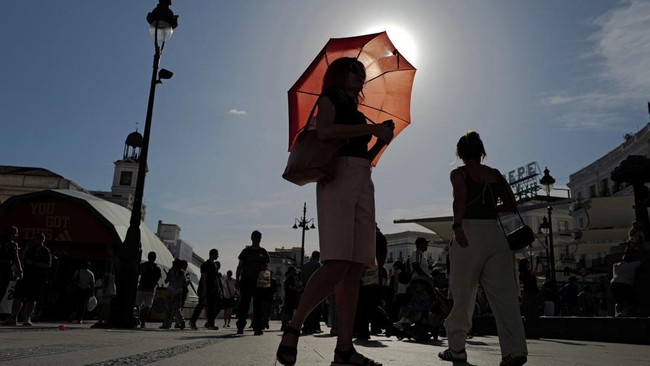
With temperatures exceeding 40 degrees Celsius, the heatwave in Europe is now turning into a business opportunity. Households are flocking to buy air conditioners, governments are preparing infrastructure spending more resilient to extreme temperatures, and companies providing construction materials and electricity networks are gaining new markets. These changes are occurring as extreme temperatures become more frequent. According to the Copernicus Climate Change Service, heatwaves are now arriving more often, lasting longer, and reaching higher intensities than a few decades ago. World Weather Attribution estimates that nearly half of the 854 cities in Europe have or will break heat stress records this year. In France, temperatures even reached 44.3 degrees Celsius, the highest in the country’s history. The World Meteorological Organization also stated that Europe is warming more than twice as fast as the global average. These changing weather patterns are beginning to alter public behaviour. Air conditioner ownership in Europe has historically been relatively low. The International Energy Agency estimates AC penetration in the region is only around 20%, far below Asia and the United States. This situation is changing as temperatures in parts of Germany surpassed 40 degrees Celsius and several countries closed schools due to the hot weather. Reuters reported that Asian electronics manufacturers are enjoying a surge in demand. Samsung Electronics recorded double-digit sales growth in the first half of 2026 in Italy, France, and Spain. LG Electronics stated its AC production lines in South Korea have been operating at full capacity since April to meet domestic and export market demand. The biggest demand is for China’s Midea. The company said sales of its PortaSplit portable ACs soared after the heatwave in late May. Sales through e-commerce channels in Germany rose by approximately 37% compared to the previous year, while shipments to Spain and France increased by 108%. Midea’s portable models are in high demand because they can be installed without drilling into walls, complying with regulations for historic buildings in many European cities. Citing Chinese media Global Times, Midea’s sales in France, Germany, the UK, and Spain increased by more than 70% year-on-year. TCL Technology even claimed its AC sales in France surged by more than 300%, while Gree Electric Appliances said most of its buyers were first-time AC users. The heatwave has also benefited Thailand as one of the world’s air conditioner production bases. Thai AC exports to Europe in May rose 41.3% to US$130.1 million. For the January-May 2026 period, the value reached US$696.8 million, up 16.5% from the same period last year. Thai AC production in May also grew 20% while the nation’s overall manufacturing output was weakening. A larger shift is occurring in infrastructure spending. Reuters assesses that the focus of investment in Europe is beginning to change. For years, climate spending was dominated by decarbonisation projects such as renewable energy plants, electric vehicles, and batteries. Now, attention is turning to infrastructure resilience against extreme temperatures. The United Nations Economic Commission for Europe warns that roads, railways, bridges, and power grids are increasingly vulnerable to heat damage. Conventional asphalt softens more easily at high temperatures, increasing the need for polymer-modified bitumen. Reuters notes that TotalEnergies and Shell have portfolios of road materials designed to withstand high thermal stress. In the construction sector, Heidelberg Materials, Holcim, and Sika supply high-performance concrete, sealants, and construction chemicals capable of extending infrastructure lifespan. Spending is also flowing into the rail transport sector. Vossloh, Pandrol, and voestalpine Railway Systems supply rail fastening systems and concrete sleepers designed to reduce the risk of deformation from metal expansion when temperatures rise. The electricity grid faces similar challenges. Power consumption is soaring due to air conditioner use, while transmission cables must continue operating in high temperatures. Reuters notes that Prysmian, Nexans, and NKT are in a position to benefit as power grid reinforcement projects accelerate across Europe. French grid operator RTE even plans to build around 45,000 kilometres of transmission and distribution networks by 2030. Meanwhile, solar power plants do not necessarily gain a direct advantage from extreme temperatures. Solar panels do generate electricity during the daytime when demand is high, but their efficiency drops as panel temperatures increase. This situation makes investment in energy storage systems, grid reinforcement, and cooling technologies more critical than simply adding solar panel capacity.