
Europe Prepares Four Future Warfare Technologies, Including GPS-Free AI
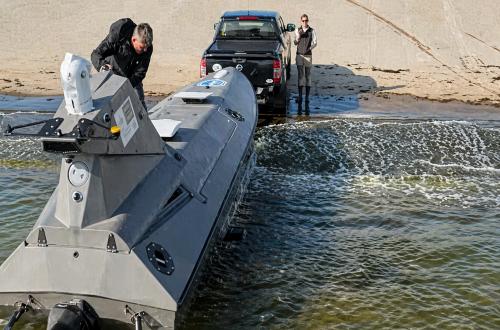
JAKARTA — The European Union is accelerating the development of weapons technology and uncrewed combat systems designed to keep operating when GPS signals are disrupted or unavailable. The European Defence Agency (EDA) selected four defence technologies from Poland, Finland, France and Estonia following a series of joint tests with the Portuguese military. They include an artificial intelligence-based mission system and a low-cost rocket launcher that can be fitted to a drone.
In an official announcement on 14 October 2026, the EDA said the four selected companies would receive a total of €1.2 million (about Rp24.32 billion) in combined funding. Each company will receive €300,000 (about Rp6.08 billion) to continue developing its technology before further field tests in 2027.
The funding is support for technology development through the BraveTech EU programme, not a weapons purchase contract or a procurement decision by the armed forces of EU member states.
The selections followed the EU OPEX 2026 operational testing campaign, held at the Santa Margarida military training area in Portugal from 21 September to 14 October. The programme, organised with the Portuguese Army, brought defence technology developers together with military users to test systems in scenarios resembling battlefield conditions.
The four selected companies are EdgeX Robotics of Poland, Kova Labs of Finland, Soraccel of France and Tempterno Defence of Estonia. Their technologies include uncrewed ground vehicles, autonomous navigation in difficult terrain, an AI-based mission system that works without GPS, and a low-cost rocket launcher that can be mounted on a vehicle or drone.
The decision reflects a new direction in European defence technology development amid changes in the nature of modern warfare. Military systems must not only be capable of attack, but also operate when communications are disrupted, satellite navigation is unavailable or the battlefield is too dangerous for personnel to enter.
The EDA stressed, however, that all four technologies require further development and testing. Selection does not mean that the systems have become operational weapons or meet all the requirements for combat use.
Four Technologies Selected from Six Companies
The four technologies were selected through BraveTech EU, a cooperation initiative between the European Union and Ukraine to accelerate defence technology development in response to real battlefield needs. The programme is funded by the European Commission and implemented with the involvement of the EDA and Ukraine’s defence innovation platform, Brave1.
Before testing in Portugal, six companies were selected to take part in the second phase of BraveTech EU. They were considered to have technologies with the potential to address military requirements, ranging from disruption-resistant communications to uncrewed weapons systems.
On 14 July 2026, the EDA announced the six participants who had advanced to the operational experimentation stage. In addition to the four companies selected in October, they included Germany’s Smaesh GmbH, which is developing a communications system based on several radio technologies, and Latvia’s Rannon, which offers rocket-propelled ammunition for counter-drone combat.
Four of the six companies were selected following evaluation during the testing campaign in Portugal. The assessment involved experts from the EDA, the European Commission and Brave1, as well as representatives of EU member states and the Portuguese Armed Forces.
The EDA did not publish a detailed ranking of the four winners in its 14 October press release. Nor did it say that the two companies not selected had failed on all technical aspects of the testing.
The evaluation aimed to identify the most promising solutions for further development towards higher technology-readiness levels. The award is therefore a funding and development decision, not the awarding of a weapons contract.
First Technology: French AI Navigates Without GPS
One of the technologies attracting attention comes from Soraccel, a French company developing an artificial intelligence-based mission system. The EDA said the system is designed to enable navigation when GPS signals are unavailable.
This capability is important because satellite navigation is widely used by modern drones. When signals are disrupted or cannot be trusted, uncrewed aircraft that rely too heavily on satellite navigation risk losing positional accuracy and their ability to complete missions.
Such disruption can occur through jamming, in which interfering signals hinder the reception of satellite navigation. Another threat is spoofing: the transmission of false signals or navigation information that can cause a device to miscalculate its position.
Soraccel’s system is intended to reduce reliance on GPS through software-based autonomous capabilities. The company is also developing robotics and systems for coordinating multiple drones, allowing operators to manage missions with the assistance of automation.
In a company statement following the award, Soraccel said the €300,000 in funding would be used to continue developing its AI mission system and prepare for further testing in 2027. The company said it aims to develop autonomous robots that can help operators carry out complex tasks, including in areas without GPS access.
The EDA announcement did not detail all the navigation methods used by Soraccel or the system’s accuracy under every test condition. The ability to navigate without GPS should also not be equated with the ability of a weapon to select and attack targets autonomously.
The use of artificial intelligence for navigation serves a different function from decision-making about the use of lethal force. The available information does not show that Soraccel’s system has the authority or operational capability to carry out attacks without human control.