
Europe on the Brink, Could Become the World's 'Sick Man'
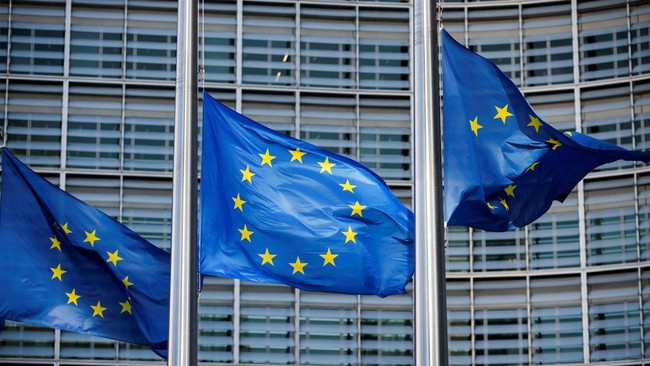
The European Union (EU) is facing pressure to accelerate economic reforms. Failure to do so could lead to long-term decline, leaving the region lagging behind both the United States and China.
The reform agenda was originally designed by former European Central Bank (ECB) President Mario Draghi, with the EU targeting several milestones by 2027. However, according to the European Policy Innovation Council, progress is far from the target. As of July 2026, the EU has only fully implemented approximately 15.7% of Draghi’s recommendations, while about 40% others are only partially addressed.
For the most critical reforms, the situation is even more dire. The Montaigne Institute estimates that the EU has only managed to establish regulations for about 3% of the core agenda, such as the creation of a single capital market and an integrated energy market.
The primary obstacle is that most of these reforms require the approval of all EU member states. This process is likely to become increasingly difficult as several European nations face elections in the coming years. Governments facing elections tend to be reluctant to cede more national authority to EU institutions. If elections result in governments that are less supportive of reform, the European integration process risks further stagnation.
Elections serve as a critical test. According to Reuters, France is a major point of concern; the country will hold elections in April 2027, amid fears that the right-wing National Rally, led by Marine Le Pen, could gain power. While the National Rally has abandoned ambitions to lead France out of the EU, the party still seeks to reduce France’s contribution to the EU budget, seek exemptions from certain energy policies, and reinstate border controls.
Spain will also face elections sooner than expected. Prime Minister Pedro Sanchez has called for early elections on 29 November after parliament rejected several government policies amidst public protests. Elections in Italy and Poland are also set to follow in 2027. This series of political agendas could make European governments increasingly cautious about supporting reforms that require them to reduce national sovereignty.
Germany is also a focal point, as support for the right-wing Alternative for Germany (AfD) continues to rise. Although the AfD has not yet succeeded in forming a government, its influence could make the ruling parties more hesitant to push for reform. Chancellor Friedrich Merz’s administration previously took bolder steps by loosening the ‘debt brake’ or government debt limit. This policy allows Germany to increase defence spending and establish an infrastructure fund worth €500 billion.
Germany is also preparing investments to modernise the power grid and implement reforms in pensions, taxation, and labour. However, certain policies, such as tightening benefits and plans to raise the retirement age, are unpopular with the public. “The core issue is that German citizens do not want reform and wish to remain in the status quo or return to the past,” wrote ING Chief Economist Carsten Brzeski.
The pressure for reform is intensifying as the EU faces increasingly fierce economic and technological competition. European Commission President Ursula von der Leyen stated that projects concerning Europe’s strategic interests must be significantly accelerated.
One key test is the creation of a single capital market. This move could unlock access to approximately €35 trillion in household savings across the EU, which is currently scattered across 27 countries, with some even invested outside Europe. Simplifying fragmented regulations is also seen as a way to boost productivity. An IMF analysis in April estimated that the reform agenda could potentially increase European productivity by up to 20% over a decade, though this projection depends on several assumptions.
Energy reform is also vital. The development of Artificial Intelligence (AI) requires a large and cheap supply of electricity, including for building and operating data centres. The ECB estimates that the rapid adoption of AI could increase EU productivity by up to 4% over a decade. However, these benefits will be difficult to achieve if electricity cannot flow efficiently across member state borders at competitive prices.
ECB President Christine Lagarde previously warned that Europe faces a difficult choice: fall behind the AI boom or become too dependent on other nations, particularly the US and China, for essential technological components. If reforms are further delayed, the productivity gap between Europe and the US could widen further. European manufacturing industries could also face increasing pressure from lower-cost Chinese producers. In the long term, Europe risks becoming increasingly dependent on other nations for strategic technological components. For Europe, the sluggishness of reforms—previously viewed as a cautious approach—could instead become one of the region’s greatest economic risks.
Source: jawawa.id (https://jawawa.id/newsitem/europe-on-the-brink-could-become-the-worlds-sick-man-1791215538)
Originally published by CNBC Indonesia (https://www.cnbcindonesia.com/news/20261005175603-4-773507/eropa-di-ujung-tanduk-bisa-jadi-orang-sakit-dunia), translated from Indonesian