
Europe in Turmoil as Hundreds of Thousands Take to the Streets: What Is Behind the Protests?
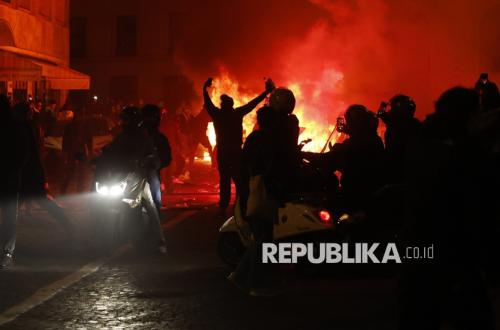
A wave of demonstrations has swept several European countries, as rising living costs, high housing prices and dissatisfaction with public services fuel public anger. Hundreds of thousands of people took to the streets in separate protests in France, Italy, Belgium and Portugal on Saturday (17 October 2026), underscoring the economic pressure facing governments across the region.
France was the main focus of the demonstrations, with attendance estimated at hundreds of thousands. Most of the protests were peaceful, but unrest broke out in several cities after groups of demonstrators clashed with police, damaged buildings and looted shops.
In Italy, a demonstration against war and the rising cost of living turned violent in central Milan. In Brussels, Belgian police used tear gas and water cannon to disperse protesters, while tens of thousands of people in Portugal marched to demand higher wages and more affordable housing.
The protests came as inflation in the eurozone rose again. The latest Eurostat data, published on Friday (16 October 2026), showed annual inflation in the eurozone reached 3.8 per cent in September, up from 3.2 per cent in August and 2.2 per cent in September a year earlier.
Higher energy prices were the largest contributor to eurozone inflation. This is putting greater pressure on household budgets, particularly for people who have to spend much of their income on basic necessities, transport, education and housing.
Al Jazeera reported that the demonstrations in the four countries were separate and were not coordinated by a single movement. However, their demands shared common themes: the cost of living, the quality of public services and the economic uncertainty facing the public.
France at the centre of the protest wave
France experienced one of its most turbulent days of demonstrations in recent decades. The Associated Press reported that between about 550,000 and 800,000 people took part at around 110 locations, reflecting differing estimates from the government and trade unions.
Demonstrations took place in Paris, Lyon, Marseille, Bordeaux, Limoges and other cities. Participants included school pupils, university students, trade union members and members of the public calling for greater purchasing power and improved public services.
The protests were linked to growing dissatisfaction with education and economic conditions. Complaints about teacher shortages, inadequate school facilities and education funding developed into broader demands for social justice and public welfare.
In Paris, the demonstration turned into clashes after some participants threw objects at security forces. Police used tear gas and water cannon to disperse those involved in violence, while several vehicles and shops were damaged.
Unrest was also reported in several other cities. The Associated Press recorded arson, looting and attacks on public facilities, although most demonstrations across France remained peaceful.
Authorities reported around 400 arrests in an update cited by the Associated Press. That figure was the number reported at the time and was not the final total of arrests.
The French government condemned the damage and said peaceful demonstrations must not be used as a pretext for attacking public facilities. Security forces also came under scrutiny after a young demonstrator in Saint-Étienne suffered a hand injury, reportedly linked to the use of crowd-control equipment.
The events recalled the gilets jaunes, or yellow vest, movement that shook France from 2018. It began as a protest against fuel tax increases before expanding into demonstrations over purchasing power, economic inequality and government policy.
Despite some similarities, the October 2026 demonstrations cannot be equated entirely with the yellow vest movement. The latest protests involved students and trade unions, and also focused on education and public services.
Unrest in Italy as Milan sees clashes
Violence also broke out in central Milan, Italy, when a demonstration that had initially been peaceful turned into clashes between masked groups and security forces. The protest was organised to oppose war and the rising cost of living.
The Associated Press reported that some rioters threw stones and other hard objects at police. They also set fire to barricades made from restaurant tables and looted shops.
The situation worsened around Piazza del Duomo, one of Milan’s best-known tourist and commercial areas. Security forces cleared the area and nearby shopping centres to prevent the unrest from spreading.
Police used tear gas and water cannon to control the crowds. At least two officers were injured, while around 50 demonstrators, including several minors, were detained, according to Italian media reports cited by the Associated Press.
Italian Prime Minister Giorgia Meloni condemned the violence. She said freedom of expression could not justify assaults, looting or damage to property.
Milan Mayor Giuseppe Sala also condemned the unrest, while acknowledging that the issues behind the demonstrations deserved attention. Public demands, he said, did not justify violence that put public safety at risk.
A similar protest took place in Bologna, where demonstrators clashed with police. Al Jazeera reported stone-throwing and clashes during the demonstration, which took place at the same time as the protest in Milan.
The unrest showed that the cost of living was one of the issues raised in demonstrations in Italy. However, the protests there were also linked to opposition to war, so not all participants can be considered to have shared the same economic demands.
Source: jawawa.id (https://jawawa.id/newsitem/europe-in-turmoil-as-hundreds-of-thousands-take-to-the-streets-what-is-behind-the-protests-1792317037)
Originally published by Republika (https://news.republika.co.id/berita/tn3j28451/eropa-bergejolak-ratusan-ribu-warga-turun-ke-jalan-ada-apa), translated from Indonesian