
Europe Hit by Protests: The Euro Is Reeling, but Still Expensive for Indonesians
Jakarta, CNBC Indonesia — Demonstrations in several European countries from September to October 2026 have begun to raise concerns about their financial markets.
Protests have taken place not only in France but also in Italy, Belgium, Spain and Portugal. Some have escalated into riots, clashes with security forces and damage to public facilities.
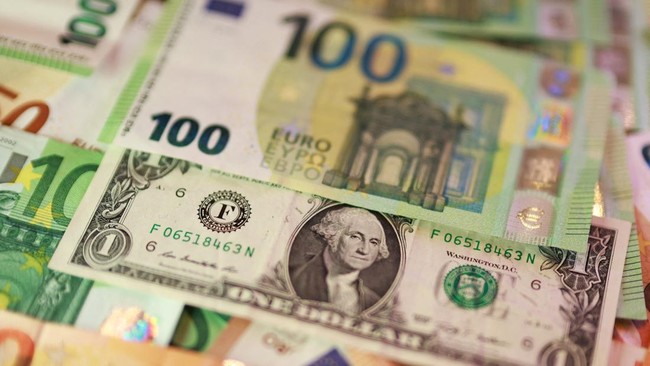
Against this backdrop, the euro has lost ground, particularly against the US dollar.
Refinitiv data show that the euro closed 0.27% lower at US$1.1172 on Monday, 26 October 2026.
Since the end of August 2026, the euro has depreciated by 3.82% against the greenback. Year to date, it is down by nearly 5%.
Protests spread as Europe grows more unsettled
In recent weeks, demonstrations have extended beyond France. Several other countries have faced similar pressures, although protesters’ demands vary.
Le Monde reported on Tuesday, 20 October 2026, that Italy was among the countries to experience significant unrest.
A demonstration in Milan on 17 October, prompted by rising living costs and dissatisfaction with the government, escalated into clashes between protesters and security forces.
The unrest damaged several shops. The Italian government deployed an additional 500 military personnel to strengthen security in Milan.
A similar situation unfolded in Belgium. On 9 October, thousands of workers and students took to the streets in Brussels to protest against the government’s planned budget cuts.
Some demonstrations ended in clashes with police, including the throwing of objects and the use of tear gas and water cannon.
In Spain, people demonstrated to demand more affordable housing, while protests in Portugal focused largely on high house prices, wages and pensions.
Although most demonstrations in Spain and Portugal remained peaceful, their spread shows that people across Europe are feeling mounting economic pressure.
The problems go beyond rising prices for everyday necessities: they also concern government finances and countries’ ability to fund public services.
How, then, can these demonstrations affect the euro?
Demonstrations do not automatically cause a currency to weaken.
However, when protests become more widespread and prolonged, investors may grow more concerned about a country’s political stability and economic conditions.
The current unrest in Europe comes as several countries are grappling with government debt, budget deficits and rising living costs.
Investors are concerned that governments will find it increasingly difficult to put their finances in order. Efforts to cut spending and reduce deficits could, in turn, provoke greater public opposition.
These concerns have prompted selling in some European financial assets, particularly government bonds issued by countries considered higher risk.
Investors have begun shifting funds from assets they regard as risky into safer instruments, such as German government bonds and US Treasury securities.
Reuters reported on Wednesday, 7 October 2026, that investors were becoming more selective in the European bond market. They were selling the debt of countries with higher fiscal risks and moving into bonds considered safer.
This shift in funds is one source of pressure on the euro, particularly when investors sell euro-denominated assets and convert the proceeds into US dollars or other currencies.
In such circumstances, demand for the euro may fall while demand for the US dollar rises.
Thus, unrest can put indirect pressure on the euro by heightening investor concerns and prompting selling in financial markets.
One of the clearest signs of that pressure is in European government bond markets, where yields in several countries have surged, reaching their highest levels in years.
European bond markets under pressure
Pressure on European government bond markets became increasingly evident from September to October 2026.
When investors sell bonds in large numbers, their prices fall. Yields, or returns, move in the opposite direction and rise.
A rise in yields driven by selling can indicate that investors are demanding higher returns to compensate for the risk of holding a country’s bonds.
This is what has happened to 10-year government bond yields in France, Italy, Belgium, Spain and Portugal.
Refinitiv data show that yields in all five countries rose from the end of August to the close of trading on Monday, 26 October 2026.
France recorded the largest increase, at 73.23 basis points (bps), followed by Belgium at 50.89 bps and Italy at 33.24 bps.
Spanish bond yields rose by 22.45 bps, while Portugal’s increased by 17.78 bps.
Higher yields can create problems for governments by making new borrowing and refinancing maturing debt more expensive.
If this continues for an extended period, the government’s interest payments could grow substantially.
When governments have to devote more of their budgets to interest payments, less may be available to meet public needs.
That could create further strains, particularly in countries where people are already protesting to demand better public services and education, as well as support to cope with the high cost of living.
How does the rupiah compare with the euro amid Europe’s turmoil?
Despite the significant pressure Europe is facing from the US dollar, the euro has still strengthened against Indonesia’s rupiah.
Refinitiv data show that at the start of 2026, the euro-rupiah exchange rate stood at Rp19,575 per euro.
By the close of trading on Monday, 26 October 2026, it had reached Rp20,257 per euro.
The rupiah has therefore lost around Rp682 per euro, depreciating by 3.48% since the beginning of the year.
This shows that although the euro is facing economic and political problems and has fallen by nearly 5% against the US dollar, the rupiah has come under even greater pressure.
As a result, even as the euro loses ground against the US dollar, the rupiah has still been unable to outperform the European currency.
Source: jawawa.id (https://jawawa.id/newsitem/europe-hit-by-protests-the-euro-is-reeling-but-still-expensive-for-indonesians-1793080282)
Originally published by CNBC Indonesia (https://www.cnbcindonesia.com/research/20261027095510-128-779751/eropa-dihantam-demo-euro-babak-belur-tapi-masih-mahal-buat-warga-ri), translated from Indonesian