
Europe Hit by a Real Disaster as Heatwave Deaths Top 50,000
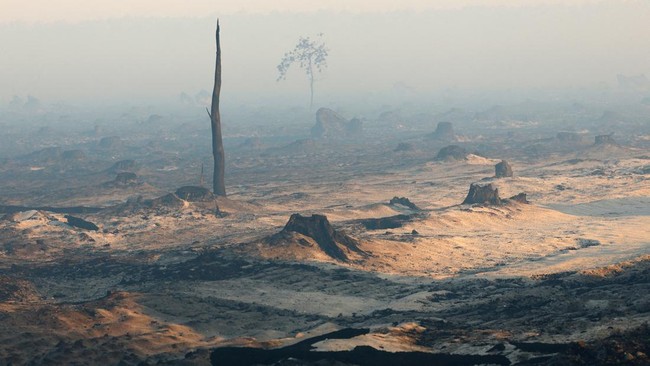
Extreme heat across Europe in summer 2026 is estimated to have killed more than 50,000 people in cities across the continent. The toll would make this the deadliest summer on record for extreme temperatures in the region, according to a new analysis.
About two-thirds of those deaths—more than 32,600—are estimated to be directly linked to climate change caused by fossil-fuel pollution. The findings were published in two peer-reviewed papers in the journal Nature Health.
Clair Barnes, a co-author of the report and a researcher in extreme weather and climate change at Imperial College London, said the death toll demonstrated the severity of this year’s heatwaves.
“I think we can be fairly confident in saying that summer 2026 was likely the worst on record for heat-related deaths across much of Europe,” Barnes said, according to CNN on Friday (23 October 2026).
The findings come only weeks before world leaders gather in Türkiye for the United Nations’ annual climate talks. They were also published days after the UN warned that the world had lost the opportunity to limit global warming to 1.5 degrees Celsius above pre-industrial levels.
“We are already far off track to limit the worst impacts of climate change. Governments need to recognise that, without faster action and coordination, things will only get worse,” Barnes said.
Europe is the fastest-warming continent in the world. Extreme heat, one of the deadliest forms of severe weather, is becoming increasingly difficult to withstand. This year, unprecedented high temperatures affected the region from late May until the end of August.
Western Europe recorded its hottest summer since records began, with average temperatures about 2.9 degrees Celsius above the 1991–2020 average. On some days, however, the gap was much larger. In several countries, temperatures exceeded normal levels by more than 12 degrees Celsius.
To estimate the death toll, researchers compared temperatures recorded in 854 cities across 30 European countries this summer with estimates of what temperatures would have been without climate change.
They then used scientific research on the relationship between high temperatures and daily mortality to estimate heat-related deaths between June and August. The researchers said their method produced estimates broadly consistent with figures later released by national health authorities.
The analysis estimated that 50,391 people died from heat in the cities studied, which represent about 40 per cent of the populations of the countries included in the research. The death toll was the highest in 26 years, far exceeding the effects of the major European heatwaves of 2022 and 2003.
Southern and Western Europe were the worst affected. But the usually cooler northern region, including the UK, also experienced thousands of deaths from extreme temperatures.
The risk of death was highest among people aged 85 and over. Extreme heat, however, was not a threat only to older people: more than 800 people aged 20 to 44 are estimated to have died from heat exposure during the period.
The report concluded that this summer was “likely the most dangerous summer in terms of temperature that Europe has experienced to date”.
Researchers also found that climate change’s contribution to heat-related deaths has grown. At the start of this century, fossil-fuel pollution was estimated to contribute to about 40 per cent of heat deaths. Its share has now risen to around two-thirds.
Raquel Nunes, an associate professor of health and environment at the University of Warwick who was not involved in the research, said the findings added to the evidence of the threat extreme heat poses to human life.
“These findings add to the growing evidence of how deadly extreme heat is, even though it is called a ‘silent killer’ because its effects are not always immediately visible,” Nunes said.
She also highlighted the high death toll among younger age groups. Thousands of those estimated to have died were under 65, she said, showing that heatwaves are not a danger limited to older people.
Barnes warned that, until the world reduces its reliance on fossil fuels, summers will continue to become hotter and more dangerous.
“Until we stop using fossil fuels, we will continue to face summers that are hotter and more dangerous,” she said.
This could make coming summers even deadlier. Barnes stressed that the death toll was not merely a statistic, but represented lives lost and families left to grieve.
“These figures are a stark reminder that our increasingly hot and extreme summers are having more severe effects on public health. Behind these statistics are real people who have lost their lives and real families grieving their loss,” Barnes said.
Source: jawawa.id (https://jawawa.id/newsitem/europe-hit-by-a-real-disaster-as-heatwave-deaths-top-50-000-1792741892)
Originally published by CNBC Indonesia (https://www.cnbcindonesia.com/news/20261023140205-4-778930/eropa-dihantam-petaka-nyata-50000-nyawa-melayang), translated from Indonesian