
Europe Faces Rp16,000 Trillion in Losses as Coastal Settlements Are Forced Inland
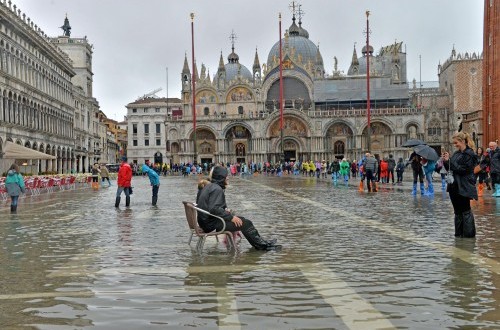
JAKARTA — Europe faces a growing threat from coastal damage, with settlements, business districts and infrastructure at risk from rising sea levels. European authorities are being urged to prepare for the relocation of settlements inland, a measure under consideration to avert major economic losses.
The Council of Europe has issued a significant recommendation on the threat. It was adopted by the Congress of Local and Regional Authorities at a session in Strasbourg, France, on Tuesday (27 October 2026).
A recent report warns of potentially enormous economic losses. Coastal damage could cause losses of €800 billion (Rp16,000 trillion) a year by 2100.
This projection assumes that protective measures are ineffective. It does not represent losses already incurred, and the estimate depends on how climate risks develop in the future.
Losses linked to coastal erosion are already substantial. In 28 European countries, they exceed €1 billion a year. Rising sea levels are expected to intensify the pressure.
According to an official Council of Europe statement on Sunday (1 November 2026), local governments are being encouraged to consider planned retreat: moving homes and infrastructure to safer areas.
The recommendation does not call for immediate mass relocation. Each government must assess local conditions, and implementation requires planning, funding and consultation with residents.
More than a quarter of Europe’s coastline is eroding
Coastal erosion is affecting areas across Europe. The Council of Europe report says more than a quarter of the continent’s coastline is being eroded, threatening settlements and local economic activity.
Nearly half of Europe’s population is said to live near the coast. Coastal areas are also centres of trade and industry, and account for around 40 per cent of Europe’s gross domestic product.
The risk of damage is expected to increase throughout this century. Around 80 per cent of low-lying coastlines face the threat of erosion, putting transport infrastructure and industrial areas at risk.
Fanis Spanos, a Greek politician who prepared the report, warned of the consequences. He said coastal areas are important economic assets for Europe and also hold cultural and historical heritage.
Spanos said settlements in hazardous zones increase vulnerability, putting people’s lives, livelihoods and property at risk. Protecting residents is a key consideration in the recommendation.
Anthony Buchanan, a British contributor to the report, highlighted rising sea levels. He said building coastal defence walls was becoming increasingly difficult to sustain, as climate change continues to place pressure on conventional defences.
Buchanan said sea levels are projected to continue rising, with a further increase of about 44 centimetres expected by 2100. The frequency of extreme storm surges could also rise sharply.
Some extreme events could become more frequent, he said, with their frequency projected to increase by 20 to 30 times by 2050. This could threaten densely populated coastal areas.
Homes, roads and railways could be relocated
The Council of Europe is calling for a change in approach to coastal protection. Building sea walls is not always the most sustainable solution, and governments should consider moving assets out of hazardous zones.
The strategy, known as planned relocation or retreat, involves moving settlements, businesses and public infrastructure. Roads and rail networks are also among the assets that could be affected.
Local governments have been asked to update disaster-risk maps. Development of new buildings in vulnerable areas should be restricted, and buffer zones could be established to reduce exposure.
The aim is to prevent the number of threatened assets from growing. New construction in at-risk areas could be limited, while existing buildings would need to be assessed for protection or relocation.
However, moving people’s homes presents major social challenges. Relocation can affect employment and community ties, while property values and family histories must also be taken into account.
The Council of Europe therefore emphasises the importance of involving residents. Governments should explain the risks and consequences of each option, and financial support is an important part of the relocation process.
The recommendations also include possible schemes to buy high-risk properties. Relocation assistance and insurance arrangements are also under consideration. National governments have been asked to provide legal frameworks and funding.
Source: jawawa.id (https://jawawa.id/newsitem/europe-faces-rp16-000-trillion-in-losses-as-coastal-settlements-are-forced-inland-1793616688)
Originally published by Republika (https://news.republika.co.id/berita/tnv7pq451/eropa-hadapi-kerugian-rp16000-t-pemukiman-pesisir-terpaksa-angkat-kaki-ke-daratan), translated from Indonesian