
EU Prepares New Trade Strategy to Address Deficit with China
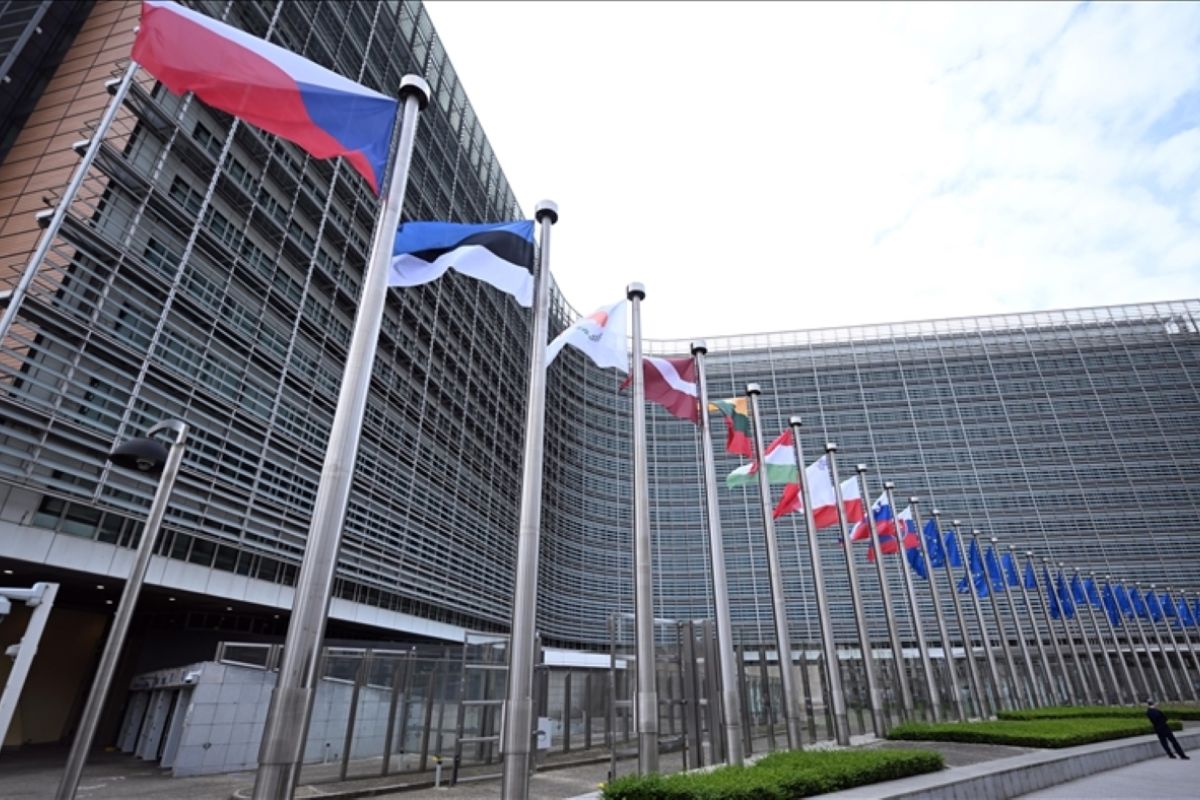
Brussels (ANTARA) - The European Union is preparing fundamental changes to its trade policy amid a ballooning trade deficit with China, growing dependence on strategic sectors, and pressure on European industry from state-backed Chinese production models.
As the world’s largest manufacturing hub, China continues to expand its penetration of global markets through government-supported industrial policies. China has rapidly increased production capacity in various sectors, especially electric vehicles, batteries, solar panels, critical mineral raw materials, and high-tech products, increasingly undermining European competitiveness.
Speaking at the G7 Summit in Canada, European Commission President Ursula von der Leyen stated that the EU’s current trade relationship with China is not sustainable. She said the EU needs to boost its own production capacity, expand its network of free trade agreements across different regions, and diversify supply chains. She also highlighted the concentration of critical mineral and raw material supplies in China, stressing the EU must avoid excessive dependence on a single supplier.
China’s dominance in global trade was a key issue discussed at the EU leaders’ meeting in Brussels on Thursday and Friday. The European Commission affirmed that economic ties with China must be maintained through a risk mitigation approach, but assessed that the current trade and investment relationship is no longer sustainable.
High-level consultations in Brussels indicate that economic and security threats can no longer be separated. This condition has prompted the development of a more comprehensive and coordinated policy towards China, including the imposition of new tariffs, import quotas, supply chain diversification obligations, and new economic defence instruments to address risks emanating from the world’s manufacturing centre.
Last year marked a turning point in EU-China trade relations. For the first time, all EU member states recorded a trade deficit with China. Eurostat data shows EU imports from China reached 559.4 billion euros, or approximately 695.3 billion US dollars (Rp12,390 trillion), in 2025. Meanwhile, EU exports to China totalled only 231.5 billion US dollars (Rp4,125.3 trillion), resulting in the largest trade deficit in history at 417.4 billion US dollars (Rp7,419.3 trillion).
Intense competition from China in sectors such as electric vehicles, solar panels, batteries, steel, chemicals, and machinery is putting significant pressure on European producers. Brussels now views the influx of cheap, state-supported Chinese products not merely as a trade issue, but as a strategic concern.
The London-based think tank Centre for European Reform has warned that Germany faces a serious risk of deindustrialisation due to China’s rising production capacity. Chinese companies are reportedly capturing increasing market share from German manufacturers in Germany’s domestic market, in third countries, and directly within the European market.
Several reports estimate that China could control around 40 percent of global industrial production by 2030, a situation expected to exert immense pressure on Europe’s production capacity, research and development, and innovation.
To address these challenges, the EU is preparing various new mechanisms. The European Commission is discussing the launch of broad market protection investigations into specific sectors, developing new instruments to counter Chinese overproduction in strategic sectors, and implementing sector-specific safeguard measures.
Proposals from France, Italy, Spain, the Netherlands, and Lithuania go beyond existing anti-dumping mechanisms. These countries are proposing the direct imposition of tariffs on certain sectors without the need for lengthy investigations.
A key regulation being drafted will mandate supply chain diversification for critical products. The aim is to prevent European companies from depending on a single country or supplier for semiconductors, rare earth elements, and other strategic industrial materials. Under the draft, companies would be required to have at least three different sources of supply and to limit the share of any single supplier in their total requirements.
EU Trade Commissioner Maros Sefcovic proposed this diversification instrument to prevent potential supply disruptions, particularly for semiconductors and critical raw materials. According to the Leibniz Centre for European Economic Research (ZEW), while diversification entails additional costs for companies, these should be viewed as an insurance premium, as the losses from supply disruptions could be far greater.
Another option under consideration is a new mechanism to safeguard the EU’s economic resilience. Through this instrument, the bloc could directly impose additional tariffs and import quotas when market practices deemed harmful threaten the region’s economic security. The legal basis is expected to rely on the national security exception clause within World Trade Organization (WTO) rules.
The EU’s increasingly assertive stance towards China is driven by concerns over strategic dependencies and the widening trade deficit. Beijing’s export restrictions on rare earth elements, magnets, and other critical technologies have also raised alarm in Europe. Brussels is determined to avoid a repeat of the crisis that followed the outbreak of the Russia-Ukraine war, when energy dependence became a major problem. However, full consensus among member states on the implementation of these measures has yet to be reached.