
EU Plans Rp1,000 Trillion Fund to Rival US and China in AI
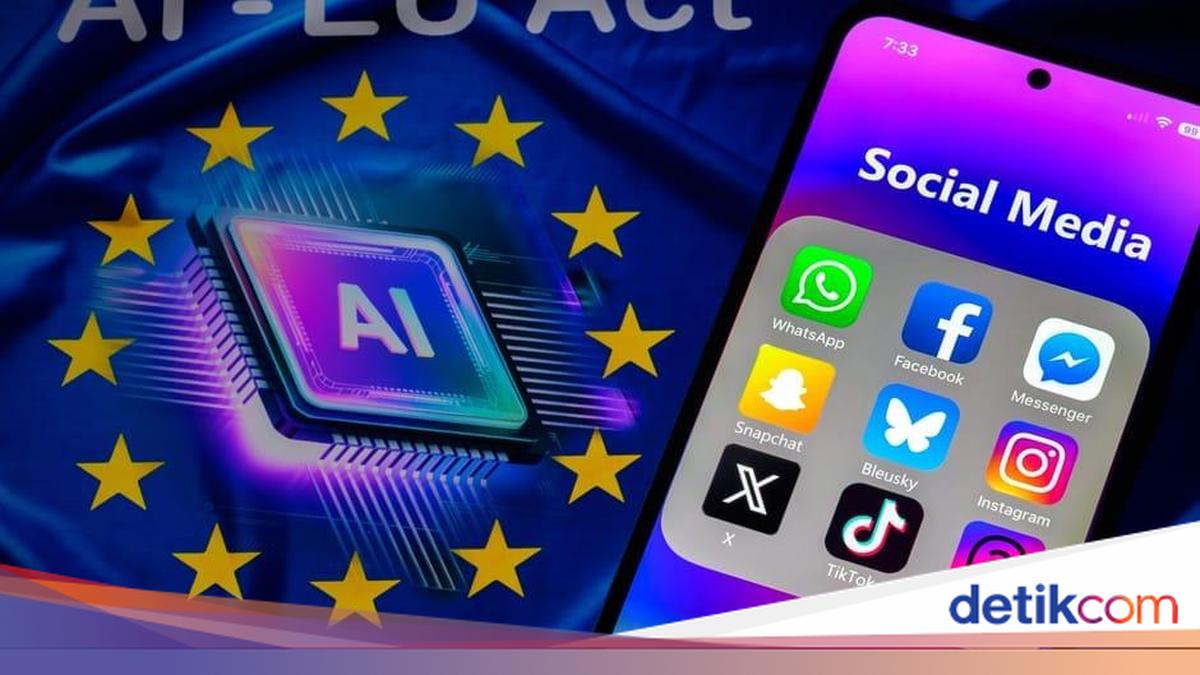
The European Union (EU) plans to invest up to €50 billion (about Rp999 trillion) through a new technology fund to reduce its dependence on the United States and China. The fund would focus on artificial intelligence (AI) and quantum-computing companies, as Europe seeks to strengthen its position in global technological competition.
The Financial Times reported on Wednesday (25 November), citing two officials involved in the discussions, that the bloc was considering establishing a Sovereign Tech Equity Fund. Reuters reported the information but said it had not been able to verify it independently.
On the same day, the European Commission was also due to announce a draft Quantum Act, intended to make Europe one of the world’s leading powers in quantum-computing technology by 2030.
Both initiatives form part of the EU’s efforts to reduce its reliance on non-European technology and strengthen domestic technology companies.
EU plans major investment fund for AI and quantum computing
According to the Financial Times report cited by Reuters, the Sovereign Tech Equity Fund is designed to provide larger investments, with higher risk and a longer time horizon than existing EU financing schemes.
The fund’s main investments would be directed towards companies working in AI and quantum computing.
The plan comes as the EU seeks to strengthen its technological autonomy amid competition with the United States and China. Reuters stressed, however, that it had not been able to verify the report about the proposed fund immediately.
Under the Quantum Act, meanwhile, the EU also plans to give European companies priority in publicly funded procurement.
According to a draft document seen by AFP, public authorities could favour European companies over those from outside the bloc. Procurement from countries that have partnerships with the EU would still be possible.
“We want to avoid making the same mistakes as in the development of AI,” an EU official told AFP, stressing the importance of investing early and building larger technology companies.
The EU’s technology chief, Henna Virkkunen, was due to present the draft Quantum Act to the European Parliament. The regulation will still need to be negotiated by member states and Parliament before it can be adopted.
Quantum computing seen as strategic for Europe’s future
Quantum computing uses the principles of quantum mechanics to solve some problems far faster than conventional computers.
The EU expects the technology to drive breakthroughs in fields including drug development, earlier medical diagnosis and more efficient battery production. Quantum computing could also accelerate AI development.
Europe is already a world leader in quantum research. The bloc says, however, that it still lags in turning research results into commercial opportunities.
Hadrien Valembois of industry group Business Software Alliance said quantum technology could be the next major technological development after AI.
“Quantum is also a major technology. It may be the next AI, develop in parallel, or perhaps fail to achieve the level of adoption it needs,” Valembois told AFP.
He said the technology’s progress would depend on regulation, funding and how governments decide to encourage or restrict its use.
The EU plan has been welcomed by the global technology industry. Jean-Marc Leclerc of US technology company IBM said the Quantum Act showed that Europe was beginning to see quantum technology as an opportunity to develop now.
“The Quantum Act is a signal that Europe sees quantum technology as an opportunity today, not something that will only materialise in the future,” Leclerc said in a statement to AFP.
He said, however, that the details of the regulation would determine how effectively it could encourage investment and broaden the use of quantum technology.
Quantum technology also poses cybersecurity risks
Alongside its economic potential, the EU has highlighted the possible use of quantum computing to strengthen regional security. The technology could be used to develop more secure communications for military operations and national security, as well as more advanced defence equipment.
Quantum computing also poses cybersecurity risks, particularly because of its potential to break encryption systems and digital data-protection mechanisms.
These concerns are emerging as governments and companies in various countries face cyberattack threats involving AI.
The European Commission said last week that its systems had been targeted by an AI-assisted cyberattack in October. The statement followed a series of hacks targeting cooling systems in shops across Europe.
Through the Quantum Act, the EU aims to make Europe a global leader in quantum technology by 2030. The Sovereign Tech Equity Fund, as reported by the Financial Times, remains a proposed investment plan that Reuters has not independently verified.
Source: jawawa.id (https://jawawa.id/newsitem/eu-plans-rp1-000-trillion-fund-to-rival-us-and-china-in-ai-1795607547)
Originally published by detikcom (https://news.detik.com/dw/d-8769692/uni-eropa-siapkan-rp-1-000-triliun-untuk-saingi-as-china-di-sektor-ai), translated from Indonesian