
EU Countries Reject Plan for Special Canadian Membership Status
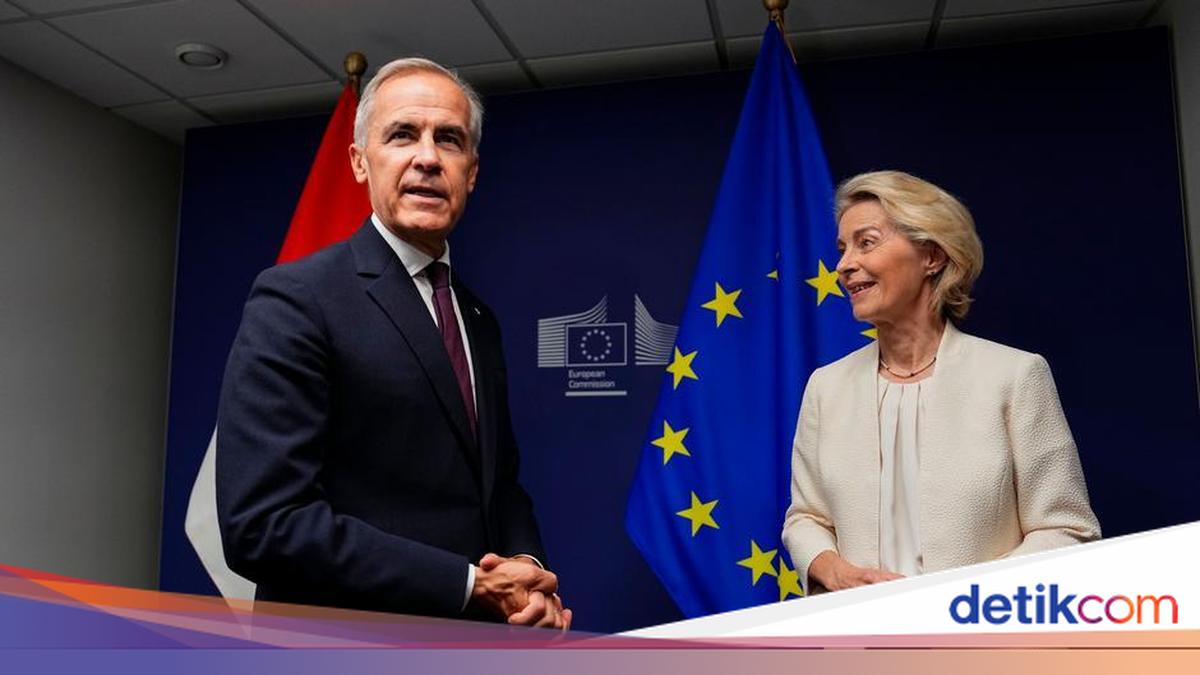
Several European Union member states have rejected European Commission President Ursula von der Leyen’s proposal to grant Canada special “associate member” status in the bloc.
German Chancellor Friedrich Merz and several other EU leaders urged that the term be removed from a draft joint declaration ahead of the two-day EU-Canada summit, which began on Thursday (29 October) in Montreal, Canada. Diplomats told the dpa and AFP news agencies.
The revised document now commits both sides only to building “closer relations”, without granting Canada any membership status.
EU member states approved the declaration on Wednesday evening (28 October), and it is due to be published on Friday (30 October), when the summit concludes.
The summit is attended by Canadian Prime Minister Mark Carney, European Commission President Ursula von der Leyen, European Council President Antonio Costa and several EU commissioners.
Why did the EU reject special membership status for Canada?
The idea of making Canada the first country to receive “associate member” status in the EU was first raised by von der Leyen last September, in a speech also attended by Carney.
The proposal prompted objections from several member states because the treaties that currently form the EU’s legal basis do not provide for such a membership category.
Diplomats said member-state governments questioned what form the proposed cooperation would take. They also felt the European Commission had not consulted them adequately before putting forward the idea.
Germany, France and Italy were among the countries that raised concerns, although all three support closer relations with Canada in principle.
Another complication was that the term “associate member” had previously been used in discussions about Ukraine’s possible accession to the EU.
Merz had proposed the status as a transitional stage before Ukraine obtained full membership. Under that arrangement, Ukraine could attend EU summits and ministerial meetings but would have no voting rights.
Von der Leyen, meanwhile, used the same term to describe a different form of relationship with Canada, which has no legal route to EU membership under the current rules.
Under the original draft declaration, Canada would have been able to take part as an associate member in consultations on various key EU political and regulatory policies.
The scope of that cooperation was due to be clarified before the next EU-Canada summit in 2027.
Carney sought to defuse the dispute over the terminology, saying that the wording mattered less than the practical benefits closer cooperation could bring to the people of Canada.
Economic, defence and energy cooperation
Despite their differences over membership status, the EU and Canada remain committed to expanding their strategic partnership.
The revised declaration focuses on the “Alliance for the Future”, a phrase Carney often uses to describe the direction of Canada’s relationship with the EU.
Through the initiative, the two sides aim to reduce trade barriers, facilitate investment and ensure supplies of critical raw materials, medicines and technology during crises.
Cooperation is also set to expand in energy, climate protection, artificial intelligence, security and education.
Canada could gain wider access to various EU programmes, including those covering research, education and defence.
The two sides also plan to establish a new economic council bringing together businesses from Canada and EU countries.
The declaration includes plans for a feasibility study on increasing Canadian liquefied natural gas (LNG) exports to Europe.
However, several economic commitments in the original draft were diluted at the request of EU member states.
An explicit target for deeper integration of financial markets, for example, was removed from the final document.
Plans to grant preferential treatment under economic security policies were also dropped. Instead, both sides have committed only to limiting the potential adverse effects of each other’s policies.
Donald Trump’s policies bring the EU and Canada closer
Efforts to strengthen EU-Canada relations come amid growing uncertainty over both sides’ ties with the United States under President Donald Trump.
Trade disputes, US import tariffs and Trump’s territorial claims have raised concerns in Canada and Europe about the reliability of the US as a partner.
The situation has prompted both sides to look for ways to reduce their dependence on other countries while strengthening their ability to advance shared interests.
Trump previously criticised the proposal to give Canada EU associate-member status, calling it “ridiculous”.
He also threatened to take action if the cooperation were considered detrimental to US interests.
Trump has even warned that he could impose high import tariffs or halt trade with Europe in certain sectors.
Although the proposal for special Canadian membership status has now been rejected, the EU and Canada are continuing efforts to strengthen their political, economic and security ties amid shifting global geopolitical dynamics.