
EU Considers Chinese Solar Panels a Security Threat, Why?
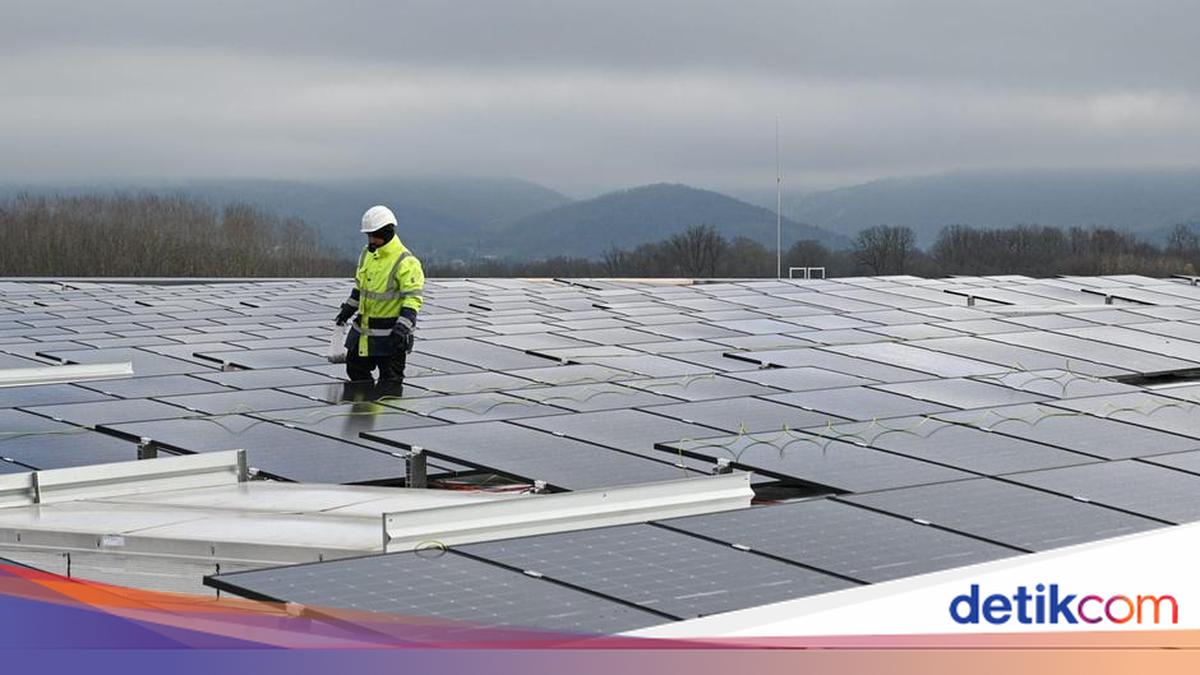
The decision made on 4 May reflects Brussels’ growing concerns over Europe’s dependence on Chinese green technology and the vulnerability of its critical infrastructure. The funding ban issued by the European Commission focuses on solar inverters, or power converters, which are considered the “brain” of solar panel systems. Inverters convert solar energy into usable electricity. These devices are connected to the internet and can often be accessed remotely for maintenance and software updates. Worst-case scenario: A blackout across Europe? “All inverter manufacturers have some kind of emergency stop button,” Christoph Podewils, secretary general of the European Solar Manufacturing Council, told DW. Emergency stop buttons and other remote connection controls are usually used for safety or grid stabilisation. However, cybersecurity experts warn that, in the worst-case scenario, hackers or hostile state actors could exploit these remote connections to disrupt electricity supplies. “The worst-case scenario is a large-scale blackout across Europe,” cybersecurity expert Swantje Westphal told DW. In 2024, 61% of all inverters imported into Europe came from China, according to the Geneva-based Loom research organisation. Huawei and Sungrow are two inverter manufacturers that dominate not only the European market but also the global one. Several Chinese manufacturers have supplied hardware for more than 220 gigawatts of installed solar capacity in Europe. “As an illustration, controlling just around 10 gigawatts would be enough to create major disruptions to the European electricity grid,” Podewils said. Dangerous communication devices in Chinese inverters? So far, no cases have been found of Chinese inverters being used to shut down parts of the electricity grid in Europe. However, concerns are mounting after Reuters reported in 2025 that US energy authorities had found dangerous communication devices inside some Chinese-made inverters. “This threat is real,” Westphal said. “It’s not a made-up hypothesis.” The debate over inverters arises as Europe re-evaluates its extensive dependence on imports of clean technology from China. According to Loom, China exports 98% of solar panels and 88% of lithium-ion batteries to Europe. Loom warns that remote control functions connected to this energy technology could potentially create vulnerabilities across the entire power system. China’s dominance in green technology in Europe Brussels is taking firmer action against imports of Chinese technology deemed risky. In March, the European Commission outlined the Industrial Accelerator Bill, which aims to direct more funding towards European-made green technologies, including batteries and electric vehicles. The European Commission also outlined revisions to the Cybersecurity Bill, which give Brussels greater authority to restrict the involvement of Chinese companies in critical infrastructure such as communications infrastructure or energy suppliers across EU member states. Through its latest policy, EU funds managed directly by the Commission and institutions such as the European Bank for Reconstruction and Development can no longer be used to purchase Chinese-made solar inverters. These restrictions do not apply to purchases made directly by EU member states. Chinese-made inverters already installed across Europe can continue to operate. “This is a step in the right direction,” Westphal said, “But we are not banning Chinese-made inverters from our market.” Can European inverters fill the gap? Currently, 80% of new solar systems in Europe rely on Chinese-made inverters, according to the European Solar Panel Manufacturing Council. If demand is not met by Chinese manufacturers, European producers must fill a significant gap. However, Podewils is confident that European suppliers are ready. “It is possible to increase production capacity within a few months to the level needed to meet demand,” Podewils said. European-made inverters are estimated to be 2% more expensive than their Chinese alternatives, according to a European Commission official. However, Podewils argues that the additional cost can be justified. “It’s like an insurance cost,” he said, referring to the ‘peace of mind’ or protection from future risks.