
EU and GCC Reject Unilateral Claims Over Strait of Hormuz
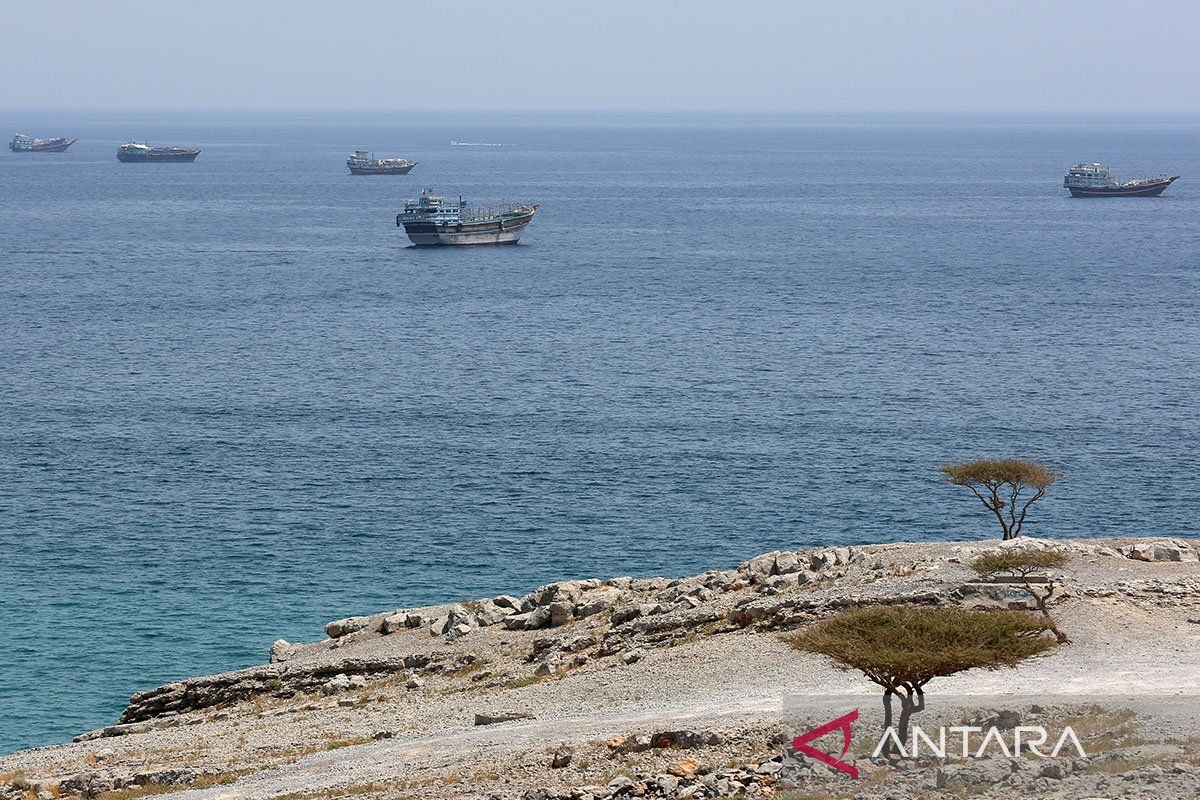
Istanbul (ANTARA) - The European Union (EU) and the Gulf Cooperation Council (GCC) on Saturday (18/7) rejected as unlawful any claim by a state over the sovereignty or control of the Strait of Hormuz.
The two blocs also opposed the imposition of permits or charges on international shipping passing through the strategic waterway.
In a joint statement following the High-Level Forum on Regional Security and Cooperation held in Brussels on 13 July, the two blocs affirmed that no arrangement, understanding or bilateral memorandum of understanding between states can unlawfully regulate or restrict the right of transit through an international strait.
The EU and GCC stressed that this right of transit is guaranteed to all states under international law and cannot be placed under the control of, or require authorisation from, any single state.
The forum was co-chaired by the EU’s High Representative for Foreign Affairs and Security Policy, Kaja Kallas, and Bahrain’s Foreign Minister Abdullatif bin Rashid Al-Zayani, in his capacity as Chairman of the GCC Ministerial Council.
Both parties reaffirmed that freedom of navigation, including the right of transit through the Strait of Hormuz as a strait used for international navigation, is guaranteed under international law as reflected in the United Nations Convention on the Law of the Sea (UNCLOS).
According to the statement, vessels from all states enjoy this right, and no state has the authority to suspend, obstruct, or impose any conditions on its exercise.
The EU and GCC also strongly condemned Iran’s attacks on commercial vessels transiting the Strait of Hormuz, as well as attacks on the sovereign territories of several states in the region.
The two blocs considered that these attacks endanger the safety of civilians and seafarers, violate international law and UN Security Council Resolution 2817, and cannot be justified under any circumstances.
The EU and GCC urged Iran to immediately halt all attacks and any form of interference with international shipping, and to keep the Strait of Hormuz open unconditionally, without transit fees or service charges.
According to the statement, any threat to the security of one state is a matter of concern to all who depend on the safety of this vital shipping route.
The EU and GCC also expressed full solidarity with the affected states and with seafarers of various nationalities whose safety is at risk.
Both parties committed to continuing to strengthen coordination to safeguard freedom of navigation and to protect international shipping and the safety of seafarers.
Furthermore, the EU and GCC called on all parties to exercise restraint, reaffirming their commitment to dialogue and diplomacy as the path to resolving the crisis while guaranteeing freedom of navigation through the Strait of Hormuz.
Tensions in the Middle East have escalated in recent weeks amid continued exchanges of attacks between the United States and Iran.
The military escalation has occurred despite the two countries signing a memorandum of understanding in June, mediated by Pakistan, to end the conflict and reach a lasting peace agreement.