
Ethereum Strengthens Its Role in the Crypto Ecosystem Through Blockchain Technology
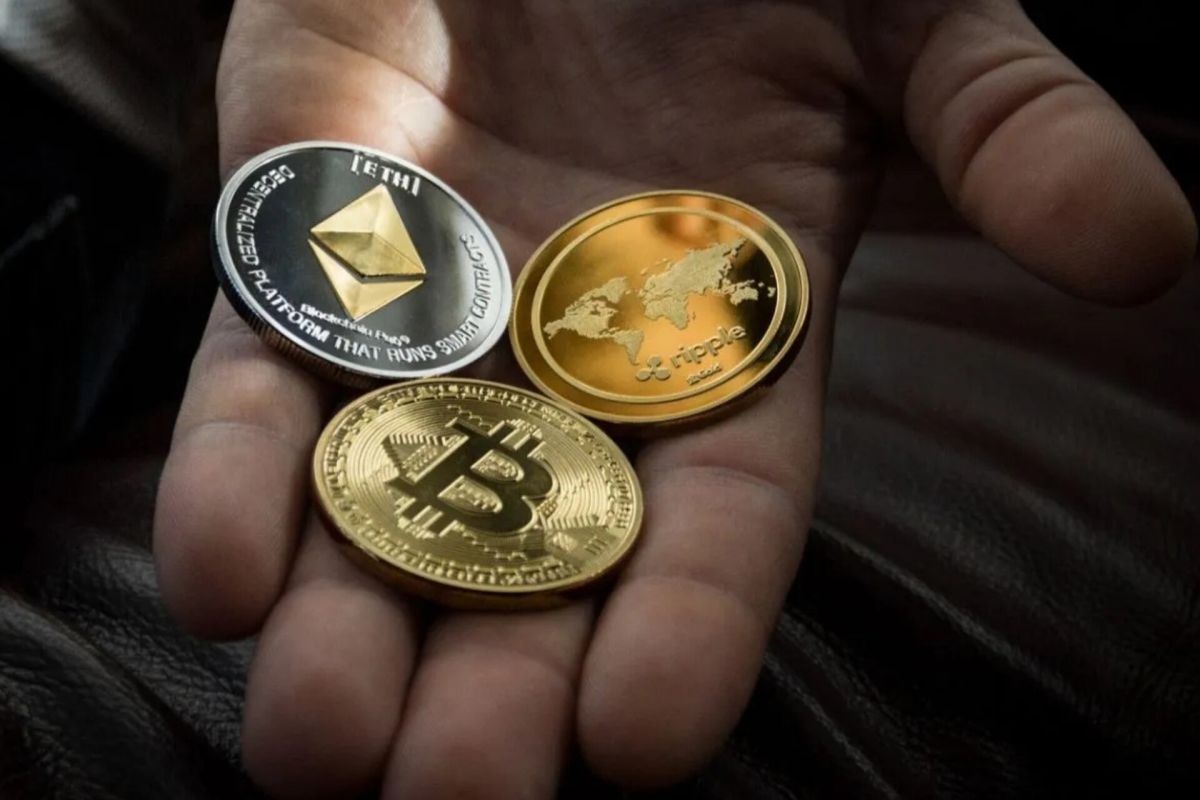
Jakarta (ANTARA) - Ethereum (ETH) is one of the blockchain networks playing an important role in the development of the global crypto-asset ecosystem. Its smart-contract technology enables a range of transactions and digital applications to operate in a decentralised manner.
Unlike Bitcoin, which is better known as a store of value, Ethereum was developed as a programmable blockchain network supporting various digital services, from decentralised finance (DeFi) and stablecoins to non-fungible tokens (NFTs).
Ethereum was first introduced in a white paper written by Vitalik Buterin in 2013 and officially launched its mainnet on 30 July 2015, in a development phase known as Frontier.
Ethereum uses the crypto-asset ETH to pay computational costs, or gas fees, required to run transactions and smart contracts on the network. This means network activity is one factor that can affect demand for ETH, alongside market conditions and investor sentiment.
For crypto traders, understanding activity on the Ethereum network is an important part of assessing market dynamics, given that ETH is the second-largest crypto-asset by market capitalisation after Bitcoin.
ETH price movements are also affected by changes to its supply mechanism since the London upgrade, introduced through Ethereum Improvement Proposal (EIP)-1559 in August 2021.
Under this mechanism, some transaction fees, known as the base fee, are burned, reducing the amount of ETH in circulation. However, Ethereum has no maximum supply cap: the amount in circulation depends on the balance between new issuance and ETH burned.
Ethereum has undergone a series of upgrades to improve the network’s efficiency and capacity. One of the biggest changes came in September 2022, when the Merge upgrade switched its consensus mechanism from Proof of Work to Proof of Stake.
The change replaced mining with a validator system, in which participants stake ETH to help secure the network and validate transactions.
Development continued with the Shapella upgrade in April 2023, which enabled withdrawals of ETH from staking, and Dencun in March 2024, which improved transaction efficiency on Layer 2 networks.
The Pectra upgrade in May 2025 raised the effective balance limit for validators from 32 ETH to 2,048 ETH, followed by the Fusaka upgrade in December 2025. Ethereum is also preparing the Glamsterdam upgrade, targeted for 2026, as part of efforts to increase network capacity and efficiency.
Market data as at 16 September 2026 put Ethereum’s market capitalisation at about US$291.6 billion, giving it a 11.23 per cent share of the global crypto-asset market. The circulating supply stood at about 122.05 million ETH.
Despite its large market capitalisation, Ethereum remains exposed to price volatility. ETH reached an all-time high of US$4,946.05 on 24 August 2025, before falling by about 51.67 per cent from that level by 16 September 2026.
In Indonesia, regulation and supervision of digital financial assets, including crypto-assets, have been the responsibility of the Financial Services Authority (OJK) since 10 January 2025. Consumers can trade crypto-assets through platforms that are licensed and supervised by the regulator.
One such platform is Ajaib Kripto, which offers crypto-asset trading through a digital application. The platform also provides access to investments in more than 650 US company shares.
Even so, members of the public should take volatility risks into account, understand the characteristics of the assets and verify that a platform is legally authorised before trading crypto-assets.
Source: jawawa.id (https://jawawa.id/newsitem/ethereum-strengthens-its-role-in-the-crypto-ecosystem-through-blockchain-technology-1792234248)
Originally published by Antara (Indonesian) (https://www.antaranews.com/berita/5793361/ethereum-perkuat-peran-dalam-ekosistem-kripto-melalui-teknologi-blockchain), translated from Indonesian