
Estonia's Smart Port 4.0: Solution to Reduce Congestion and Logistics Costs in Indonesia
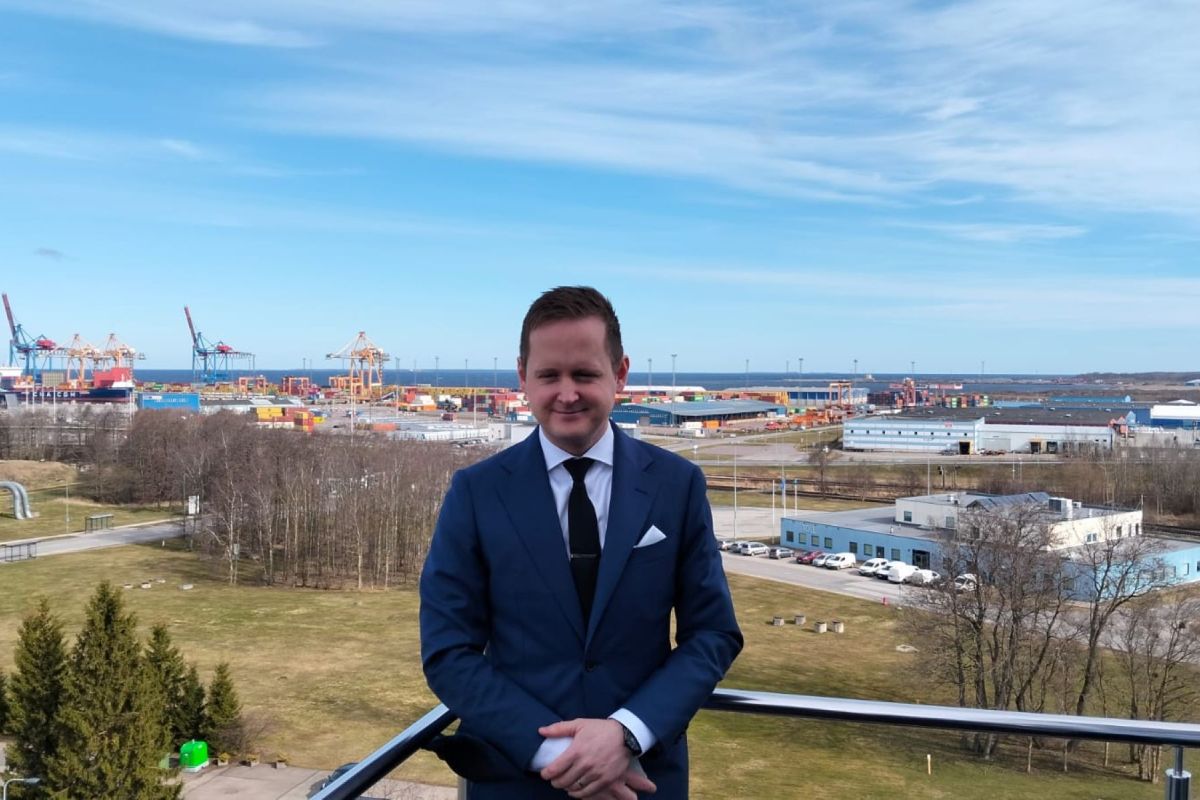
The Estonian model demonstrates that the most important strategic improvements do not begin with building new terminals, but with establishing a common operational language among all port stakeholders.
Jakarta (ANTARA) - Peter Drucker, known as the Father of Modern Management, once stated that “time is the scarcest resource and unless it is managed, nothing else can be managed.”
This principle is highly relevant in port management, where every hour wasted translates to higher logistics costs, congested supply chains, and declining national competitiveness.
In the current era of global trade, ports that fail to manage time effectively will ultimately lose their strategic value. This is why the Smart Port 4.0 approach—supported by Single Window integration and Just-in-Time logistics—has become central to modern maritime governance.
In this context, the concept of Smart Port 4.0 reflects a new stage in the evolution of port management. Smart Port 4.0 is not just about having modern cranes or digital documents, but about building an integrated ecosystem where data, infrastructure, and decision-making operate in real-time.
As is known, Port 1.0 typically refers to traditional ports functioning for loading and unloading. Then Port 2.0 emerged when ports began to develop into logistics and industrial functions to support warehousing, distribution, and trade facilitation.
Next, Port 3.0 represents the era of port modernisation through partial digitalisation and intermodal connectivity, where ports began adopting IT systems, containerisation, and better infrastructure to support faster cargo movement.
The latest stage is Smart Port 4.0, which relies on technologies such as automation, sensors, big data analytics, artificial intelligence, and digital platforms to synchronise the entire port supply chain; connecting ships, terminals, truck flows, customs, and even urban transport networks into one coordinated system.
Smart ports
In other words, Smart Port 4.0 goes further by transforming ports into intelligent, data-based centres. Instead of operating through fragmented systems and manual coordination, ports under the 4.0 model emphasise full integration, predictive planning, and automated efficiency.
In fact, Indonesia has begun implementing the Smart Port 4.0 concept and port digitalisation, particularly since 2021. Several innovations developed include Phinnisi, TOS Nusantara, and PTOS-M, designed to enhance operational efficiency and transparency in ports.
PT Pelabuhan Indonesia (Persero) or Pelindo, through its subsidiary PT Pelindo Solusi Digital, has also introduced the Port Digitalization Experience, which integrates services through a unified system (single system), showcased at the Hannover Messe 2023 event.
In the European region, the Port of Tallinn as the largest port authority in Estonia has become one of the prime examples of Smart Port 4.0 implementation. This shows how a relatively small maritime nation can leverage digital innovation and integrated systems to compete on a global scale.
Several Indonesian journalists were invited by the Estonian government, among others, to witness the implementation of Smart Port 4.0 by the Port of Tallinn.
According to a presentation delivered by the Chief Business Development Officer of the Port of Tallinn, Rene Pärt, they use a digital recognition system at entry points to automatically identify vehicles and direct them to the correct lanes without waiting or manual checks.