
ESGIN-AEKI Partnership Drives Coffee Industry Transformation Towards a Green Economy
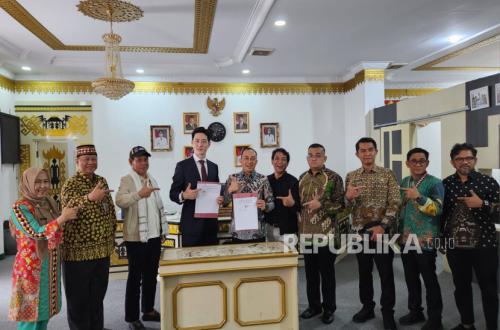
TANGGAMUS — The transformation of the coffee industry towards more sustainable practices is considered an important step to boost Indonesia’s export competitiveness while opening new sources of income for farmers. The development of biochar, carbon trading, and the digitalisation of environmental governance is seen as capable of turning plantation waste into a high-value economic asset.
This commitment was marked by the signing of a memorandum of understanding between PT ESGIN Global Partners (ESGIN) and the Central Board of the Indonesian Coffee Exporters Association (DPP AEKI) at the Tanggamus Regency Government Office in Lampung on Thursday (23/7/2026).
The cooperation covers biochar development, the implementation of Digital Measurement, Reporting and Verification (Digital MRV), certification, and the commercialisation of carbon credits to support green economy development in national coffee plantation centres.
Tanggamus Regency was chosen as the initial location because it is one of Indonesia’s largest coffee-producing regions. According to Tanggamus Regency Government data, coffee production in the area reached 39,165 tonnes in 2025, with plantations covering approximately 41,526 hectares managed by around 40,084 farmer households. Ulu Belu District is the largest production centre, yielding 12,067 tonnes from an area of about 10,720 hectares.
The vast plantation area generates large volumes of biomass, ranging from coffee husks and pruning residues to other organic waste. To date, most of this biomass has not been optimally utilised, despite its potential to be processed into biochar, which can improve soil fertility while sequestering carbon over the long term.
Through this scheme, plantation waste is expected to no longer be an environmental burden, but rather a source of new added value through carbon credit trading while supporting more sustainable coffee cultivation practices.
Brandon Keam, Chief Executive Officer of PT ESGIN Global Partners, said that green economy development requires collaboration between government, the business community, associations, investors, academics and society.
“Green investment must deliver real benefits to communities. That is why we are not only building projects, but also enhancing regional capacity, strengthening farmers’ welfare, creating green jobs, and helping local governments chart a sustainable direction for green economic development. Tanggamus has great potential to become a national model for coffee-based green economy development,” he said.
According to Brandon, ESGIN’s role is not limited to being a green project investor; it also acts as a partner to local governments in drawing up green economy roadmaps, developing Digital MRV technology based on artificial intelligence (AI) and blockchain, and encouraging low-carbon investment into the region.
He added that this approach is designed to align with Presidential Regulation No. 110 of 2025 on the Implementation of Carbon Economic Value Instruments and National Greenhouse Gas Emission Control, while supporting the achievement of Indonesia’s Nationally Determined Contribution (NDC) targets and the Net Zero Emission target by 2060 or earlier.
Irfan Anwar, Chairman of DPP AEKI, believes sustainability will be a key factor in determining the competitiveness of Indonesian coffee in the global market.
“Going forward, the competitiveness of Indonesian coffee will be determined not only by bean quality, but also by the ability to apply sustainable, low-carbon production practices that meet global ESG standards. We hope this cooperation improves farmers’ welfare while strengthening the export competitiveness of the national coffee industry,” he said.
The Tanggamus Regency Government welcomed the collaboration positively, as it is seen as opening opportunities for green investment, technology adoption, and the development of carbon markets that could improve community welfare.
Through this partnership, ESGIN and DPP AEKI aim to create a coffee-based green economy development model that integrates green investment, biochar utilisation, environmental governance digitalisation, carbon trading, and farmer empowerment. The model is expected to be replicated across Indonesia’s coffee centres to strengthen the plantation sector’s contribution to low-carbon development while increasing the added value of the national coffee commodity.