
ESG Standards Set New Direction for Global Nickel and EV Ecosystem
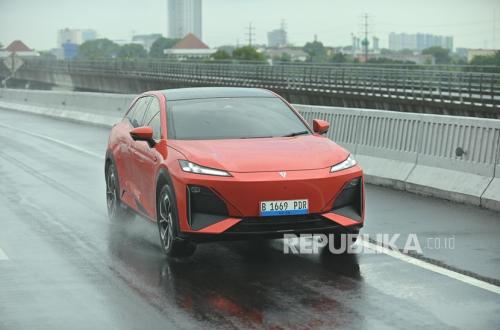
Environmental, Social, and Governance (ESG) standards have now become the primary determinant of the new direction for the global nickel ecosystem and the electric vehicle (EV) industry. ESG is no longer merely a compliance framework but has evolved into a core requirement for entering the world’s critical mineral supply chain.
Amidst the growing demand for nickel and strategic minerals to support the energy transition, the global market is becoming increasingly selective. Assessments are no longer based solely on product quality and volume, but also on the sustainability footprint of the entire process, from extraction to downstream processing.
The Ministry of Energy and Mineral Resources (ESDM) views this trend as opening a strategic opportunity for Indonesia, as one of the world’s leading nickel producers, provided the country can meet the sustainability standards demanded by the global market.
Cecep Mochammad Yasin, Director of Mineral Business Development at the Directorate General of Mineral and Coal, ESDM, stated that minerals produced with ESG standards carry higher added value within the EV and clean energy industrial supply chain. “The global market currently assesses not only the quality of the mineral products produced, but also how those minerals are produced,” Cecep said during the INDEF–GTI Critical Mineral Dialogue Series, quoted on Sunday (21/6/2026).
This statement underscores a major shift in the global industrial structure. EV manufacturers and technology companies now place ESG as a primary factor in selecting supply chain partners. Without meeting sustainability standards, access to the global market becomes significantly tighter.
According to Cecep, the government is continuously strengthening the integration of ESG into national mining governance. These principles are being applied in the evaluation and approval of mining companies’ Work Plans and Budgets (RKAB).
From a social perspective, companies are required to implement Community Development and Empowerment Programmes (PPM) formulated in collaboration with local governments. On the environmental front, companies are encouraged to improve energy efficiency, reduce emissions, strengthen waste and mine water management, and carry out responsible reclamation and post-mining activities.
“In some mines, ESG standards such as IRMA have already been implemented, including energy efficiency and emission reduction through the electrification of heavy equipment and the use of cleaner energy sources,” he added.
Furthermore, the Directorate General of Mineral and Coal is conducting a study to align national standards with global ESG practices through a gap analysis between domestic regulations and international standards. This step is considered crucial as an increasing number of global supply contracts require compliance with sustainability standards. For instance, mining companies supplying the EV industry must meet the ESG standards set by global automotive manufacturers.
“One example is the cooperation between Vale Indonesia with Ford and Volkswagen, which applies global ESG standards in its supply chain,” Cecep noted.
This development demonstrates that ESG has transformed from a mere governance principle into a strategic instrument in global industrial competition. For Indonesia, which possesses large reserves of nickel, copper, tin, and bauxite, the main challenge has now shifted. It is no longer about resource availability, but the ability to meet the sustainability standards that are a prerequisite for the global market.
In line with this, national mining industry players are beginning to place ESG at the core of their business strategy. The state-owned mining holding company MIND ID, along with its group members, continues to strengthen ESG implementation through emission reduction, post-mining land reclamation and rehabilitation, environmental conservation, and improved governance and transparency in sustainability reporting.
According to Cecep, this trend marks a significant change in the direction of the global mining industry. Business success is no longer determined solely by the size of reserves or production capacity, but also by the ability to meet sustainability demands across the entire supply chain. With these dynamics, ESG has become not just a reputational factor, but a primary prerequisite for maintaining market access and winning contracts in the global EV industry.
“The global market is moving towards increasingly demanding sustainable mining practices. Therefore, ESG is no longer just about compliance, but has become a determining factor for competitiveness and market access for the mineral industry,” Cecep concluded.